No products in the cart.

Fabrication Solution
The Best Material Fabrication in Saudi Arabia
The Best Material Fabrication in Saudi Arabia: The fabricators of the material need to be...

+966 59 204 1946
No products in the cart.
In today’s rapidly evolving global market, manufacturing is undergoing a profound transformation. Businesses are constantly seeking innovative methodologies to enhance efficiency, reduce costs, and deliver superior products. This drive toward excellence has elevated the importance of advanced fabrication solutions, moving beyond traditional methods to embrace cutting-edge technologies and processes. At Aska Solution, we’ve witnessed firsthand how embracing these innovations can redefine operational capabilities, setting new benchmarks for quality and speed.
We understand that navigating the complexities of modern manufacturing requires not just adaptation, but a proactive pursuit of the best tools and techniques available. Our expertise in implementing comprehensive advanced fabrication solutions helps companies not only meet current demands but also anticipate future challenges. This guide will explore the various facets of advanced fabrication, detailing how it revolutionizes production across industries and why it is indispensable for sustained competitive advantage.
The global manufacturing landscape is more dynamic and competitive than ever before. Companies face increasing pressure to innovate, respond quickly to market changes, and deliver products that meet increasingly stringent quality and performance standards. In this environment, relying solely on conventional fabrication methods is no longer sustainable. We firmly believe that embracing advanced fabrication solutions is not merely an option, but a strategic necessity for long-term success.
The manufacturing world is undergoing a significant paradigm shift driven by factors such as globalization, digitalization, and evolving consumer expectations. Global supply chains have become more interconnected yet also more vulnerable, prompting a need for greater resilience and localized production capabilities. This new reality demands precision manufacturing capabilities that can adapt quickly to design changes and diverse material requirements. We’ve observed that businesses that invest in industrial automation and digital fabrication are better equipped to navigate these shifts, maintaining agility and responsiveness. The demand for highly customized products, often in smaller batches, also necessitates flexible and efficient advanced fabrication solutions.
Traditional manufacturing, while foundational, often struggles with the demands of modern production. Methods like manual welding, conventional machining, and basic stamping can be labor-intensive, time-consuming, and prone to human error. They typically offer limited geometric complexity and are less efficient when dealing with intricate designs or bespoke manufacturing requirements. Furthermore, material waste can be considerable, and the ability to iterate rapidly on designs is severely constrained. In our experience, these limitations often translate into higher costs, longer lead times, and an inability to compete effectively on innovation. Addressing these shortcomings directly highlights the value proposition of advanced fabrication solutions.
In a market where disruption is the norm, continuous innovation is the only path to a sustainable competitive advantage. Advanced fabrication solutions enable companies to develop new products faster, improve existing ones, and reduce their time-to-market significantly. By leveraging technologies such as additive manufacturing and advanced CNC machining, businesses can achieve levels of precision manufacturing and design freedom previously unimaginable. This allows for the creation of lighter, stronger, and more complex parts, leading to superior product performance and functionality. We consistently advise our clients that investing in these innovations is an investment in their future market leadership, differentiating them from competitors who remain reliant on outdated processes.
Advanced fabrication represents a paradigm shift from traditional manufacturing, integrating sophisticated technologies, materials science, and automation to achieve unprecedented levels of precision, efficiency, and design flexibility. It moves beyond simply making parts to intelligently engineering manufacturing processes. For us at Aska Solution, defining advanced fabrication involves a holistic view of how components are designed, produced, and optimized. It’s about combining intelligent systems with physical processes to unlock new capabilities.
At the heart of advanced fabrication solutions lies the deep integration of digital technologies. This includes sophisticated CAD (Computer-Aided Design), CAM (Computer-Aided Manufacturing), and CAE (Computer-Aided Engineering) software, which allows for intricate design, simulation, and programming of manufacturing processes. Digital fabrication leverages these tools to translate digital models directly into physical products with minimal human intervention. This integration facilitates rapid prototyping, complex geometry creation, and real-time process monitoring. We’ve consistently seen that businesses adopting these digital workflows achieve greater accuracy, reduce design-to-production cycles, and significantly enhance production optimization.
The capabilities of advanced fabrication solutions are heavily reliant on advancements in advanced materials. Modern processes can now work with a diverse range of high-performance alloys, composites, ceramics, and even smart materials that were previously challenging or impossible to fabricate. These materials offer superior strength-to-weight ratios, enhanced durability, corrosion resistance, and specific functional properties like conductivity or thermal insulation. Understanding and applying these novel materials is a core aspect of our consulting. For instance, in additive manufacturing, the ability to process specialized metal powders opens doors for components used in extreme environments.
Industrial automation and robotics are fundamental to achieving the precision and scale demanded by advanced fabrication. Robotic arms can perform repetitive tasks such as welding automation, material handling, and assembly with unwavering consistency and speed, surpassing human capabilities in both endurance and accuracy. Collaborative robots (cobots) work alongside human operators, augmenting their skills and improving safety. This automation minimizes human error, increases throughput, and allows for continuous operation, leading to substantial gains in efficiency and cost-effectiveness. In our experience managing complex installations, we’ve seen that integrating welding automation systems can dramatically improve both quality and production rates for our clients.
The umbrella of advanced fabrication solutions encompasses several distinct yet often interconnected technologies, each offering unique capabilities to revolutionize manufacturing. At Aska Solution, we specialize in implementing and optimizing these diverse pillars to create bespoke manufacturing workflows tailored to our clients’ specific needs. Understanding these core technologies is vital for anyone looking to truly transform their production capabilities.
Additive manufacturing, commonly known as 3D printing, builds objects layer by layer from a digital design. This revolutionary process stands in stark contrast to traditional subtractive manufacturing methods and is a cornerstone of advanced fabrication solutions. It allows for unparalleled geometric complexity and customization, making it ideal for rapid prototyping, tooling, and the production of highly specialized components.
Additive manufacturing covers a range of technologies. Selective Laser Melting (SLM) and Electron Beam Melting (EBM) are powerful metal 3D printing techniques that use a high-energy source to fuse powdered metal layer by layer, creating dense, high-strength parts. Fused Deposition Modeling (FDM), while commonly known for plastic prototyping, also has industrial applications for printing with advanced polymers and composites. Each technology has specific material compatibilities and application strengths. We guide our clients in selecting the appropriate method based on their material, geometric, and volume requirements.
One of the most significant advantages of additive manufacturing is its ability to utilize a vast array of advanced materials, from plastics and resins to various metal alloys (titanium, aluminum, stainless steel) and composites. This versatility, combined with the ability to create complex internal geometries, lattices, and organic shapes that would be impossible with traditional methods, offers unprecedented design freedom. This capability is crucial for lightweighting components, enhancing performance, and consolidating multi-part assemblies into a single, stronger unit.
Additive manufacturing is widely used for rapid prototyping because it quickly translates designs into physical models for testing and iteration. Beyond prototyping, it excels in creating custom tooling, jigs, and fixtures, significantly reducing lead times and costs. Increasingly, it’s used for producing end-use parts, particularly in high-value, low-volume applications like aerospace components, medical implants, and bespoke manufacturing for specific industrial needs. We’ve consistently seen that adopting additive manufacturing leads to dramatic improvements in development cycles.
While additive manufacturing builds up material, subtractive manufacturing removes it from a solid block or sheet to create the desired shape. Advanced subtractive manufacturing leverages computer numerical control (CNC) to achieve extraordinary precision manufacturing and efficiency, making it another vital component of modern advanced fabrication solutions.
Modern CNC machining goes far beyond basic 3-axis operations. Multi-axis CNC milling and turning machines (4-axis, 5-axis, and even 9-axis configurations) can perform highly complex operations in a single setup, significantly reducing setup times and improving accuracy. These machines are capable of intricate contouring, undercuts, and features that would be impossible with fewer axes. This level of precision manufacturing is crucial for industries like aerospace and medical devices, where tight tolerances are paramount.
Laser cutting technology has advanced to deliver incredible precision and speed across a range of materials, including metals, plastics, and composites. High-power fiber lasers can cut thick steel quickly, while precision lasers are used for intricate designs and engraving on delicate materials. This non-contact method reduces material distortion and produces clean edges with minimal post-processing, making it an indispensable part of metal fabrication techniques. In our projects, laser cutting often provides the speed and accuracy needed for intricate sheet metal components.
Waterjet cutting uses a high-pressure stream of water, often mixed with an abrasive grit, to cut through virtually any material, including metals, stone, glass, and composites, without heat-affected zones. This makes it ideal for materials that are sensitive to thermal distortion or for applications requiring very fine detail. While generally slower than laser cutting for certain materials, its versatility and ability to cut very thick materials make it a critical tool in our advanced fabrication solutions toolkit, particularly for specialized metal fabrication techniques.
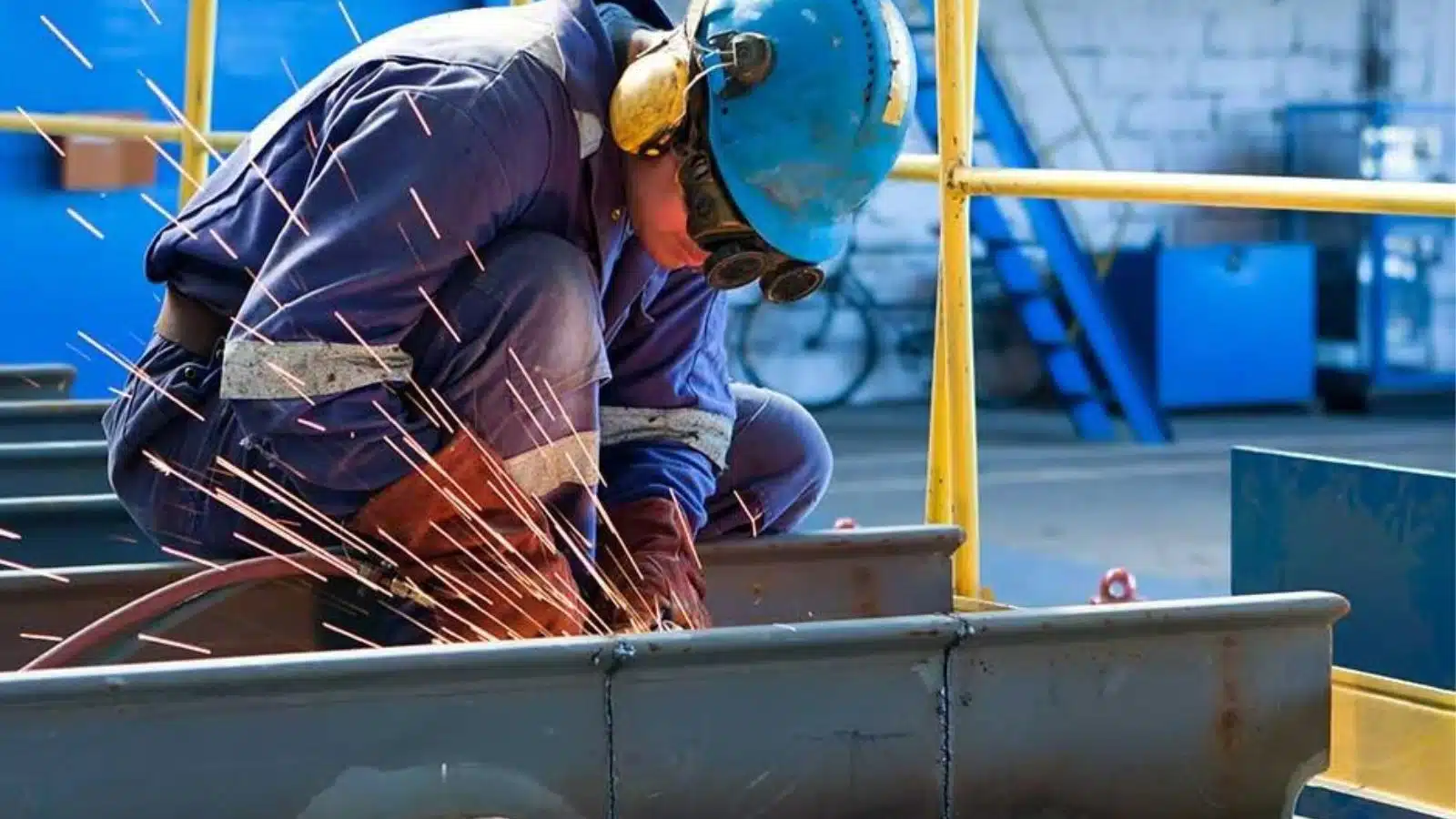
Welding is a fundamental process in manufacturing, and its automation has dramatically increased quality, speed, and safety. Welding automation is a cornerstone of advanced fabrication solutions, ensuring consistency and strength in joined components.
Robotic welding systems integrate advanced sensors, vision systems, and precise robotic arms to perform various welding processes, including MIG (Gas Metal Arc Welding), TIG (Gas Tungsten Arc Welding), and laser welding. These systems offer unparalleled repeatability, faster cycle times, and superior weld quality compared to manual methods. They are particularly effective for high-volume production and for welding complex assemblies. We’ve seen a client significantly increase their structural component output by 25% after implementing welding automation with robotic MIG systems.
Friction Stir Welding (FSW) is a solid-state joining process that creates high-quality, low-distortion welds, especially useful for aluminum alloys. Hybrid welding processes combine two welding methods, such as laser-arc welding, to achieve the benefits of both—for example, the deep penetration of a laser with the gap-bridging capabilities of an arc weld. These advanced fabrication solutions offer specialized advantages for precision manufacturing in demanding applications.
Integrated quality control and Nondestructive Testing (NDT) are crucial for ensuring the integrity of welded joints. Techniques like ultrasonic testing, X-ray inspection, and eddy current testing can detect internal flaws without damaging the part. Modern welding automation systems often incorporate in-process monitoring to detect deviations in real-time, further enhancing quality assurance and reducing rework. This level of scrutiny is vital for critical components in industries like aerospace and energy.
Sheet metal fabrication, a core metal fabrication technique, has also been revolutionized by advanced fabrication solutions, moving towards greater automation, accuracy, and material efficiency.
Automated press brakes and robotic bending cells offer high repeatability and speed for forming sheet metal parts. These systems can execute complex bending sequences with extreme precision, handling various material thicknesses and dimensions. The integration with CAD/CAM software allows for offline programming, minimizing setup times and maximizing machine utilization. We’ve found that automated bending is critical for achieving the tight tolerances required in precision manufacturing for enclosures and chassis.
CNC punching machines and high-tonnage stamping presses, equipped with advanced tooling, can produce intricate patterns and shapes in sheet metal rapidly and efficiently. Turret punch presses can quickly switch between different tools, enabling versatile fabrication of complex designs without constant tool changes. This technology is vital for mass production of consistent, high-quality sheet metal components, essential for lean manufacturing principles.
Efficient use of raw materials is a significant cost driver in sheet metal fabrication. Advanced nesting software optimizes the layout of parts on a sheet to minimize waste, maximizing material utilization. This production optimization strategy not only reduces material costs but also contributes to more sustainable manufacturing practices. We routinely help clients implement these advanced fabrication solutions to enhance their cost-effectiveness and environmental footprint.
Digital transformation is not merely a buzzword; it is the backbone of all advanced fabrication solutions. It integrates every stage of the product lifecycle, from design and engineering to production and maintenance, creating intelligent, interconnected systems. This digital thread enhances collaboration, decision-making, and overall efficiency, propelling manufacturers towards higher levels of production optimization.
The seamless integration of Computer-Aided Design (CAD), Computer-Aided Manufacturing (CAM), and Computer-Aided Engineering (CAE) is fundamental. CAD allows engineers to create precise 3D models. CAM then translates these designs into machine-readable instructions for manufacturing equipment, such as CNC machining centers or additive manufacturing machines. CAE tools, including simulation and analysis software, predict how a part will perform under various conditions, enabling design optimization before physical production. This integrated workflow ensures design intent is maintained throughout the process, reducing errors and accelerating development cycles for bespoke manufacturing.
Digital twin technology creates a virtual replica of a physical asset, process, or system. This “digital twin” is continuously updated with real-time data from sensors on the physical counterpart, allowing for precise monitoring, analysis, and simulation of performance. In advanced fabrication solutions, a digital twin can model an entire production line, predict equipment failures, optimize maintenance schedules, and simulate the impact of design changes without interrupting actual production. This predictive capability is invaluable for production optimization and proactive problem-solving.
Artificial Intelligence (AI) and Machine Learning (ML) are rapidly transforming how advanced fabrication solutions operate. AI algorithms can analyze vast amounts of production data to identify patterns, predict outcomes, and suggest improvements in real-time. For instance, ML can optimize tool paths in CNC machining for maximum material removal and minimum tool wear, or fine-tune parameters in additive manufacturing to achieve desired material properties. A common technical issue we help businesses fix is inconsistent weld quality, which AI-powered welding automation can significantly mitigate by adapting parameters dynamically. This intelligence leads to continuous production optimization and enhanced quality control.
The sheer volume of data generated by modern manufacturing processes offers immense potential when properly analyzed. Data analytics provides actionable insights into machine performance, material consumption, and product quality. Predictive maintenance, enabled by data analytics, anticipates equipment failures before they occur, allowing for scheduled maintenance rather than reactive repairs, thereby minimizing downtime. Similarly, analyzing quality data can pinpoint root causes of defects, enabling proactive adjustments to the manufacturing process. This data-driven approach is critical for implementing lean manufacturing principles and ensuring consistent precision manufacturing.
The evolution of advanced fabrication solutions is inextricably linked to breakthroughs in advanced materials. Without these innovative materials, many of the complex geometries and high-performance requirements of modern products would be impossible to achieve. We constantly explore and integrate the latest material science discoveries to push the boundaries of what our clients can create.
High-performance alloys, such as superalloys (nickel-based, cobalt-based) and titanium alloys, are engineered to withstand extreme conditions—high temperatures, corrosive environments, and intense mechanical stress. These materials are crucial for industries like aerospace, energy, and medical devices. Their excellent strength-to-weight ratio and durability make them ideal for critical components. However, they are often challenging to process using traditional subtractive manufacturing methods, requiring specialized CNC machining and laser cutting techniques. Additive manufacturing has opened new avenues for fabricating complex components from these alloys, reducing waste and lead times.
Composites, materials made from two or more constituent materials with significantly different physical or chemical properties, offer superior performance characteristics not achievable with single materials. Carbon fiber reinforced polymers (CFRPs) are a prime example, offering exceptional strength and stiffness at a fraction of the weight of metals. Hybrid materials combine the benefits of different material classes, such as metal-matrix composites or functionally graded materials. Advanced fabrication solutions like automated fiber placement or specialized CNC machining are essential for working with these materials, allowing for the creation of incredibly strong, lightweight structures crucial for precision manufacturing in various sectors.
Smart materials possess properties that can be significantly altered in a controlled fashion by external stimuli, such as temperature, light, electric or magnetic fields. Examples include shape memory alloys and piezoelectric materials. Nanomaterials, engineered at the nanoscale, exhibit unique properties due to their incredibly small size. Incorporating these materials into advanced fabrication solutions opens up possibilities for self-healing components, sensors integrated into structures, or materials with tunable properties. While still an emerging field for large-scale fabrication, these materials promise to revolutionize product functionality and create entirely new bespoke manufacturing opportunities in the future.
The decision to invest in advanced fabrication solutions is driven by a clear understanding of the substantial operational benefits they deliver. From enhanced quality to significant cost savings, these technologies provide a compelling return on investment (ROI) that reshapes a company’s competitive standing. At Aska Solution, we guide our clients through a detailed analysis to uncover these benefits and maximize their impact.
One of the most immediate benefits of advanced fabrication solutions is the dramatic improvement in precision manufacturing and overall quality control. Automated processes, coupled with digital oversight, minimize human error and ensure unparalleled repeatability. Technologies like CNC machining, laser cutting, and welding automation can hold tighter tolerances and produce more consistent parts than manual methods. This leads to fewer defects, reduced rework, and a higher quality end product, which is critical for demanding applications. We’ve once worked with a client who struggled with mismatched pneumatic tubing specifications. By upgrading their system architecture to include advanced CNC tube bending, they saw a 20% improvement in operational efficiency and product quality.
Advanced fabrication solutions inherently lead to more efficient material usage. Additive manufacturing, by its nature, only uses the material required to build the part, significantly reducing waste compared to subtractive manufacturing. However, even in subtractive processes, intelligent nesting software for laser cutting and sophisticated tool path optimization in CNC machining drastically minimize scrap. This reduction in waste not only lowers material costs but also aligns with growing demands for sustainable manufacturing practices, making lean manufacturing more achievable.
The speed at which new products can be designed, prototyped, and brought to market is a critical competitive differentiator. Advanced fabrication solutions accelerate every stage. Rapid prototyping with additive manufacturing allows for quick design iterations. Automated processes boost production throughput, and digital integration reduces bottlenecks. This acceleration significantly reduces time-to-market, enabling businesses to respond faster to market demands and gain a first-mover advantage. For many of our enterprise clients, we’ve seen that combining custom fabrication with structural engineering in a rapid prototyping environment cuts their development time by a third.
While initial investment in advanced fabrication solutions can be significant, the long-term cost optimization and ROI are compelling. Reduced material waste, lower labor costs due to industrial automation, increased production efficiency, and fewer quality issues all contribute to a lower overall cost per unit. Furthermore, the ability to create more complex and higher-performing products can unlock new revenue streams and markets. Our team focuses on demonstrating a clear ROI for our clients by modeling these savings and gains.
In today’s consumer-driven world, the demand for customized and personalized products is skyrocketing. Advanced fabrication solutions, especially additive manufacturing and flexible CNC machining setups, excel at bespoke manufacturing without incurring prohibitive costs or lead times. This capability allows manufacturers to produce unique products or low-volume specialized components efficiently, catering to niche markets or individual customer preferences, transforming traditional mass production into mass personalization.
Here’s a comparison highlighting some key operational benefits:
| Operational Aspect | Traditional Fabrication | Advanced Fabrication Solutions |
|---|---|---|
| Precision & Quality | Limited by manual skill, prone to variation. | High, repeatable precision; enhanced quality control with automation. |
| Material Waste | Often high, especially in subtractive methods. | Significantly reduced; optimized usage through smart software/processes. |
| Production Speed | Slower, manual steps, longer cycle times. | Accelerated cycles, higher throughput, faster time-to-market. |
| Cost Efficiency | Higher labor, material waste, rework costs. | Lower cost per unit (long-term), reduced waste, optimized labor. |
| Customization | Challenging, expensive for low volumes. | Easy, efficient for bespoke manufacturing and mass personalization. |
| Complexity | Limited geometric possibilities. | High design freedom, intricate geometries possible. |
While the benefits of advanced fabrication solutions are clear, their adoption is not without hurdles. Successfully integrating these technologies requires careful planning and strategic investment. At Aska Solution, we frequently assist businesses in navigating these challenges, turning potential obstacles into opportunities for growth and production optimization.
The initial capital outlay for advanced fabrication solutions can be substantial. High-end CNC machining centers, additive manufacturing systems, welding automation robots, and laser cutting equipment represent significant investments. Businesses must conduct thorough cost-benefit analyses and explore financing options. We help clients evaluate the true ROI and build a compelling business case, often showing how phased implementation or leasing can mitigate the upfront financial burden.
The advanced nature of these technologies necessitates a highly skilled workforce capable of programming, operating, and maintaining complex machinery. There is often a significant skill gap between existing workforces and the demands of digital fabrication. Addressing this requires investing in comprehensive training programs, upskilling current employees, and attracting new talent with expertise in industrial automation, CAD/CAM, and advanced materials. We emphasize continuous learning and often help structure training modules for our clients.
Many manufacturers operate with established legacy systems that may not be easily compatible with new advanced fabrication solutions. Integrating modern digital fabrication tools, software, and data streams with older ERP or MES systems can be complex and time-consuming. Careful planning, custom middleware development, and a phased integration strategy are essential to ensure a smooth transition and avoid disrupting ongoing operations. Our team tackles these issues on-site, they often find that a modular approach to system integration yields the best results.
Implementing advanced fabrication solutions often requires access to specialized advanced materials, such as specific metal powders for additive manufacturing or unique composite prepregs. This can lead to new supply chain complexities, including sourcing from specialized vendors, managing inventory for less common materials, and ensuring consistent quality and availability. Building robust relationships with new suppliers and diversifying sourcing options are critical to mitigate risks and ensure uninterrupted precision manufacturing.
> “The biggest hurdle isn’t the technology itself, but the organizational shift required to truly leverage its power. It demands a new mindset towards collaboration, learning, and continuous process evolution.” – Dr. Eleanor Vance, Manufacturing Innovation Strategist
The impact of advanced fabrication solutions is most clearly demonstrated through their real-world applications across various industries. These examples showcase how businesses are achieving breakthroughs in design, performance, and efficiency.
The aerospace sector is a prime adopter of advanced fabrication solutions. Additive manufacturing is extensively used to produce lightweight, complex components like turbine blades, brackets, and structural elements. By creating intricate lattice structures and optimizing designs for weight, precision manufacturing of these parts significantly reduces fuel consumption and improves aircraft performance. High-performance alloys like titanium and nickel-based superalloys are fabricated into critical engine and airframe components using CNC machining and laser cutting, pushing the boundaries of what’s possible in flight.
In the medical field, advanced fabrication solutions enable the creation of highly customized and biocompatible devices. Additive manufacturing is revolutionary for producing patient-specific implants (e.g., hip replacements, cranial plates) directly from patient scans, ensuring a perfect fit and faster recovery. CNC machining is used for precision manufacturing of surgical instruments from medical-grade stainless steel and titanium. The ability to create complex internal channels in 3D-printed devices also allows for advanced functionalities like drug delivery or integrated sensors, opening up new frontiers in healthcare.
The automotive industry leverages advanced fabrication solutions for rapid prototyping of new vehicle designs, reducing development cycles dramatically. Additive manufacturing is used for concept models, functional prototypes, and even low-volume production of specialized parts for high-performance vehicles. CNC machining produces precision engine components, transmission parts, and molds for various plastic and metal components. Welding automation ensures consistent, high-strength joins for chassis and body structures, contributing to vehicle safety and structural integrity.
The energy sector, particularly oil and gas, nuclear, and renewable energy, relies on advanced fabrication solutions to produce durable components capable of operating in extreme conditions. Precision manufacturing of parts from advanced materials like corrosion-resistant alloys for offshore platforms or heat-resistant components for power generation turbines is critical. Laser cutting and CNC machining are used for complex geometries in energy systems, while specialized welding automation ensures the integrity of critical pressure vessels and pipelines. These advanced fabrication solutions are essential for reliability and safety in demanding environments.
The landscape of advanced fabrication solutions is continuously evolving, with exciting new trends emerging that promise to further revolutionize manufacturing in the coming years. At Aska Solution, we keep a keen eye on these developments to ensure our clients remain at the forefront of innovation and production optimization.
The future of advanced fabrication solutions increasingly points towards hybrid manufacturing systems that combine additive manufacturing and subtractive manufacturing in a single machine. For example, a single platform might perform metal deposition (additive) to build a complex shape, and then use CNC machining (subtractive) to achieve high-precision finishes and tolerances on critical surfaces. This integration offers the best of both worlds: the design freedom of additive and the precision of subtractive, leading to incredibly efficient bespoke manufacturing of complex components with superior quality.
Robotics will continue to advance, becoming more intelligent, adaptable, and autonomous. Beyond traditional industrial automation for repetitive tasks, future robots will incorporate advanced AI and machine learning for more complex decision-making, error correction, and even self-optimization. Collaborative robots (cobots) will become even more prevalent, working seamlessly alongside human operators, augmenting human capabilities and improving ergonomics and safety in precision manufacturing environments. These systems will be integral to flexible and dynamic advanced fabrication solutions.
The rise of digital fabrication and advanced fabrication solutions facilitates a shift towards decentralized and localized manufacturing. With 3D printing and advanced CNC machining becoming more accessible and efficient, it’s increasingly viable to produce goods closer to the point of demand, reducing complex global supply chains and transportation costs. This trend enhances supply chain resilience, enables faster response to local market needs, and supports bespoke manufacturing models, aligning with lean manufacturing principles on a global scale.
Sustainability is no longer optional; it’s a core driver for innovation. Future advanced fabrication solutions will place an even greater emphasis on reducing environmental impact. This includes further advancements in material efficiency (less waste from additive manufacturing, optimized nesting for laser cutting), greater adoption of recyclable and biodegradable advanced materials, and energy-efficient processes. The goal is to minimize carbon footprint, conserve resources, and promote a circular economy within manufacturing, ensuring production optimization also encompasses ecological responsibility.
The journey to revolutionize manufacturing with advanced fabrication solutions is dynamic and ongoing, but the path forward is clear. By embracing technologies such as additive manufacturing, advanced subtractive manufacturing, welding automation, and digital fabrication, businesses can unlock unprecedented levels of precision manufacturing, efficiency, and innovation. These advanced fabrication solutions empower companies to overcome the limitations of traditional methods, enhance product quality, accelerate time-to-market, and achieve significant cost optimization. The integration of advanced materials, industrial automation, and intelligent digital tools like AI and data analytics is not just an upgrade; it’s a fundamental transformation that provides a decisive competitive edge.
At Aska Solution, we are dedicated to guiding our clients through this exciting evolution. We understand the complexities of adopting these technologies and are here to provide the expertise and support needed to implement robust, future-proof advanced fabrication solutions. We are confident that by strategically investing in these advancements, your operations will not only meet the demands of today but will also be powerfully positioned to lead the industries of tomorrow.
A1: Additive manufacturing (3D printing) builds objects layer by layer by adding material, allowing for highly complex geometries and minimal waste. Subtractive manufacturing (like CNC machining or laser cutting) removes material from a solid block or sheet to create the desired shape, excelling in precision manufacturing and surface finish. Both are critical advanced fabrication solutions, often used in conjunction.
A2: Industrial automation, through robots and automated systems, contributes by increasing precision, consistency, speed, and safety in manufacturing processes. It minimizes human error, boosts throughput, enables continuous operation, and reduces labor costs, leading to significant production optimization in advanced fabrication solutions like welding automation or automated material handling.
A3: Key advanced materials include high-performance alloys (like titanium and superalloys), composites (such as carbon fiber reinforced polymers), and smart materials. These materials offer superior strength, lightweight properties, durability, and specific functional characteristics, enabling the creation of advanced products that were previously impossible with traditional materials.
A4: Yes, while initial investment can be high, advanced fabrication solutions lead to significant long-term cost optimization. This is achieved through reduced material waste (e.g., in additive manufacturing and optimized laser cutting), lower labor costs due to industrial automation, increased efficiency, faster rapid prototyping, and fewer quality defects, all contributing to a compelling ROI.
A5: Digital fabrication is the backbone of modern advanced fabrication solutions. It integrates CAD/CAM/CAE for design and programming, uses digital twin technology for simulation and monitoring, and employs AI and data analytics for production optimization, predictive maintenance, and quality control. This digital thread creates intelligent, interconnected systems for greater efficiency and innovation.
A6: Advanced fabrication solutions excel in bespoke manufacturing and mass personalization. Technologies like additive manufacturing and flexible CNC machining setups allow for the efficient production of unique, customized products or low-volume specialized components without prohibitive costs or lengthy lead times, directly meeting the growing demand for personalized goods.
Don’t forget to share it
Related Articles
The Best Material Fabrication in Saudi Arabia

The Art of Structural Fabrication in Saudi Arabia

Top Welding Fabrication Company in Saudi Arabia

The Best Steel Fabrication in Saudi Arabia

Top Aluminium Fabrication Company in Saudi Arabia
Top Industrial Steel Fabrication Company in Dammam Saudi Arabia
We have received your inquiry and our team will review your requested items and get back to you as soon as possible.