No products in the cart.

Need help? Call us:
+966 59 204 1946
Shopping cart (0)
Subtotal: 0.00 ر.س
Spend 2,500.00 ر.س to get free shipping
Congratulations! You've got free shipping.
ASKA SOLUTION
Online Industrial Hardware Store
One stop online Industrial Hardware store is your ultimate destination for all your industrial needs in KSA. We offer a comprehensive range of high-quality hardware products, from nuts and bolts to specialized tools.
Save upto 15% discount on
Tools & Hardware for FabricationPlumbingSecurityPaintingHVACElectricalPlumbingElectronicsMechanical Operations
Aska Solution is the most trusted of all fasteners suppliers in Saudi Arabia, delivering critical components for the Kingdom’s demanding industries. We provide the certified stud bolt and hardware essential for operational safety and integrity. Our inventory includes premier API 20E Fasteners, ensuring compliance for the most critical applications. We are distinct from fasteners manufacturers in saudi arabia; we focus on expert supply, quality assurance, and logistics. Therefore, leading firms choose us over other fasteners suppliers in dammam
The Role of Fasteners in Saudi Arabia's Modern Industry
This guide provides an authoritative overview of industrial fasteners, exploring their foundational role in modern industry with a specific focus on applications within Saudi Arabia. A fastener is a hardware device that mechanically joins objects, but its role extends far beyond this simple definition.In industrial settings, a single fastener failure is never a minor inconvenience. It can consequently lead to catastrophic equipment damage, costly downtime, and serious safety hazards. For instance, a leaking flange on a high-pressure pipeline due to incorrect bolting can halt production, cause significant financial loss, and pose a major environmental risk. Therefore, understanding the science of fastener selection is a cornerstone of sound engineering for anyone sourcing fasteners in Saudi Arabia.Aska Solution provides fasteners that meet the highest standards of quality. We specifically select our inventory of fasteners in Saudi Arabia for the operational and environmental challenges of the region. Our commitment is to provide components that ensure every connection is secure and every project is built to last.The Anatomy of a Fastener: Understanding the Terminology
To select the right fastener, you must first speak the language. Understanding the basic anatomy of a fastener is key to interpreting specifications, performing quality checks, and ensuring you procure the correct part. This foundational knowledge prevents costly errors and project delays for our clients in Riyadh and across the Kingdom.Head Styles and Identification Markings
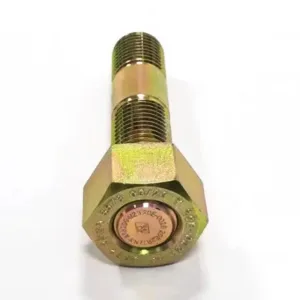
The head provides a bearing surface and a method for turning the fastener. Common styles we supply include Hex Head and Socket Cap Head. Critically, the head is also stamped with vital markings that identify the manufacturer and material grade. For example, six radial lines indicate an SAE Grade 8 bolt, while "B7" identifies an ASTM A193 stud bolt. Ultimately, understanding these markings is the first step in quality verification for any fasteners in Saudi Arabia.Thread Anatomy and Classes
Threads are the helical ridges on a fastener's shank that convert rotational motion into powerful clamping force. Beyond basic terms like Crest and Pitch, threads have classes of fit that define the tolerance between a bolt and a nut.- Class 2A/2B: This is the most common industrial fit, offering a balance of performance and manufacturability.
- Class 3A/3B: This class provides a tighter tolerance with no allowance, used for high-precision or safety-critical applications where a snug fit is paramount.
The Importance of Thread Engagement & Grip Length
Effective joint design requires understanding two key concepts. Thread Engagement is the length over which the male and female threads are in contact. A general rule for steel is an engagement length of 1 to 1.5 times the bolt's nominal diameter to ensure the bolt can be tensioned to its full capacity without stripping the threads.Furthermore, Grip Length is the length of the unthreaded portion of the bolt shank. A longer grip length provides better resistance to shear forces and increases the bolt's overall elasticity, which is beneficial for joints under cyclic or dynamic loads.Strength of Fasteners: Understanding Mechanical Properties & Grades
A fastener's performance is defined by its mechanical properties. These values appear on its Mill Test Certificate (MTC). Indeed, they are a guarantee of the fastener's ability to handle stress. As expert fasteners suppliers in dammam, we ensure all properties are verified.Load Types in Bolted Joints (Tension, Shear, Bending)
Fasteners are specifically designed to resist powerful forces.- A tensile load is a straight pulling force along the fastener's axis.
- A shear load, in contrast, is a slicing force perpendicular to the axis.
- Most bolted joints are designed so that the clamping force (preload) creates friction between the joint surfaces to resist shear.
- Bending loads can also occur if flanges are not parallel, creating additional stress.
Defining Key Properties: Tensile, Yield, and Proof Strength
Tensile Strength is the maximum pulling stress before fracture. Yield Strength is the stress at which permanent deformation begins. For engineers, yield strength is often the more critical value. A permanently stretched bolt has failed its primary function. Additionally, Proof Strength is the maximum tensile load a fastener can withstand without permanent elongation. It is typically 90-93% of yield strength and is a key quality control measure.The Stress-Strain Curve Explained
The relationship between these properties is visualized on a stress-strain curve. When a bolt is tensioned, it first stretches elastically, meaning it will return to its original length if the load is removed. If loading continues past the yield point, the bolt enters the plastic region, where deformation is permanent. The peak of the curve represents the ultimate tensile strength.The Importance of Hardness, Ductility, and Toughness
Hardness measures a material's resistance to surface indentation and often relates directly to its tensile strength. Ductility, conversely, is a material's ability to deform before fracturing, providing a visual warning of overload. Toughness is the ability to absorb energy under sudden impact, measured by a Charpy impact test. This property is critical for low-temperature service.Understanding Fastener Grades (e.g., Grade 8.8, A193 B7)
Fastener grades are a shorthand for their mechanical properties. For industrial process applications, ASTM standards are paramount. An ASTM A193 B7 stud bolt has specific chemical and mechanical properties that make it suitable for high-temperature, high-pressure service. This level of specificity is something only the best fasteners suppliers in saudi arabia can provide guidance on. A reliable stud bolt must meet these grade requirements without fail.Safety Factors in Fastener Design
Applying a safety factor is a fundamental engineering practice. It ensures a bolted joint can withstand unforeseen loads and variables. Moreover, it provides a crucial buffer against failure. This is a topic all top fasteners suppliers in dammam should be able to explain with authority.What is a Safety Factor?
A safety factor is a ratio. It compares the ultimate strength of a material to the maximum expected stress in an application. For instance, if a bolt has an ultimate tensile strength of 1000 MPa and the expected service load is 250 MPa, the safety factor is 4. This means the fastener is four times stronger than the expected load.Engineers often calculate the safety factor based on yield strength rather than tensile strength. This is because permanent deformation (yielding) often constitutes a failure of the joint, even if the bolt hasn't broken. The formula is simply:Safety Factor = Material Strength (Yield or Tensile) / Maximum Expected Service StressFactors Influencing the Required Safety Factor
The required safety factor is not a single number; it depends on many variables that must be carefully evaluated by the design engineer.- Load Type and Certainty The nature of the load is the primary driver.
- Static Loads: These are constant and predictable, requiring the lowest safety factors. A pipe rack in a stable indoor environment is a good example.
- Dynamic & Cyclic Loads: Loads that change over time, like those on vibrating machinery (pumps, compressors), cause fatigue and require significantly higher safety factors.
- Shock Loads: Sudden, high-impact loads, such as those from a water hammer event in a pipeline, require the highest safety factors to prevent immediate brittle fracture.
- Environmental Conditions The operating environment in Saudi Arabia can be extreme and must be considered.
- Temperature: High temperatures, common in Riyadh, can reduce a material's strength over time (creep). Low temperatures can cause certain steels to become brittle.
- Corrosion: The humid, chloride-rich air in coastal cities like Jeddah and Dammam can cause corrosion, which reduces the effective cross-sectional area of a fastener and weakens it.
- Consequences of Failure This is the most critical consideration. Engineers categorize joints based on the risk associated with their failure.
- Non-Critical Joints: The failure of a fastener on a non-structural panel would be an inconvenience but not a disaster.
- Critical Joints: The failure of a stud bolt on a high-pressure flange could lead to a major safety incident, environmental damage, and significant financial loss. These joints demand the highest safety factors.
- Confidence in Data The certainty of the calculations also plays a role. If the service loads are well-understood and the material properties are certified and traceable (as with our API 20E Fasteners), a lower safety factor may be acceptable. If there is uncertainty, a higher safety factor is used to compensate.
Typical Safety Factors for Industrial Applications
While the final decision rests with the design engineer, certain typical safety factors are used as a starting point in the industry. Aska Solution can provide guidance on selecting components that meet your design's safety factor requirements.| Application Example | Load Type | Typical Safety Factor (vs. Yield) | Justification |
|---|---|---|---|
| Non-critical static structure | Static | 2 - 3 | Loads are predictable and consequences of failure are low. |
| Pressure vessel flange bolting | Static / High Consequence | 4 - 5 | High internal pressure; failure is a major safety risk. |
| Vibrating machinery base | Dynamic / Cyclic | 5 - 8 | Must resist fatigue failure from constant vibration. |
| Overhead lifting equipment | Shock / Critical Safety | 8 - 12+ | Must withstand sudden impact loads where failure is catastrophic. |
Types of Industrial Fasteners We Supply
Aska Solution's inventory covers all major categories of industrial fasteners in Saudi Arabia. Our range is engineered to provide reliable solutions for every application, from high-pressure piping to heavy structural steel. Consequently, we have the correct component for your specific needs. We are a premier choice among fasteners suppliers in saudi arabia, offering a wider range than many fasteners manufacturers in saudi arabia.Stud Bolts: The Standard for High-Pressure Flange Connections
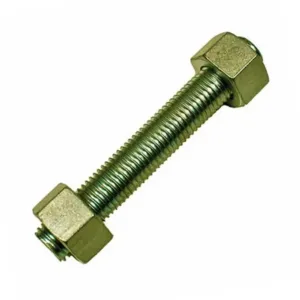
For critical flange connections, the stud bolt is the superior choice, especially in the oil and gas sector. As the leading stud bolts supplier in KSA, we stock all primary types. A stud bolt allows for more accurate torque application and provides even clamping force on gaskets. This makes every stud bolt we supply a critical component for leak-free operations.API 20E ASTM-A193A BSL-2 Full Threaded Stud Bolt
This is the workhorse for flange-to-flange connections. Its key characteristics include:- Full-Length Threading: Provides maximum versatility and ensures complete thread engagement with nuts on both sides of a flange pair.
- High-Integrity Clamping: When used with two heavy hex nuts, it creates a powerful, evenly distributed clamping force, which is essential for compressing gaskets and creating a reliable seal.
- API 20E BSL-2 Compliance: This certification guarantees a rigorous manufacturing and testing process, making it the standard choice for critical HPHT applications in wellheads, BOPs, and pipelines.
API 20E ASTM-A193A BSL-2 Tap End Stud Bolt
This specialized stud bolt is engineered for applications where through-bolting is not possible. Its design is ideal for mounting equipment.- Asymmetrical Design: Features a short "tap end" designed to be screwed into a threaded hole in heavy equipment (like a valve body or pump casing).
- Single-Nut Application: The longer "nut end" secures an adjoining flange with a single nut, offering a secure and efficient fastening solution.
- Enhanced Reliability: This design is critical for ensuring operational reliability in wellheads, manifolds, and risers where one side of the connection is a solid body.
General & Specialized Bolts / Cap Screws
We supply a full range of headed bolts for machinery and structural applications. Our inventory includes a wide variety of types to suit any engineering requirement.- Hex Head & Heavy Hex Structural Bolts These are the most common type of headed bolt, used for a vast range of applications. Heavy Hex Structural Bolts (e.g., ASTM A325, A490) feature a larger head for a greater bearing surface, making them ideal for steel-to-steel structural connections in construction projects.
- Socket Head Cap Screws These fasteners have a cylindrical head with a hexagonal recess (socket) for tightening with an Allen key. They are ideal for machinery and equipment where a flush finish is required or where there is not enough clearance for a standard wrench.
- U-Bolts and Eye Bolts We also supply specialized fasteners for specific tasks. U-Bolts are used to support and secure pipework, while certified Eye Bolts provide safe and reliable lifting points for heavy equipment.
Nuts, Washers, and Mating Components
A fastener is only as strong as its system. Therefore, we provide correctly matched components for every stud bolt and bolt. Our stock includes a full range of nuts and washers to complete your bolted joint assembly.- Heavy Hex Nuts (e.g., ASTM A194 2H) These are the standard nuts for use with high-strength bolts and studs. Their larger width and thickness provide a greater bearing surface and resistance to stripping under high torque. The ASTM A194 Grade 2H nut is the required partner for an A193 B7 stud bolt.
- Lock Nuts For applications with high vibration, lock nuts are essential to prevent loosening. We supply various types, including nylon-insert lock nuts (Nyloc) and all-metal prevailing torque lock nuts.
- (H4) Hardened Washers (e.g., ASTM F436) Hardened flat washers are critical components. They distribute the load from the nut over a wider area, prevent damage to the flange surface, and provide a smooth, hard surface to ensure accurate torque readings.
Anchoring Fasteners for Structural Foundations
For construction and plant infrastructure, we supply robust anchoring solutions. This includes Mechanical Anchors like Wedge Anchors. It also includes high-strength Chemical Anchors. These are essential for securing equipment to concrete foundations in projects across Saudi Arabia.Fastener Materials for the Saudi Arabian Environment
Choosing the correct material dictates fastener performance, especially in the demanding climate of Saudi Arabia. Aska Solution has more expertise than typical fasteners suppliers in dammam.High-Temperature Service (Carbon & Alloy Steels)
For high-temperature applications in refineries and power plants, specific alloy steels are required. The industry standard is ASTM A193 B7. This chromium-molybdenum steel is quenched and tempered to achieve its high strength. Its chemical composition provides excellent resistance to creep and stress relaxation at elevated temperatures, ensuring the bolted joint maintains its clamping force over long operational periods. We also supply other high-temperature grades like B16 for even more demanding service. This is why we stock a full range of B7 stud bolt products.Low-Temperature Service (Cryogenic Steels)
For low-temperature applications like LNG facilities, materials must remain tough and not become brittle. The primary concern is the Ductile-to-Brittle Transition Temperature (DBTT), below which steel can fracture easily upon impact. ASTM A320 L7 is the standard choice. It is a quenched and tempered alloy steel that undergoes a mandatory Charpy V-notch impact test at -101°C (-150°F) to guarantee its toughness and prevent brittle fracture at sub-zero temperatures.Corrosive Environments (Stainless Steels & Exotic Alloys)
In Saudi Arabia's coastal regions like Jubail, corrosion is a major concern.- Austenitic Stainless Steels (304 & 316) SS316 (ASTM A193 B8M) contains molybdenum, which gives it superior resistance to chloride pitting and crevice corrosion compared to SS304 (B8). It is the minimum requirement for coastal, marine, and many chemical processing applications.
- Duplex & Super Duplex Stainless Steels These advanced alloys have a mixed austenitic-ferritic microstructure. This gives them a higher strength than standard stainless steels and excellent resistance to Stress Corrosion Cracking (SCC), a failure mode common in hot chloride environments. They are often specified for critical subsea and desalination plant equipment.
- Nickel Alloys (Inconel, Monel) For the most extreme environments, we supply exotic nickel alloys. Inconel is used for extreme high-temperature and corrosive applications. Monel offers outstanding resistance to seawater and hydrofluoric acid. These materials are often specified for specialized equipment, including API 20E Fasteners.
Fastener Comparison: Making the Right Choice
Making an informed decision is critical, especially when selecting fasteners in Saudi Arabia. Therefore, we have prepared these tables to compare common fastener options for local applications.Comparison Table: ASTM A193 B7 vs. Grade B8M (SS316) Studs
This table helps you decide between strength and corrosion resistance for your stud bolt.| Feature | ASTM A193 B7 | ASTM A193 B8M (SS316) | Recommendation |
|---|---|---|---|
| Strength | Very High | High | B7 is stronger at most temperatures. |
| Corrosion Resistance | Poor (Requires Coating) | Excellent | B8M is for corrosive or coastal environments. |
| High-Temp Limit | ~450°C | ~425°C | B7 is generally preferred for high heat. |
| Cost | Lower | Higher | B7 offers a lower initial cost. |
| Application | Refineries, Power Plants | Marine, Chemical, Desalination | Choose based on environment, not just strength. |
Comparison Table: Stud Bolts vs. Hex Bolts for Flanges
This table clarifies the best choice for critical flange connections.| Feature | Stud Bolt | Hex Head Bolt | Recommendation |
|---|---|---|---|
| Torque Accuracy | High | Moderate | A stud bolt allows for more accurate preload. |
| Stress Distribution | Even | Less Even | The stud stretches evenly along its axis. |
| Gasket Sealing | Superior | Good | Even clamping from a stud bolt is better for gaskets. |
| Installation | Requires access to both sides | Can be installed from one side | Choose based on joint access. |
| Application | High-Pressure Flanges | General Structural | Use studs for all critical pipeline flanges. |
Comparison Table: Hot-Dip Galvanized vs. PTFE Coated Fasteners
This table compares two popular coating options for fasteners in Saudi Arabia.| Feature | Hot-Dip Galvanized (HDG) | PTFE (Xylan®) Coated | Recommendation |
|---|---|---|---|
| Protection | Sacrificial (Zinc) | Barrier (Polymer) | HDG is for general outdoor use; PTFE for chemicals. |
| Thickness | Thick, can affect threads | Thin, uniform | PTFE offers a cleaner fit. |
| Friction | High | Very Low (Anti-Galling) | PTFE is excellent for preventing thread seizure. |
| Chemical Resistance | Moderate | Excellent | PTFE is the choice for corrosive plant environments. |
| Reusability | Single Use | Allows for easier breakout | PTFE coating often aids in disassembly. |
Protective Coatings & Surface Treatments
Coatings add a critical layer of defense, especially for carbon and alloy steel fasteners. We are one of the few fasteners suppliers in saudi arabia with expertise in advanced coatings.Sacrificial Coatings (Hot-Dip Galvanizing, Zinc Plating)
These coatings, primarily zinc, corrode "sacrificially." They protect the steel substrate underneath. Hot-Dip Galvanizing (HDG) provides a thick, robust layer. Consequently, it is ideal for long-term outdoor structural protection in humid locations like Dammam.Barrier & Low-Friction Coatings (PTFE / Xylan®)
These coatings create an inert barrier against chemicals. PTFE coatings are common in the oil and gas industry. They provide excellent corrosion resistance. Furthermore, they offer a low-friction surface that prevents thread galling. This makes them ideal for a reusable stud bolt.Passivation of Stainless Steel
This is not a coating. It is a chemical treatment. It removes free iron from the surface of stainless steel. As a result, this process enhances its natural corrosion resistance. Many fasteners manufacturers in saudi arabia do not offer this as a standard service, but we can arrange it.A Deep Dive into Fastener Standards and Certifications
Compliance with standards is non-negotiable for industrial fasteners in Saudi Arabia. Aska Solution guarantees fasteners that meet the world's most stringent specifications. This includes providing critical API 20E Fasteners. We are among the top fasteners suppliers in dammam.Dimensional & Thread Standards (ASME, ISO)
Dimensional standards ensure a proper fit and interchangeability.- ASME B18.2.1: This standard governs the dimensions for common bolts and screws.
- ASME B18.2.2: This standard covers the dimensions for nuts.
- Thread Standards (UNC, UNF, 8UN): These define the thread profile. The 8UN series is mandatory for many high-pressure flanges in oil and gas service.
Material & Manufacturing Standards (ASTM, NACE, API)
These standards define the quality and performance of the fastener itself.- ASTM (American Society for Testing and Materials): Defines the chemical and mechanical properties of materials.
- NACE MR0175: The global standard for materials used in sour gas (H₂S) environments.
- API 20E: This specification is for critical-service bolting. It requires a very strict quality program. We are a leading supplier of API 20E Fasteners, and we have deep expertise in the different Bolting Specification Levels (BSL-1, 2, and 3).
The Importance of Mill Test Certificates (MTC 3.1) and Lot Traceability
An MTC is a quality assurance document issued by the material manufacturer. It certifies the material's chemical and mechanical properties. Furthermore, it provides full traceability via a unique heat number. Aska Solution ensures MTCs are available for all critical fasteners in Saudi Arabia.How to Choose the Right Fastener: A Practical Guide
This guide will help you make an informed decision. Following these steps ensures you select the correct fastener. Aska Solution, unlike some fasteners suppliers in saudi arabia, provides full technical support.Step 1: Define the Application and Environment
First, clearly define the service conditions. Consider the temperature, pressure, and media. Note any corrosive elements like H₂S or chlorides. Is the application in Riyadh's dry heat or Jeddah's humidity?Step 2: Determine Load Requirements and Strength Grade
Next, determine the required strength. You must calculate the tensile and shear loads. Then, select a material grade that exceeds these loads. Always remember to apply an appropriate safety factor.Step 3: Select the Appropriate Material and Coating
Now, choose a material based on your environment. Use our comparison tables for guidance. A stud bolt for offshore use needs a different material than one for a desert pipeline.Step 4: Specify the Correct Size, Thread, and Standards
Finally, specify all physical and compliance details. This includes diameter, length, and thread series. Also, specify all required standards, such as the need for API 20E Fasteners.Fastener Selection Checklist
- Application & Location
- Temperature & Pressure
- Load Requirements
- Required Standards (ASTM, API, etc.)
- Material & Grade
- Coating Requirements
- Size & Dimensions
- Nut & Washer Type
Applications of Fasteners in Saudi Arabian Industries
Our fasteners are used across all major industrial sectors in the Kingdom. We are a key partner to many firms. We are not just one of the fasteners suppliers in dammam; we are a Kingdom-wide solutions provider.Oil & Gas (Upstream & Downstream)
The oil and gas industry is the largest user of high-strength fasteners. It primarily uses ASTM A193 B7 and B8M stud bolts. NACE MR0175 compliance and the availability of API 20E Fasteners are critical here.Petrochemical & Refining
Petrochemical plants require fasteners with high chemical resistance. PTFE-coated fasteners are common. So are stainless steel and exotic alloys. This sector relies on quality fasteners suppliers in saudi arabia.Construction & Infrastructure (Vision 2030 Projects)
Saudi Arabia's Vision 2030 projects require vast quantities of fasteners in Saudi Arabia. These include structural bolts and concrete anchors. Hot-dip galvanized coatings are essential for longevity.Power Generation & Water Desalination
These facilities heavily use stainless steel fasteners. Duplex stainless steel is also common. This is to combat corrosion in high-temperature and coastal environments. The right stud bolt is critical for plant reliability.Precautions and Best Practices for Fasteners
Proper handling and installation are critical for joint integrity. Aska Solution provides this guidance. It ensures you get the best performance from our products. We offer more support than other fasteners suppliers in dammam.Pre-Installation and Inspection Precautions
First, always inspect fasteners upon receipt. Check for any shipping damage. Confirm the head markings match the MTC. Also, ensure threads are clean and free of defects. This is a critical first step.Installation Best Practices (Lubrication, Torqueing, Tensioning)
Next, proper installation is key. Always use a calibrated torque wrench. You must apply the correct lubricant to the threads and nut face. This ensures the torque translates into the required preload. For critical joints, consider hydraulic tensioning. This is a topic we have deep expertise in. A quality stud bolt deserves a quality installation.Storage and Handling Precautions
In addition, store fasteners correctly. Keep them in a dry, clean environment. Keep them in their original packaging. This prevents damage, corrosion, or mixing of different grades. Proper inventory management is key.Common Failure Modes to Avoid (Galling, Embrittlement, Corrosion)
Finally, understanding failure modes helps prevent them. Thread galling often occurs with stainless steel. Hydrogen embrittlement can affect high-strength steels. Corrosion is a constant threat. Partnering with expert fasteners suppliers in saudi arabia like Aska Solution helps mitigate these risks. We are distinct from fasteners manufacturers in saudi arabia in our application support.Our Kingdom-Wide Service and Supply Network
Aska Solution is strategically positioned to serve the entire Kingdom of Saudi Arabia. We are more than just a name; we are a logistics and supply chain partner. Our network ensures that you get the right fasteners in Saudi Arabia, on time, every time.Our Main Hubs: Dammam and Riyadh
Our primary stocking facilities are located in the industrial heartlands of Dammam and Riyadh. This allows us to provide rapid delivery to the Eastern Province and the Central Region. Our status as leading fasteners suppliers in dammam is built on this local presence.Serving All Major Industrial Cities
Our supply network extends to all major industrial zones. We provide regular deliveries to:- Jubail and Yanbu for the petrochemical sector.
- Jeddah and the Western Province for construction and logistics projects.
- Khobar and the surrounding metropolitan area.
- Remote project sites across the Kingdom.
Why a Local Supplier Matters
Choosing a local supplier like Aska Solution means faster response times and a deeper understanding of regional requirements. We are on the ground, ready to support your project's needs. We are the trusted local choice for fasteners in Saudi Arabia.Why Choose Aska Solution for Fasteners in Saudi Arabia
Choosing a supplier is as important as choosing the fastener. Aska Solution stands apart from other fasteners suppliers in saudi arabia. We also offer more than typical fasteners manufacturers in saudi arabia.Our Expertise in Local & International Standards
We have deep expertise in all relevant standards. This includes ASTM, ASME, and API. Furthermore, we understand the specific requirements of Saudi Aramco and SABIC. This local knowledge is invaluable. We are the top choice among fasteners suppliers in dammam.Our Commitment to Quality Assurance and Certified Materials
We are committed to quality. Our process goes beyond just supplying parts. We provide full documentation, including MTCs. We also offer verification services like PMI. We ensure every stud bolt we sell meets or exceeds specifications.Fastener Frequently Asked Questions (FAQ)
- What is the difference between Grade 8 bolts and ASTM A193 B7 fasteners?
Grade 8 bolts are for general machinery. ASTM A193 B7 fasteners are specifically for high-temperature, high-pressure service. This includes the B7 stud bolt.
- Why is an ASTM F436 hardened washer required with a B7 stud?
A hardened washer prevents damage to the flange. It also ensures even load distribution. This is critical for achieving the correct preload.
- Can I substitute a B7 stud with stainless steel?
You must not do this without careful engineering review. Their strength and temperature characteristics are very different. An expert from our team can help.
- What are API 20E Fasteners?
API 20E Fasteners are critical-service fasteners. They are manufactured under a stringent quality system. They offer the highest level of traceability and testing.
- How do I get an accurate quote?
Please provide the fastener type and grade. Also include the diameter, length, coating, and quantity. Our team in Dammam will respond promptly.
Conclusion: Your Partner in Engineering Excellence and Safety
In conclusion, selecting the right industrial fastener is a critical engineering decision that directly impacts the safety, reliability, and lifespan of your most important assets in Saudi Arabia. This guide has equipped you with the necessary technical knowledge to make informed choices.Choosing Aska Solution as your partner provides you with:- Unmatched Technical Expertise: We possess a deep understanding of the complex interplay between materials, international standards like ASTM and API 20E Fasteners, and the specific application challenges found within the Kingdom. We ensure you get the right advice, not just a part number.
- An Unwavering Commitment to Quality: We provide fully traceable, standards-compliant fasteners in Saudi Arabia, complete with Mill Test Certificates (MTCs). We believe there is no compromise on the safety and integrity of your operations.
- Comprehensive Local Inventory: Our extensive stock of stud bolts, nuts, washers, and specialized fasteners in Saudi Arabia in our Dammam and Riyadh hubs means faster delivery and less downtime for your projects.
- A True Solutions Partner: We go beyond just supplying parts. We partner with you to solve challenges, offering expert technical support, quality assurance verification, and logistical excellence across the Kingdom. We are not just another name among fasteners manufacturers in saudi arabia; we are your dedicated supply chain expert.
Product Status
Filter by brand
Sorry, we couldn't find what you're looking for
This website uses cookies to improve your experience.
By using this website you agree to our Privacy Policy.
By using this website you agree to our Privacy Policy.
Ok, I am ready
