No products in the cart.

Fabrication Solution
The Best Material Fabrication in Saudi Arabia
The Best Material Fabrication in Saudi Arabia: The fabricators of the material need to be...

+966 59 204 1946
No products in the cart.
Welcome to the forefront of manufacturing innovation, where the power of Advanced Fabrication Solutions is transforming the landscape of industrial and commercial operations. In today’s competitive market, simply producing goods is no longer enough. Businesses are constantly seeking ways to cut costs, enhance product quality, and accelerate their time to market, all while navigating complex supply chains and evolving customer demands. This is where strategic investment in advanced fabrication techniques becomes not just an option, but a necessity for sustainable growth and unparalleled success.
The manufacturing sector is in the midst of a profound paradigm shift, moving away from traditional, often labor-intensive methods towards highly automated, data-driven processes. This evolution is fueled by technological advancements that enable greater precision, efficiency, and flexibility than ever before. From initial design to final assembly, every stage of production is being re-evaluated through the lens of innovation, prompting a widespread adoption of Advanced Fabrication Solutions. This shift is particularly evident in industries demanding high precision and tight tolerances, where even marginal improvements can yield significant competitive advantages. We’ve observed this trend across numerous sectors, from automotive to aerospace, where the push for lighter, stronger, and more complex components is relentless.
This transformation is not merely about adopting new tools; it’s about fundamentally rethinking how products are conceived, engineered, and brought to life. It involves a holistic approach to manufacturing that integrates cutting-edge software with sophisticated machinery. Embracing these advanced methodologies is crucial for companies aiming to stay relevant and dominant in their respective markets, providing them with the agility to respond swiftly to market changes and consumer preferences. For many of our contracting clients, we’ve observed that a strategic move towards these solutions has not only streamlined their operations but also opened new avenues for product development.
The direct impact of Advanced Fabrication Solutions on a company’s bottom line is undeniable. By leveraging these technologies, businesses can significantly reduce material waste, optimize energy consumption, and minimize the need for extensive rework. These efficiencies translate into substantial cost savings that directly boost profitability. Furthermore, the ability to produce components with higher accuracy and consistency leads to superior product quality, which in turn enhances customer satisfaction and strengthens brand reputation.
Beyond cost reduction and quality improvement, these solutions enable faster production cycles, allowing companies to respond more quickly to market opportunities and deliver products with unprecedented speed. This agility is a key differentiator in an era where speed to market can make or break a product’s success. Moreover, investing in advanced fabrication often leads to a safer working environment, as dangerous or repetitive tasks are increasingly handled by automated systems. We consistently guide our clients towards these investments because the return goes far beyond immediate financial gains, fostering long-term resilience and innovation.
The integration of industrial automation and robotics represents a cornerstone of modern Advanced Fabrication Solutions. These technologies are fundamentally changing how manufacturing processes are executed, bringing unparalleled levels of precision, speed, and consistency to production lines. By automating repetitive and physically demanding tasks, companies can not only enhance productivity but also significantly improve the safety of their workforce. We advocate for a phased approach to implementing these systems, focusing on areas where immediate impact can be realized.
Robotics, in particular, offers a degree of repeatability that human labor simply cannot match, ensuring that every component produced adheres to the exact specifications. This is critical for achieving the kind of precision engineering required in high-stakes industries such as medical devices or aerospace. Our multi-disciplinary operational capabilities mean we often advise clients on selecting and integrating the right robotic solutions, from collaborative robots (cobots) for assembly tasks to large articulated robots for heavy material handling.
One of the most immediate benefits of adopting automation and robotics in fabrication is the significant reduction in reliance on manual labor for routine or dangerous tasks. This frees up human workers to focus on more complex problem-solving, quality assurance, and creative endeavors that require cognitive input. By shifting repetitive actions to machines, businesses can mitigate the risks associated with human fatigue and distraction, leading to a safer workplace.
Furthermore, automating processes inherently minimizes the potential for human error. Tasks like cutting, drilling, and assembly can be programmed to execute with extreme accuracy, virtually eliminating inconsistencies that might arise from manual operation. This consistency is vital for maintaining high product standards and reducing material waste associated with rejects. We’ve seen firsthand how this transition can dramatically improve operational efficiency across a client’s entire manufacturing floor.
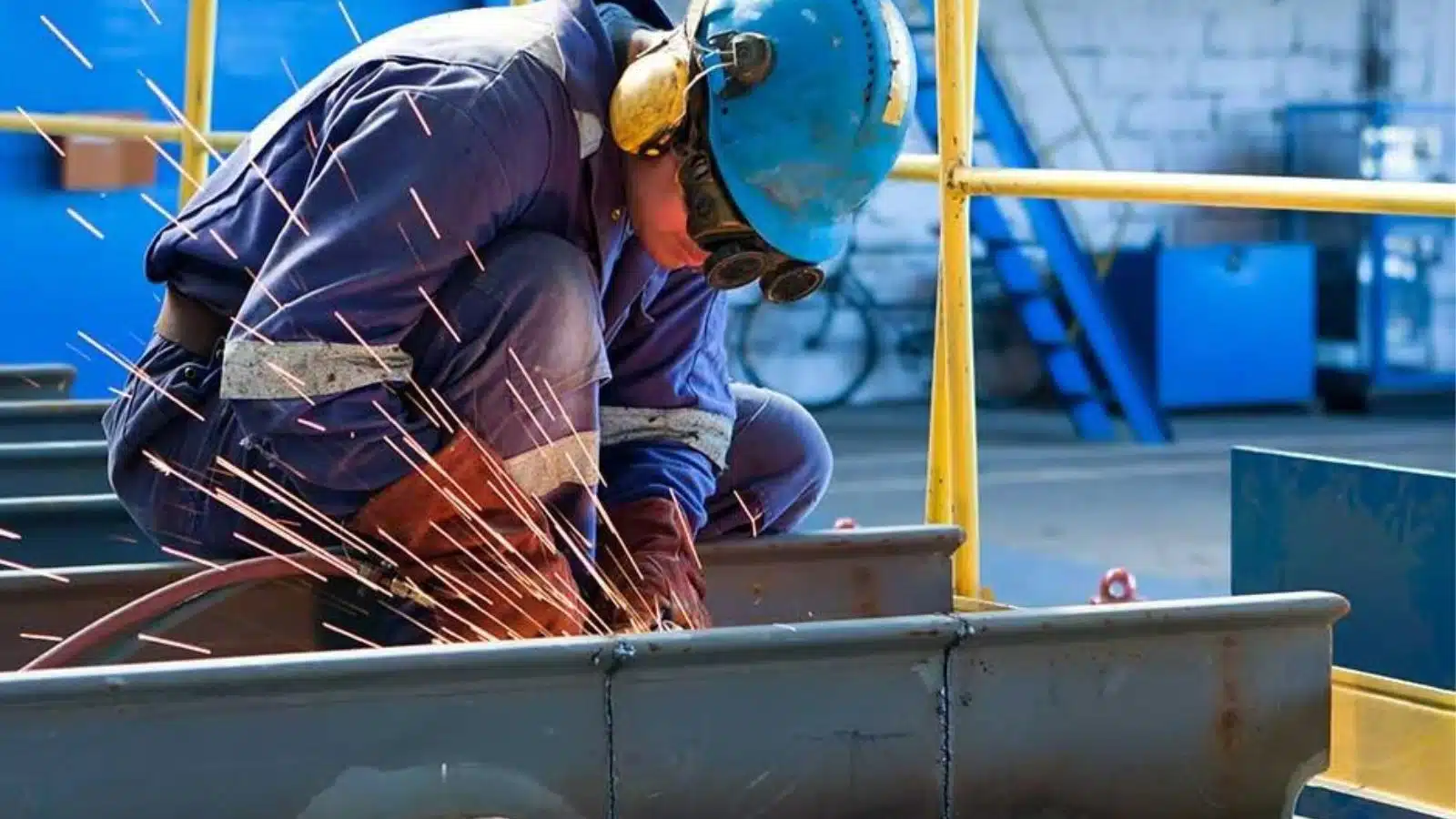
[IMAGE: Robotic arms precisely welding components on an assembly line, sparks flying from the contact points, demonstrating automated welding.]
The pursuit of consistent, high-quality output is a primary driver for implementing industrial automation. Robots and automated systems perform tasks with a level of accuracy and repeatability that human operators, regardless of skill, cannot sustain over long periods. This ensures that each fabricated part meets exact specifications, contributing to overall product reliability and performance. This consistency is particularly crucial in industries where product failure can have severe consequences, such as in the automotive or medical sectors.
For instance, in metal fabrication, automated welding systems can achieve weld beads of uniform thickness and strength, far surpassing what is typically possible with manual welding. This not only enhances the structural integrity of the final product but also contributes to its aesthetic quality. By ensuring every component is identical, businesses can simplify subsequent assembly processes and guarantee a superior end product, directly impacting customer satisfaction and reducing warranty claims. This unwavering consistency is a hallmark of truly Advanced Fabrication Solutions.
For businesses considering their first foray into industrial automation, the most effective strategy is often to start small. Identify highly repetitive, labor-intensive, or ergonomically challenging tasks that could benefit immediately from automation. These could include material loading and unloading, simple assembly, or consistent part handling. Implementing a single robotic cell for such a task can provide valuable experience without requiring a massive initial investment.
This incremental approach allows your team to learn, adapt, and build confidence with the new technology, demonstrating tangible returns on investment quickly. We consistently advise our clients to pilot automation projects in areas where the impact on waste reduction and operational efficiency can be most clearly measured. This strategy minimizes risk while maximizing the learning curve and prepares the ground for broader automation initiatives, paving the way for more comprehensive Advanced Fabrication Solutions.
CNC machining stands as a pillar of modern Advanced Fabrication Solutions, offering unparalleled precision and efficiency in material removal processes. Computer Numerical Control (CNC) technology enables machines to execute highly complex designs with extreme accuracy, minimizing errors and maximizing material utilization. This digital approach to fabrication is crucial for companies looking to reduce waste, control costs, and produce intricate components from a variety of materials.
The evolution of CNC machining has seen the integration of multi-axis capabilities and sophisticated software, allowing for simultaneous cutting operations and the creation of geometries previously impossible to machine. This capability is vital for industries demanding high-performance components that must be both lightweight and incredibly strong. We often consult with clients on selecting the right CNC equipment, from milling machines to lathes and grinders, ensuring they match specific production needs and material requirements.
One of the most significant advantages of Advanced Fabrication Solutions involving CNC machining is its ability to drastically minimize material waste. Traditional machining methods often result in considerable scrap due to inaccuracies, setup errors, or the limitations of manual control. CNC machines, guided by precise digital instructions, can optimize cutting paths and tool movements to extract the maximum number of parts from a raw material block. This waste reduction is a direct contributor to lower production costs.
By precisely controlling every aspect of the cutting process, from feed rates to spindle speeds, CNC machines ensure that only the necessary material is removed. This not only conserves valuable resources but also reduces the cost of waste disposal. For many of our metal fabrication clients, integrating advanced CNC operations has led to substantial savings in raw material expenses, directly improving their profit margins. It’s a key component of a lean manufacturing strategy.
The advent of multi-axis CNC machining has revolutionized the ability to produce parts with extremely complex geometries and intricate features. Where conventional machining was limited to simpler shapes, 3-axis, 5-axis, and even 9-axis CNC machines can navigate complex curves, internal features, and compound angles with remarkable ease and precision. This capability is critical for precision engineering in sectors requiring highly customized or performance-optimized components.
This allows designers and engineers to push the boundaries of product design, creating components that are lighter, stronger, and more functionally integrated. From turbine blades to orthopedic implants, the ability to accurately machine complex forms without multiple setups or specialized fixtures significantly streamlines the production process. This advanced capability is a hallmark of truly digital fabrication and empowers innovation across various industries.
To fully leverage the potential of Advanced Fabrication Solutions and CNC machining, investing in modern tooling and sophisticated software is paramount. High-performance cutting tools, such as those made from carbide or with advanced coatings, can significantly increase material removal rates, extend tool life, and improve surface finish quality. These tools are designed to withstand the rigors of continuous, high-speed machining, contributing directly to operational efficiency.
Equally important is the adoption of advanced CAD/CAM (Computer-Aided Design/Computer-Aided Manufacturing) software. Modern CAM software provides powerful algorithms for generating optimized toolpaths, simulating machining processes to prevent collisions, and fine-tuning parameters for different materials. This software integration ensures that designs are translated into efficient and precise machine instructions, crucial for realizing the full benefits of precision engineering and waste reduction in CNC operations.
Additive manufacturing, commonly known as 3D printing, represents a paradigm shift in Advanced Fabrication Solutions. Unlike traditional subtractive methods that remove material, additive processes build components layer by layer directly from a digital design. This revolutionary approach offers unprecedented design freedom, allowing for the creation of intricate geometries, customized parts, and lightweight structures that are simply unachievable with conventional manufacturing techniques.
The technology encompasses a wide range of processes, from polymer-based fused deposition modeling (FDM) and stereolithography (SLA) to metal-based selective laser melting (SLM) and electron beam melting (EBM). Each method offers unique advantages in terms of material properties, surface finish, and part strength. We guide our clients in navigating this diverse landscape, helping them choose the optimal additive manufacturing process for their specific application and material requirements, whether for rapid prototyping or end-use parts. This form of digital fabrication is rapidly expanding its footprint across industrial sectors.
One of the earliest and most impactful applications of additive manufacturing has been in rapid prototyping. The ability to quickly and affordably produce physical models directly from a CAD file has drastically accelerated product development cycles. Engineers can iterate on designs with unprecedented speed, testing multiple versions of a component within days, rather than weeks or months. This dramatically reduces the time and cost associated with design validation.
This agility allows companies to bring innovative products to market faster, gaining a crucial competitive edge. Designers can physically hold and evaluate their concepts, identifying potential flaws or areas for improvement early in the development process, thereby preventing costly changes down the line. We consistently recommend additive manufacturing for clients who need to accelerate their product development, as it directly supports a culture of rapid innovation and efficiency.
Beyond prototyping, additive manufacturing is increasingly used for producing functional, end-use parts, especially those requiring complex geometries, internal lattice structures, or customized features. This capability is particularly valuable in industries like aerospace and automotive, where lightweighting components can lead to significant fuel efficiency gains or performance improvements. The layer-by-layer build process allows for the creation of optimized structures that maximize strength while minimizing material usage.
Moreover, the design freedom offered by additive manufacturing allows for part consolidation, where multiple components that would traditionally be assembled can be designed and printed as a single, integrated unit. This reduces assembly time, simplifies supply chain optimization, and enhances overall product reliability. The ability to create parts with precise internal channels, for example, is transforming thermal management solutions in high-performance electronics and engines through precision engineering.
While additive manufacturing offers incredible advantages, it’s not always a standalone solution for every production need. Many Advanced Fabrication Solutions are now exploring hybrid manufacturing approaches, combining the strengths of additive processes with traditional subtractive methods like CNC machining. For example, a part might be 3D printed to achieve its complex internal geometry and then CNC machined to achieve critical tolerances on external surfaces or interfaces.
This hybrid approach allows manufacturers to leverage the best of both worlds: the design freedom and material efficiency of additive manufacturing combined with the surface finish and dimensional accuracy of traditional machining. It can significantly reduce overall production time and cost for intricate components. We often advise clients on integrating these complementary technologies to create optimized workflows that harness the full spectrum of digital fabrication capabilities.
The concept of digital fabrication has evolved to include sophisticated tools like digital twins and simulation, which are pivotal in modern Advanced Fabrication Solutions. A digital twin is a virtual replica of a physical product, process, or system, continuously updated with real-time data from its physical counterpart. Simulation, on the other hand, allows engineers to model and predict the behavior of a product or process under various conditions before any physical fabrication begins. Together, these technologies offer an unprecedented level of insight and control, bridging the gap between design and production.
By creating a comprehensive digital ecosystem, manufacturers can test designs, optimize processes, and troubleshoot potential issues in a virtual environment. This proactive approach significantly reduces physical prototyping, minimizes errors, and accelerates the time to market. We often implement these technologies for clients aiming for true operational efficiency and predictive maintenance capabilities across their facilities.
Digital twins and simulation are powerful tools for predicting outcomes and proactively preventing errors in the fabrication process. Engineers can run countless simulations to analyze how a design will perform under stress, heat, or vibration, making iterative improvements virtually before committing to physical production. This predictive capability is invaluable for identifying design flaws or potential manufacturing challenges early on, saving significant time and resources.
For complex metal fabrication projects, for instance, simulation can model the effects of welding on material distortion, allowing engineers to adjust designs or welding sequences to prevent warpage. This foresight is a cornerstone of precision engineering, ensuring that the final product meets all specifications with minimal rework. By understanding potential issues before they arise, companies can drastically reduce scrap rates and improve quality control.
Integrating digital twins and simulation into the design and production workflow creates a seamless, highly optimized path from concept to finished product. Designers can use simulation results to refine their CAD models, which then inform the CAM programming for CNC machining or additive manufacturing. The digital twin can then monitor the actual production process, comparing real-world performance against simulated expectations and providing real-time feedback.
This continuous feedback loop allows for immediate adjustments and improvements, enhancing overall operational efficiency and ensuring adherence to the original design intent. It fosters a truly connected manufacturing environment where data flows freely between design, engineering, and production, minimizing bottlenecks and improving collaboration. For many of our clients, this integrated approach has become synonymous with achieving lean, agile manufacturing.
To fully realize the benefits of digital twins and simulation within Advanced Fabrication Solutions, it is crucial to utilize integrated CAD/CAM software for end-to-end planning. Modern CAD/CAM platforms are not just drawing tools; they are comprehensive solutions that can simulate machining operations, analyze material stress, optimize toolpaths, and even generate code for robotic systems. This holistic approach ensures that design intent is perfectly translated into manufacturing instructions.
Investing in and mastering these sophisticated software suites allows for a tighter integration between design and production teams, breaking down traditional silos. We always recommend training and continuous development in these tools for our clients, as they are fundamental to achieving the highest levels of precision engineering and quality control in modern digital fabrication environments. The upfront investment in software and training yields immense dividends in efficiency and product quality.
Lean manufacturing principles are indispensable elements of Advanced Fabrication Solutions, focusing on the systematic elimination of waste to improve efficiency and value delivery. Originating from the Toyota Production System, lean methodologies aim to optimize every step of the production process, from raw material sourcing to final delivery. This philosophy is not just about cutting costs; it’s about maximizing customer value while minimizing resources.
By identifying and eradicating activities that do not add value, businesses can streamline their operations, reduce lead times, and enhance product quality. This holistic approach impacts everything from inventory management to the layout of the production floor. We actively work with clients to implement lean strategies, fostering a culture of continuous improvement that drives sustained operational efficiency and profitability.
At the heart of lean manufacturing is the rigorous identification and elimination of non-value-added activities, often categorized as “the seven wastes” (or eight, with “non-utilized talent”). These include overproduction, waiting, unnecessary transport, over-processing, excess inventory, unnecessary motion, and defects. Each of these wastes contributes to increased costs, longer lead times, and reduced quality. By systematically addressing them, companies can unlock significant efficiencies.
For example, excessive waiting times between fabrication steps indicate bottlenecks that can be resolved through better scheduling or process redesign. Unnecessary transport of materials between workstations can be minimized by optimizing factory layout or implementing more localized production cells. Focusing on waste reduction in this manner directly impacts the bottom line and improves overall productivity. This meticulous scrutiny of processes is a hallmark of truly Advanced Fabrication Solutions.
Effective lean manufacturing is intrinsically linked to optimizing inventory levels and ensuring a smooth production flow. Excessive inventory ties up capital, requires storage space, and runs the risk of obsolescence or damage. Lean principles advocate for “just-in-time” (JIT) production, where materials and components are delivered precisely when they are needed, minimizing inventory holding costs and freeing up working capital.
A streamlined production flow, characterized by minimal bottlenecks and continuous movement of materials, directly reduces lead times and improves predictability. This is crucial for supply chain optimization, allowing manufacturers to respond more flexibly to customer demands and market fluctuations. By implementing pull systems and value stream mapping, businesses can achieve a harmonious flow that significantly enhances operational efficiency.
To sustain the benefits of lean manufacturing and continuously drive waste reduction, it is essential to conduct regular process audits. These audits involve a thorough review of existing fabrication processes, identifying areas where waste may have crept back in or where further improvements can be made. This systematic evaluation ensures that lean principles remain embedded in the company’s operational culture.
Audits should involve cross-functional teams, including operators, engineers, and management, to gain diverse perspectives and foster collective ownership of the improvement process. We help our clients establish robust audit frameworks, encouraging them to question every step and seek innovative solutions. This commitment to continuous improvement is what ultimately differentiates leading companies in the adoption of Advanced Fabrication Solutions.
Here is an example of common waste types addressed in lean manufacturing:
| Waste Category | Description | Impact on Fabrication | Lean Solution |
|---|---|---|---|
| Defects | Products or services that do not meet quality standards. | Rework costs, material waste, delayed shipments, customer dissatisfaction. | Implement robust quality control, Poka-Yoke (mistake-proofing), root cause analysis. |
| Overproduction | Producing more than is needed or before it is needed. | Excess inventory, storage costs, obscured defects, wasted resources. | Just-In-Time (JIT) production, pull systems, production leveling. |
| Waiting | Time when people, materials, or machines are idle. | Lost productivity, extended lead times, inefficient use of assets. | Balanced production lines, optimized scheduling, continuous flow, multi-skilled workers. |
| Non-Utilized Talent | Underutilizing people’s skills, creativity, and knowledge. | Lost innovation, decreased employee morale, missed improvement opportunities. | Empowerment, cross-functional teams, suggestion systems, comprehensive training. |
| Transportation | Unnecessary movement of materials or products. | Increased risk of damage, longer lead times, added costs, no added value. | Optimized factory layout, point-of-use storage, minimized travel distances. |
| Inventory | Excess raw materials, work-in-progress, or finished goods. | Tied-up capital, storage costs, obsolescence risk, hidden defects. | JIT, smaller batch sizes, strong supplier relationships, supply chain optimization. |
| Motion | Unnecessary movement of people or equipment within a workstation. | Fatigue, injury risk, wasted time, reduced productivity. | Ergonomic workstation design, standardized work, efficient tool placement. |
| Over-processing | Doing more work than is required by the customer. | Wasted resources, unnecessary steps, increased costs. | Value analysis, clear customer specifications, streamlined processes. |
Advanced Fabrication Solutions are incomplete without a focus on state-of-the-art welding automation and techniques. Welding is a critical process in metal fabrication, forming strong, permanent bonds between components. The evolution of welding technology has moved far beyond traditional manual methods, embracing automation, precision energy sources, and sophisticated control systems to achieve superior results. These advancements contribute significantly to product durability, structural integrity, and overall production efficiency.
Modern welding techniques not only enhance the strength and quality of the weld joint but also allow for faster processing times and greater consistency. This is vital in industries where structural integrity is paramount, such as construction, shipbuilding, and pressure vessel manufacturing. We possess deep expertise in various welding technologies, advising clients on the optimal solutions to meet stringent material specifications and performance requirements.
One of the primary advantages of advanced welding techniques, particularly through welding automation, is the ability to achieve stronger and more aesthetically pleasing welds. Automated systems, like robotic welders or laser welding machines, maintain precise control over parameters such as arc length, travel speed, and filler material deposition. This consistent control eliminates the variability inherent in manual welding, leading to welds with superior metallurgical properties and minimal defects.
The result is a uniform, clean weld bead that often requires less post-processing, enhancing both the structural integrity and the visual appeal of the fabricated product. This level of precision engineering is essential for components that are exposed to high stresses or require a flawless finish. Stronger welds mean more durable products, reducing failure rates and extending product lifespan, which is a key aspect of quality control.
[IMAGE: A close-up of a perfectly smooth and consistent robotic weld bead on a metal surface, highlighting precision.]
Traditional welding methods often necessitate significant rework and post-processing steps, such as grinding, sanding, or polishing, to correct imperfections or achieve the desired surface finish. This adds considerable time and cost to the production cycle and can introduce further opportunities for error. Advanced Fabrication Solutions leveraging automated and precise welding techniques drastically reduce these needs.
With highly controlled processes, the incidence of defects like porosity, spatter, or incomplete fusion is minimized, leading to “right first time” welds. This not only saves labor and material costs associated with rework but also accelerates the overall production schedule, boosting operational efficiency. We’ve seen clients achieve remarkable reductions in their post-weld finishing times, directly impacting their manufacturing throughput.
For critical components where weld integrity, precision, and speed are paramount, we strongly recommend considering automated or laser welding technologies. Welding automation with robotics allows for high repeatability and precision, especially for complex or long weld seams, making it ideal for repetitive tasks in high-volume production. Robotic systems can also handle larger, heavier workpieces and operate in challenging environments.
Laser welding offers even greater precision and energy density, resulting in narrow, deep welds with minimal heat-affected zones and distortion. This is particularly advantageous for thin materials, dissimilar metals, or applications requiring extremely high strength-to-weight ratios. While the initial investment can be higher, the long-term benefits in terms of quality, speed, and reduced rework often yield a significant return, making them vital Advanced Fabrication Solutions for precision engineering.
“The shift to automated welding has been a game-changer for our manufacturing floor. We’ve seen a 30% reduction in weld defects and a 20% increase in throughput, allowing us to take on more complex projects with confidence.” – Elena Rodriguez, Production Manager at Sigma Manufacturing
In the realm of Advanced Fabrication Solutions, achieving and maintaining uncompromising quality control is not an afterthought but an integral part of every process. This is increasingly accomplished through the integration of advanced metrology and quality assurance (QA) systems that provide real-time monitoring, precise measurement, and immediate feedback. These technologies move beyond traditional post-production inspection, embedding quality verification directly into the manufacturing workflow.
By leveraging sophisticated sensors, vision systems, and data analytics, manufacturers can detect and address potential defects as they occur, preventing the production of non-conforming parts. This proactive approach significantly reduces scrap rates, minimizes rework, and ensures that every product leaving the facility meets the highest standards of precision engineering. We equip our clients with the tools and strategies to build quality into their processes from the ground up, ensuring robust operational efficiency.
The ability to perform real-time monitoring and defect detection is a transformative aspect of modern quality control. Instead of relying solely on end-of-line inspections, integrated metrology systems continuously gather data during the fabrication process. This might involve in-line optical scanners checking dimensions, infrared cameras monitoring temperatures during welding automation, or acoustic sensors detecting anomalies in machinery operation.
If a deviation from the specified parameters is detected, the system can immediately alert operators, stop the machine, or even automatically adjust process variables to correct the issue. This proactive intervention prevents the propagation of defects down the production line, saving material, time, and resources. For any serious metal fabrication enterprise, this level of vigilance is crucial for upholding stringent quality standards. It’s a key feature of truly digital fabrication.
Integrated metrology and QA systems are fundamental to maintaining consistent product standards across entire production runs and over extended periods. By continuously verifying critical dimensions, surface finishes, and material properties against digital specifications, these systems ensure that every part produced is virtually identical and conforms to the original design intent. This consistency is a hallmark of precision engineering.
This capability is particularly important in high-volume manufacturing environments where slight variations can quickly accumulate and lead to significant quality issues. Automated inspection ensures objectivity and eliminates the subjectivity that can sometimes occur with manual inspection. The data collected provides invaluable insights for process optimization, contributing to continuous improvement and bolstering overall operational efficiency.
To truly elevate quality control within Advanced Fabrication Solutions, we strongly recommend implementing in-line inspection systems. These systems are integrated directly into the production line, performing automated measurements and checks on parts as they move through various fabrication stages. This allows for immediate feedback and correction, rather than discovering defects after a batch of parts has already been completed.
Examples include robotic vision systems that verify assembly accuracy, laser scanners that measure part dimensions in real-time after CNC machining, or automated ultrasonic testing for weld integrity. While requiring an initial investment, these systems pay dividends by preventing costly scrap and rework, accelerating production, and providing irrefutable proof of quality. They are critical enablers for maintaining high standards of precision engineering and significantly improving operational efficiency.
The journey towards modern, high-performance manufacturing is intrinsically linked to embracing Advanced Fabrication Solutions. As we’ve explored, from industrial automation and CNC machining to additive manufacturing, digital fabrication, and integrated quality control, these technologies are not just incremental improvements; they are foundational shifts that redefine what’s possible in production. They offer a clear pathway to not only cut costs and boost quality but also to enhance agility, foster innovation, and secure a competitive edge in an ever-evolving market. The strategic adoption of these solutions allows businesses to optimize every facet of their operations, ensuring they remain robust and responsive in the face of future challenges.
To summarize the most impactful strategies for immediate improvement in your fabrication processes:
1. Embrace Automation: Start by automating repetitive tasks to reduce human error and boost precision engineering.
2. Optimize with CNC: Leverage CNC machining to minimize waste reduction and handle complex geometries.
3. Integrate Quality: Implement in-line quality control and real-time monitoring to prevent defects and ensure consistent product standards.
These three areas represent a powerful starting point for any business looking to significantly enhance its fabrication capabilities. By focusing on these core pillars, you can begin to see tangible improvements in efficiency, cost-effectiveness, and product excellence within your operations.
Building a future-ready fabrication facility means committing to continuous innovation and strategic investment in Advanced Fabrication Solutions. It involves cultivating a culture that values lean manufacturing principles, embraces welding automation, and leverages data from digital fabrication tools like digital twins and simulation. This holistic approach ensures that your operations are not just efficient for today but are also adaptable and resilient for the demands of tomorrow. We believe that integrating these advanced techniques will allow businesses to unlock new levels of productivity and innovation, providing solutions that are both sustainable and highly profitable.
The interconnectedness of these technologies creates a synergistic effect, where improvements in one area amplify benefits across the entire production ecosystem. This proactive stance allows companies to anticipate market needs, adapt quickly to technological shifts, and consistently deliver superior products that resonate with customer expectations.
The path to smarter, more profitable fabrication begins with a comprehensive understanding of your current operations and a clear vision for the future. We are dedicated to partnering with businesses to assess their needs, identify optimal Advanced Fabrication Solutions, and implement tailored strategies that deliver measurable results. Our multi-disciplinary team is equipped to guide you through every stage of this transformative journey, from initial consultation to full-scale integration and ongoing support.
Q1: What exactly are Advanced Fabrication Solutions?
A1: Advanced Fabrication Solutions refer to the integration of cutting-edge technologies and methodologies in manufacturing processes to achieve higher precision, efficiency, quality, and cost-effectiveness. This includes technologies like industrial automation, robotics, multi-axis CNC machining, additive manufacturing (3D printing), digital twins, advanced welding, and integrated quality control systems. The goal is to move beyond traditional, often manual, methods to leverage digital and automated processes for superior outcomes.
Q2: How do Advanced Fabrication Solutions help reduce costs?
A2: These solutions contribute to cost reduction in several ways. They minimize material waste through precision engineering and optimized cutting paths (e.g., CNC machining). They reduce labor costs by automating repetitive tasks, increase operational efficiency by streamlining workflows, and lower rework expenses by improving quality control and defect detection. Furthermore, faster production cycles reduce time-to-market costs, and proactive maintenance informed by digital twins prevents costly unplanned downtime.
Q3: Can these solutions be applied to small and medium-sized businesses (SMBs)?
A3: Absolutely. While large corporations often lead in adopting Advanced Fabrication Solutions, many technologies are scalable and becoming increasingly accessible for SMBs. Strategies like starting small with industrial automation for specific repetitive tasks, investing in modern CAD/CAM software, or exploring affordable additive manufacturing options can provide significant benefits without requiring massive initial investments. The key is strategic implementation tailored to specific needs and budget.
Q4: What role does automation play in achieving higher quality in fabrication?
A4: Industrial automation and robotics play a crucial role in achieving higher quality by providing unparalleled precision and repeatability. Automated systems perform tasks with consistent accuracy, eliminating human variability and error. This leads to parts that meet exact specifications, uniform surface finishes, and stronger, more consistent welds (e.g., welding automation). Real-time monitoring integrated with automation further ensures immediate defect detection and correction, bolstering overall quality control.
Q5: What is the significance of “digital fabrication” in modern manufacturing?
A5: Digital fabrication signifies the use of computer-based technologies throughout the entire manufacturing workflow. This includes digital design (CAD), computer-aided manufacturing (CAM), CNC machining, additive manufacturing, and digital twins. Its significance lies in enabling seamless data flow from design to production, allowing for greater design complexity, rapid prototyping, predictive analysis, and real-time process optimization. It fosters a more efficient, agile, and interconnected manufacturing environment, crucial for supply chain optimization and responsiveness in [year].
Don’t forget to share it
Related Articles
The Best Material Fabrication in Saudi Arabia

The Art of Structural Fabrication in Saudi Arabia

Top Welding Fabrication Company in Saudi Arabia

The Best Steel Fabrication in Saudi Arabia

Top Aluminium Fabrication Company in Saudi Arabia
Top Industrial Steel Fabrication Company in Dammam Saudi Arabia
We have received your inquiry and our team will review your requested items and get back to you as soon as possible.