No products in the cart.

Need help? Call us:
+966 59 204 1946
Shopping cart (0)
Subtotal: 0.00 ر.س
Spend 2,500.00 ر.س to get free shipping
Congratulations! You've got free shipping.



Have A Question?
Complete the form below to start discussing your industrial products and Services required.
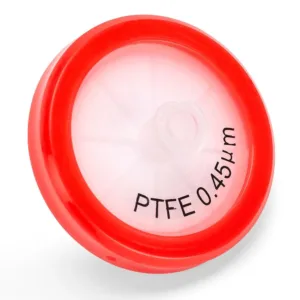
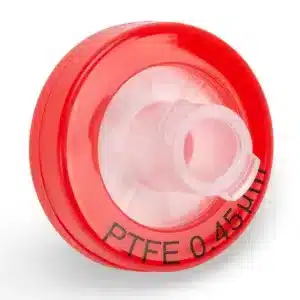
PTFE Hydrophilic Membrane 25mm Syringe Filter 0.45 µm (Bulk Pack of 100, Luer Slip)
Rated 5.00 out of 5 based on 2 customer ratings
(2 customer reviews)- Hydrophilic PTFE membrane: filters aggressive aqueous samples with no pre-wetting needed.
- 0.45 µm pore size: removes the particulates that damage HPLC columns and skew results.
- 25 mm Luer Slip housing: tough polypropylene body rated to 6 bar for fast, leak-free filtration.
- Bulk pack of 100: economical supply for high-throughput labs across Saudi Arabia.
Estimated delivery:1 day
Please, activate Waitlist option to use this widget.
 PTFE Hydrophilic Membrane 25mm...

25mm Syringe Filter 0.45 µm – Hydrophilic PTFE, Pack of 100
If you prepare HPLC samples from aggressive aqueous solutions, this is the filter you want. This 25mm syringe filter 0.45 µm uses a hydrophilic PTFE membrane, so water-based samples pass straight through. No pre-wetting with alcohol. No fuss. The membrane stands up to acids, bases, and most solvents, and the tough polypropylene housing is rated to 6 bar. You get 100 filters in one bulk pack, ready for high-throughput days.
Key Features and Benefits
Every part of this 25mm 0.45 micron syringe filter is built for clean, fast sample prep. Here is what you get:
- Chemical resistance you can trust: Hydrophilic PTFE handles acids, bases, and aggressive solvents that would damage nylon or cellulose membranes.
- No pre-wetting needed: The membrane is treated to love water, so aqueous samples flow on the first push. That saves time on every batch.
- Clean filtrate for sensitive instruments: PTFE and polypropylene release almost nothing into your sample, which keeps HPLC and ion chromatography results honest.
- Fast flow with tiny sample loss: The 25 mm disc gives a generous filtration area and low hold-up volume, so even small, precious samples come through with minimal waste.
- Bulk pack economy: One hundred filters per pack keeps the cost per filter down and cuts packaging waste for busy labs.
Technical Specifications
The key numbers at a glance:
| Specification | Detail |
|---|---|
| Product name | 25mm Syringe Filter 0.45 µm, Hydrophilic PTFE |
| Filter diameter | 25 mm |
| Membrane material | Hydrophilic polytetrafluoroethylene (PTFE) |
| Pore size | 0.45 µm |
| Housing material | Polypropylene (PP) |
| Connection | Luer Slip |
| Maximum operating pressure | 6 bar (87 psi) |
| Sterility | Non-sterile (for analytical use) |
| Pack quantity | 100 filters |
Hydrophilic PTFE vs Nylon vs Hydrophobic PTFE
Picking the wrong membrane wastes samples. This quick comparison shows where this 25mm syringe filter 0.45 µm wins — and where the alternatives fit:
| Feature | Hydrophilic PTFE (this filter) | Nylon | Hydrophobic PTFE |
|---|---|---|---|
| Use with water | Excellent — no pre-wetting | Excellent | Poor — needs alcohol pre-wet |
| Chemical resistance | Excellent — acids, bases, solvents | Good — avoid strong acids and bases | Excellent — solvents and gases |
| Best for | Aggressive aqueous samples, HPLC | General aqueous samples and buffers | Organic solvents, air and gas filtration |
Where Saudi Labs Use This Filter
From Jubail’s petrochemical plants to university labs in Riyadh, this is where the 25mm syringe filter 0.45 µm earns its keep:
- HPLC sample preparation: Filter aggressive or mixed aqueous and organic samples before injection. Clean samples protect expensive columns from particulate damage.
- Environmental and water testing: Prepare drinking water and wastewater samples for ion chromatography and other sensitive methods.
- Petrochemical quality control: Clarify aqueous reagents and product samples that contain harsh chemicals.
- Pharma and food quality control: Remove particulates from water-based test solutions where purity cannot be compromised.
How to Use a Syringe Filter
Using a 25mm syringe filter 0.45 µm takes less than a minute once you have done it once:
- Draw your sample into a clean syringe and remove any air bubbles.
- Push the filter firmly onto the syringe’s Luer Slip tip.
- Hold the assembly over your sample vial and press the plunger slowly and steadily.
- Never force the plunger. If resistance spikes, the membrane is clogged — swap in a fresh filter.
- Each filter is single-use. Dispose of it per your lab’s chemical waste protocol.
Key Safety Advantages
This syringe filter 0.45 micron protects both your results and your people:
- Leak-resistant housing: The polypropylene body is rated to 6 bar, so normal hand pressure will not crack it or spray sample.
- Chemically inert flow path: PTFE and polypropylene do not react with most lab chemicals, which keeps hazardous samples contained and uncontaminated.
- Low extractables: Almost nothing leaches from the membrane or housing, so your analysis reflects the sample — not the filter.
- Single-use design: A fresh filter every time means no cross-contamination between samples.
Precautions & Safety Protocols
A minute of care here prevents ruined samples and accidents:
- Check chemical compatibility: Hydrophilic PTFE resists most chemicals, but always confirm against your exact solvent blend — especially unusual or highly concentrated ones.
- Respect the pressure limit: Do not exceed 6 bar (87 psi). Forcing a clogged filter can rupture the housing and expose you to the sample.
- Clarify, do not de-sludge: This filter polishes samples; it is not for thick or particle-heavy liquids. Pre-filter dirty samples with a coarser pore size first.
- Dispose of properly: Treat used filters as chemical waste per your laboratory’s safety protocol, especially after filtering hazardous materials.
Frequently Asked Questions
- What is the difference between hydrophilic and hydrophobic PTFE?
A hydrophobic PTFE membrane repels water and suits organic solvents and gases. This hydrophilic version is specially treated so water-based solutions pass through easily — no alcohol pre-wetting needed. - What does a 0.45 µm pore size actually remove?
It removes the fine particulates that would otherwise damage HPLC columns or distort sensitive analyses. For sterile filtration of buffers and media, labs typically step down to 0.22 µm instead. - What is a Luer Slip connection?
It is the standard tapered push-fit tip found on most syringes. You simply push the filter on — no twisting. (A Luer Lock adds a threaded collar for extra security.) - Can I use this filter with organic solvents?
Yes, within reason. PTFE resists most organic solvents, which is exactly why labs choose it over nylon for mixed aqueous and organic HPLC samples. Always verify compatibility with your specific solvent blend first. - Is this filter sterile?
No. As a non sterile PTFE syringe filter, it is supplied for analytical sample preparation. For sterile work, use a pre-sterilized 0.22 µm filter instead. - Why choose 25 mm over 13 mm?
The larger membrane area gives faster flow and holds more particles before clogging. For samples above a few millilitres — or dirtier samples — 25 mm wastes less time and fewer filters. - How do I get a quote for delivery in Saudi Arabia?
Contact AskA Solution directly. We keep the 25mm syringe filter 0.45 µm in local stock and deliver fast to Riyadh, Jeddah, Dammam, Jubail, and Yanbu.
Need a 25mm syringe filter 0.45 µm in bulk? AskA Solution stocks this 0.45 µm PTFE syringe filter in a convenient pack of 100, ready for rapid delivery across Saudi Arabia. Get in touch for a competitive quote today.
5.00
Rated 5.00 out of 5 based on 2 customer ratings
Based on 2 reviews
Rated 5 out of 5 based on 2 customer ratings
2 Rated 4 out of 5
0 Rated 3 out of 5
0 Rated 2 out of 5
0 Rated 1 out of 5
0 2 reviews for PTFE Hydrophilic Membrane 25mm Syringe Filter 0.45 µm (Bulk Pack of 100, Luer Slip)
Add a review Cancel reply
You must be logged in to post a review.
Related products



Still Searching for the Right Product?
Let us know your exact requirements — we’ll make it happen.
This website uses cookies to improve your experience.
By using this website you agree to our Privacy Policy.
By using this website you agree to our Privacy Policy.
Ok, I am ready

Ahmad Irfan –
This 100-pack of lab filters offers outstanding value and reliable performance every single time
bilalsami1852 –
We rely on these exact syringe filters for rapid and reliable sample purification every single day.