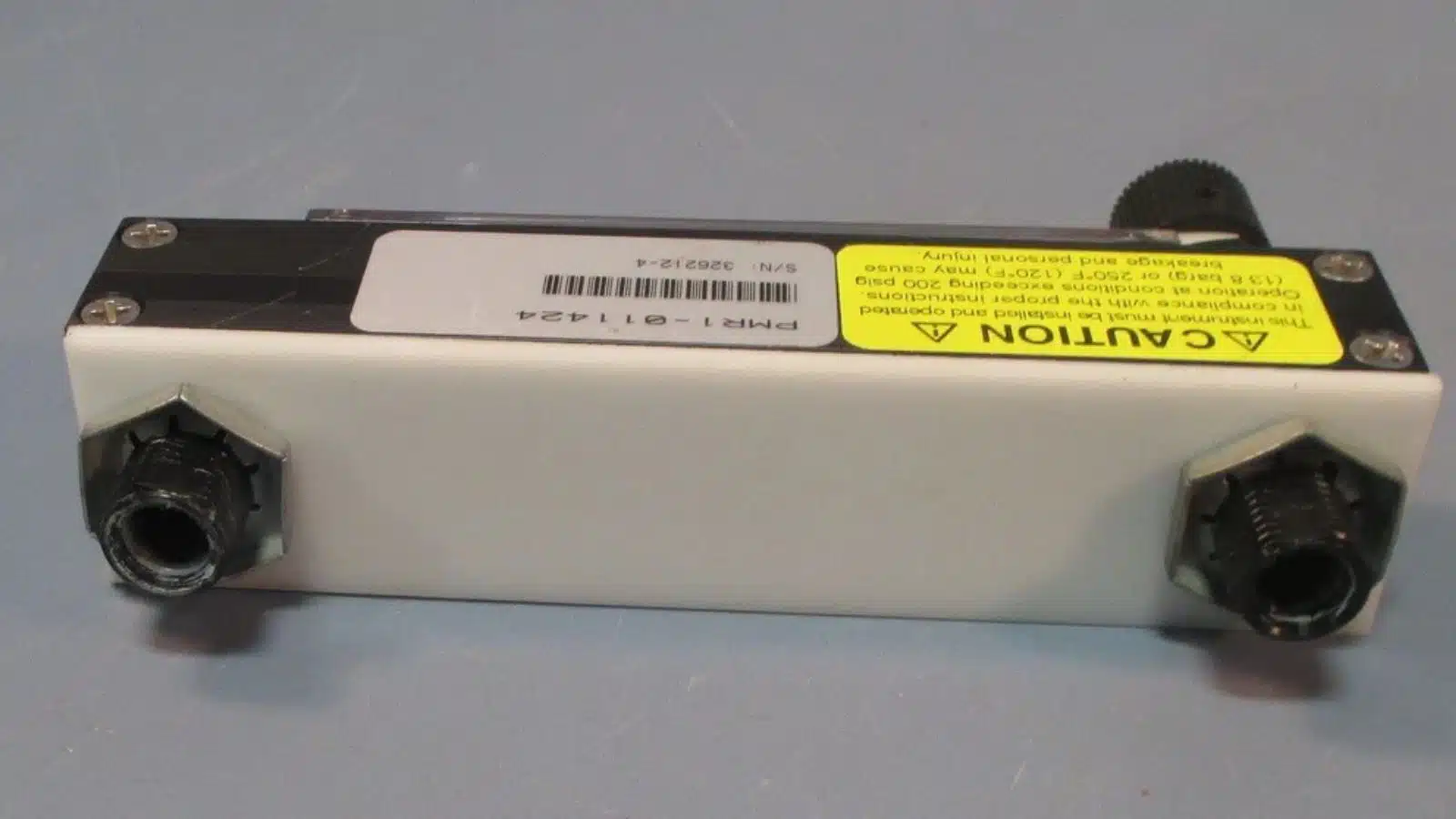
Boost Your Industrial Flow Monitoring Accuracy with Aalborg USA PMR1-013564
+966 59 204 1946
No products in the cart.
How the KITAGAWA AP-20 Enhances Workplace Air Quality Monitoring: Workplace air quality is a critical factor in ensuring the safety, productivity, and long-term health of employees, especially in high-risk environments such as oil & gas, petrochemical, manufacturing, and construction industries. In Saudi Arabia, where industrial growth is booming, monitoring air quality isn’t just a precaution—it’s a necessity.
ASKA Solution, a trusted provider of industrial safety solutions in the Kingdom, is proud to offer the KITAGAWA AP-20 gas sampling pump—a highly accurate and user-friendly device for on-the-spot air quality analysis. Designed for use with a wide range of detector tubes, this tool empowers professionals to identify toxic gases, vapors, and airborne hazards quickly and reliably.
With rapid industrial development and frequent exposure to hazardous substances, the need for dependable air quality monitoring in Saudi Arabia is greater than ever. Poor air quality can lead to:
Industries operating under Saudi Aramco, SABIC, and Royal Commission regulations must follow strict environmental and occupational health guidelines. The KITAGAWA AP-20 helps facilities meet these standards and exceed them.
Read Also: Workplace H₂S Protection with Honeywell BWC2-H BW Clip
The KITAGAWA AP-20 is a precision manual gas sampling pump developed by Komyo Rikagaku Kogyo K.K. of Japan. It works in conjunction with colorimetric detector tubes to sample and measure specific gases in the air.
Whether you’re testing for ammonia, sulfur dioxide, carbon monoxide, volatile organic compounds (VOCs), or hundreds of other gases, the AP-20 provides real-time, visual results that are easy to interpret.
This simple process allows instant analysis without the need for power sources or calibration.
The AP-20 pump is perfectly suited for Saudi Arabia’s harsh and demanding environments. Here’s how it serves different industries:
Used for leak detection and confined space testing in refineries, rigs, and processing plants.
Ensures clean air inside labs and chemical storage facilities.
Detects dust, fumes, and harmful gases in building zones, especially during demolition or welding.
Monitors gases like methane, hydrogen sulfide (H₂S), and ammonia in treatment tanks and plant interiors.
Improves compliance with OSHA and SASO indoor air quality standards in production lines and warehouses.
While the AP-20 is a powerful tool, its effectiveness depends on proper usage and responsible safety policies. ASKA Solution offers training and awareness programs for integrating the device into standard operating procedures.
Best Practices for Employers:
The KITAGAWA AP-20 supports compliance with national and international regulations:
With the AP-20 in hand, your team is better equipped to comply with the Kingdom’s stringent environmental and labor standards.
ASKA Solution is a reliable partner for organizations in Saudi Arabia looking to enhance workplace safety and operational efficiency.
Our experts not only supply the AP-20 pump and tubes but also help organizations integrate air monitoring into their safety management systems.
Want to enhance your workplace air monitoring capabilities with the KITAGAWA AP-20? Contact ASKA Solution today for a free consultation or demo.
Don’t forget to share it
Related Articles
Boost Your Industrial Flow Monitoring Accuracy with Aalborg USA PMR1-013564
Workplace H₂S Protection with Honeywell BWC2-H BW Clip
A Comprehensive Guide to KITAGAWA Gas Detector Tubes
A Complete Review of the Werther Silent Air Compressor
Unlocking Peak Performance: The Power of Precision Tools
Smart Instrumentation: Your Path to Peak Performance
AskA Solution
We firmly believe that the internet should be available and accessible to anyone, and are committed to providing a website that is accessible to the widest possible audience, regardless of circumstance and ability.
To fulfill this, we aim to adhere as strictly as possible to the World Wide Web Consortium’s (W3C) Web Content Accessibility Guidelines 2.1 (WCAG 2.1) at the AA level. These guidelines explain how to make web content accessible to people with a wide array of disabilities. Complying with those guidelines helps us ensure that the website is accessible to all people: blind people, people with motor impairments, visual impairment, cognitive disabilities, and more.
This website utilizes various technologies that are meant to make it as accessible as possible at all times. We utilize an accessibility interface that allows persons with specific disabilities to adjust the website’s UI (user interface) and design it to their personal needs.
Additionally, the website utilizes an AI-based application that runs in the background and optimizes its accessibility level constantly. This application remediates the website’s HTML, adapts Its functionality and behavior for screen-readers used by the blind users, and for keyboard functions used by individuals with motor impairments.
If you’ve found a malfunction or have ideas for improvement, we’ll be happy to hear from you. You can reach out to the website’s operators by using the following email
Our website implements the ARIA attributes (Accessible Rich Internet Applications) technique, alongside various different behavioral changes, to ensure blind users visiting with screen-readers are able to read, comprehend, and enjoy the website’s functions. As soon as a user with a screen-reader enters your site, they immediately receive a prompt to enter the Screen-Reader Profile so they can browse and operate your site effectively. Here’s how our website covers some of the most important screen-reader requirements, alongside console screenshots of code examples:
Screen-reader optimization: we run a background process that learns the website’s components from top to bottom, to ensure ongoing compliance even when updating the website. In this process, we provide screen-readers with meaningful data using the ARIA set of attributes. For example, we provide accurate form labels; descriptions for actionable icons (social media icons, search icons, cart icons, etc.); validation guidance for form inputs; element roles such as buttons, menus, modal dialogues (popups), and others. Additionally, the background process scans all the website’s images and provides an accurate and meaningful image-object-recognition-based description as an ALT (alternate text) tag for images that are not described. It will also extract texts that are embedded within the image, using an OCR (optical character recognition) technology. To turn on screen-reader adjustments at any time, users need only to press the Alt+1 keyboard combination. Screen-reader users also get automatic announcements to turn the Screen-reader mode on as soon as they enter the website.
These adjustments are compatible with all popular screen readers, including JAWS and NVDA.
Keyboard navigation optimization: The background process also adjusts the website’s HTML, and adds various behaviors using JavaScript code to make the website operable by the keyboard. This includes the ability to navigate the website using the Tab and Shift+Tab keys, operate dropdowns with the arrow keys, close them with Esc, trigger buttons and links using the Enter key, navigate between radio and checkbox elements using the arrow keys, and fill them in with the Spacebar or Enter key.Additionally, keyboard users will find quick-navigation and content-skip menus, available at any time by clicking Alt+1, or as the first elements of the site while navigating with the keyboard. The background process also handles triggered popups by moving the keyboard focus towards them as soon as they appear, and not allow the focus drift outside it.
Users can also use shortcuts such as “M” (menus), “H” (headings), “F” (forms), “B” (buttons), and “G” (graphics) to jump to specific elements.
We aim to support the widest array of browsers and assistive technologies as possible, so our users can choose the best fitting tools for them, with as few limitations as possible. Therefore, we have worked very hard to be able to support all major systems that comprise over 95% of the user market share including Google Chrome, Mozilla Firefox, Apple Safari, Opera and Microsoft Edge, JAWS and NVDA (screen readers).
Despite our very best efforts to allow anybody to adjust the website to their needs. There may still be pages or sections that are not fully accessible, are in the process of becoming accessible, or are lacking an adequate technological solution to make them accessible. Still, we are continually improving our accessibility, adding, updating and improving its options and features, and developing and adopting new technologies. All this is meant to reach the optimal level of accessibility, following technological advancements. For any assistance, please reach out to