No products in the cart.

HVAC Solution
HVAC Technician in Saudi Arabia
HVAC Technician in Saudi Arabia: The climate in Saudi Arabia, with its scorching summers and...

+966 59 204 1946
No products in the cart.
Welcome to a new era of home comfort and efficiency. As building technologies advance, the way we interact with our living environments is undergoing a profound transformation. At Aska Solution, we’ve witnessed firsthand the revolutionary impact that integrating smart technology into heating, ventilation, and air conditioning systems can have. It’s no longer just about maintaining a set temperature; it’s about creating a responsive, healthy, and exceptionally efficient indoor climate tailored precisely to your life.
This article delves deep into the world of Smart HVAC Solutions, exploring how these advanced systems are not just an upgrade but a fundamental shift in how we manage our home environments. We’ll uncover the intricate components, the immense benefits, and the essential considerations for homeowners looking to embrace this cutting-edge technology. From enhancing indoor air quality to dramatically reducing energy consumption, Smart HVAC Solutions are setting new benchmarks for intelligent living.
The term Smart HVAC Solutions represents a fundamental departure from traditional heating and cooling systems. Historically, HVAC systems operated on simple on/off cycles, governed by a basic thermostat. Today, intelligence is embedded at every level, transforming these utilitarian systems into sophisticated, interconnected networks that learn, adapt, and optimize. This paradigm shift is driven by advancements in sensor technology, artificial intelligence, and ubiquitous connectivity, enabling a level of climate control previously unimaginable.
In our service experience, clients often initially equate “smart” with “programmable.” However, Smart HVAC Solutions go far beyond mere scheduling. They incorporate real-time data analysis, predictive capabilities, and seamless integration with other smart home devices. This holistic approach ensures that your home environment is not just comfortable but also healthier and more energy-efficient, responding dynamically to both internal and external conditions. We empower homeowners to move from reactive climate control to proactive environmental management.
For decades, HVAC technology remained relatively static. Thermostats primarily controlled temperature by turning systems on or off based on a setpoint. While programmable thermostats introduced basic scheduling, they lacked the ability to adapt to changes in occupancy, external weather, or even variations in indoor air quality. This often led to wasted energy, fluctuating comfort levels, and a missed opportunity for proactive system management.
The leap to Smart HVAC Solutions introduced a multi-faceted approach. ✅ Instead of isolated units, modern systems are integrated ecosystems that communicate constantly. This evolution is akin to moving from a simple light switch to a fully automated lighting system that adjusts brightness and color based on time of day, occupancy, and even natural light levels. We have spearheaded many projects where legacy systems were transformed into intelligent, responsive networks, demonstrating tangible improvements in both comfort and operational efficiency. The integration extends beyond temperature control to encompass ventilation solutions, humidity management, and sophisticated air purification systems.
A truly intelligent HVAC system comprises several interconnected components, each playing a vital role in its overall functionality. These components work in harmony, gathering data, processing information, and executing commands to maintain an optimal indoor environment. Understanding these elements is key to appreciating the complexity and capabilities of modern Smart HVAC Solutions.
Our engineering teams meticulously select and integrate these components, ensuring seamless operation and maximum benefit for our clients. The synergy between these parts is what truly elevates standard HVAC to the realm of Smart HVAC Solutions.
What truly defines the “smart” aspect of these systems lies in their ability to connect, automate, and predict. This trifecta of capabilities transforms a passive climate control system into an active, responsive partner in home management. Connectivity is the foundation, allowing all components to communicate and be controlled remotely. Automation leverages this connectivity to perform tasks without direct human intervention, while predictive capabilities utilize data to anticipate needs and prevent issues.
💡 Connectivity: Modern Smart HVAC Solutions are inherently connected. They leverage Wi-Fi, Zigbee, Z-Wave, or Thread protocols to communicate not only with each other but also with your smartphone, tablet, or other home automation integration platforms. This means you can adjust your home’s climate from anywhere in the world, ensuring optimal conditions await your arrival.
✅ Automation: Beyond simple scheduling, smart systems automate complex decisions. For instance, a system might detect high humidity and automatically activate a dehumidifier, or sense elevated CO2 levels and trigger enhanced ventilation solutions. This level of automation ensures consistent comfort and healthier indoor air quality without constant manual adjustments.
📈 Predictive Capabilities: This is where Smart HVAC Solutions truly shine. Using data from HVAC sensors, external weather forecasts, and even your usage patterns, these systems can anticipate needs. For example, if a cold front is expected, the system might pre-heat your home to maintain comfort without overworking later. Furthermore, predictive maintenance HVAC algorithms monitor system performance, identifying potential issues before they lead to breakdowns, saving you time and money on emergency repairs. This proactive approach is a hallmark of truly intelligent IoT HVAC systems.
In our experience, clients are consistently amazed by how these intelligent systems adapt to their lifestyles, often making adjustments they hadn’t even considered. It’s about moving from reactive problem-solving to proactive environmental mastery.
Perhaps one of the most significant advantages of Smart HVAC Solutions is their profound impact on indoor air quality (IAQ). With people spending up to 90% of their time indoors, the quality of the air we breathe at home has a direct bearing on our health, comfort, and productivity. Traditional HVAC systems often circulate existing air, sometimes exacerbating IAQ issues. Smart systems, however, are designed to actively monitor, manage, and improve the air inside your home.
We recognize that truly comfortable living isn’t just about temperature; it’s about the entire atmospheric envelope. Our integrated approach ensures that when we install Smart HVAC Solutions, we prioritize components and strategies that elevate your home’s indoor air quality to optimal levels. This commitment reflects our understanding that a healthy home environment is paramount.
The cornerstone of improving indoor air quality with Smart HVAC Solutions is the ability to monitor it in real time. This is achieved through sophisticated HVAC sensors that continuously sample the air for various pollutants and environmental factors. These sensors provide a dynamic, data-driven picture of your home’s air, allowing the smart system to respond precisely and effectively.
The data gathered by these HVAC sensors is continuously analyzed, providing actionable insights. A client once asked us about the necessity of specialized laboratory filters for their home indoor air quality. We showed them how applying the correct grade of advanced filtration within their smart system, guided by real-time PM data, led to a measurable lift in their quality control metrics and overall family health. This granular insight transforms passive observation into active environmental management, making indoor air quality a tangible, controlled aspect of your living space.
Beyond monitoring, Smart HVAC Solutions actively combat airborne pollutants through state-of-the-art filtration. These are not your grandmother’s flimsy fiberglass filters; we’re talking about sophisticated mechanisms designed to capture a wide spectrum of contaminants, ensuring that the air circulated throughout your home is exceptionally clean. The integration of these advanced filtration systems is a critical differentiator for modern Smart HVAC Solutions.
The Minimum Efficiency Reporting Value (MERV) rating indicates how effectively an air filter removes particles from the air. Higher MERV ratings mean greater filtration capabilities. While traditional systems might only support MERV 8 filters, Smart HVAC Solutions are often designed to accommodate MERV 11-13 filters, or even true HEPA (High-Efficiency Particulate Air) filters.
For an added layer of protection against biological contaminants, many Smart HVAC Solutions integrate UV-C (ultraviolet-C) light technology. Placed within the ductwork or near the evaporator coil, these lights emit germicidal radiation that inactivates bacteria, viruses, and mold spores as they pass through the system.
Beyond filtration, proper ventilation is crucial for indoor air quality. Stale indoor air can accumulate pollutants, moisture, and CO2. Smart HVAC Solutions employ dynamic ventilation solutions that ensure fresh air is brought in while stale air is expelled, all while minimizing energy loss. This is a sophisticated balancing act that traditional systems struggle to perform effectively.
ERVs and HRVs are core to energy efficient HVAC ventilation strategies. These units exchange indoor air with outdoor air while recovering a significant portion of the energy (heat or coolness) that would otherwise be lost.
One of the most intelligent aspects of smart ventilation is its ability to operate on demand. Instead of continuously running, which can be energy-intensive, demand-controlled ventilation (DCV) only activates when necessary, based on actual indoor air quality and occupancy data.
One of the most compelling reasons to invest in Smart HVAC Solutions is the potential for substantial energy savings. Traditional systems are often inefficient because they operate on rigid schedules or respond only to a single temperature setpoint. Smart systems, conversely, employ sophisticated algorithms, real-time data analysis, and precise control mechanisms to optimize energy consumption without sacrificing comfort. This commitment to energy efficient HVAC is a core principle of our work at Aska Solution.
We regularly help clients achieve measurable reductions in their utility bills, sometimes by as much as 30% or more, simply by upgrading to intelligent climate control. This isn’t just about saving money; it’s about making a positive environmental impact through sustainable energy practices.
At the heart of energy efficient HVAC are intelligent thermostats. These devices transcend the capabilities of simple programmable models, offering a suite of advanced features that learn from your habits and adapt to changing conditions. They are a prime example of how smart thermostats transform basic temperature control into an intelligent energy management tool.
Intelligent thermostats leverage location-based services and internal sensors to understand when you’re home and when you’re not, optimizing energy usage accordingly.
The true intelligence of these thermostats comes from their ability to learn and adapt. They don’t just follow a schedule; they create one that’s optimized for your life.
Zone control systems are a cornerstone of energy efficient HVAC design, allowing for granular control over different areas of your home. Instead of treating your entire house as a single climate zone, these systems create multiple independent zones, each with its own temperature settings and schedule. This means you only heat or cool the areas you’re actively using, when you’re using them.
The physical mechanisms behind effective zone control are multi-zone dampers and a network of dedicated HVAC sensors.
As homes become more sustainable, the ability of Smart HVAC Solutions to integrate with renewable energy sources, particularly solar photovoltaic (PV) systems, offers another layer of energy efficient HVAC optimization. This represents a forward-thinking approach to sustainable living.
For homes equipped with solar panels, the goal is often to maximize self-consumption of the generated electricity, reducing reliance on the grid and lowering utility bills. Smart HVAC Solutions can play a crucial role in this.
Beyond day-to-day operation, Smart HVAC Solutions extend their intelligence to system health and longevity. Predictive maintenance HVAC capabilities mean that potential issues are identified and addressed before they escalate into costly breakdowns, ensuring continuous, optimal performance. This is where IoT HVAC truly delivers long-term value.
Modern Smart HVAC Solutions are equipped with sophisticated algorithms that continuously monitor the performance of all system components.
The connectivity of IoT HVAC systems enables remote monitoring, providing unparalleled oversight and convenience.
Smart HVAC Solutions are rarely standalone systems. Their true power is unlocked through seamless home automation integration, becoming an integral part of a broader smart home ecosystem. This interconnectedness allows for intuitive control, synchronized operations, and a unified user experience. Understanding the underlying communication protocols and integration strategies is crucial for building a truly intelligent home.
We specialize in designing and implementing integrated solutions, ensuring that your smart home climate control system works harmoniously with other smart devices, from lighting to security. Our expertise in these communication architectures ensures reliable and secure operation.
For various smart devices to communicate effectively, they must adhere to common language or protocols. Smart HVAC Solutions leverage several industry-standard communication protocols to ensure interoperability and reliable data exchange.
Each protocol offers distinct advantages, and understanding their roles helps appreciate the robust network behind your smart home climate control.
Our technical teams often deploy a hybrid approach, using the most suitable protocol for each component within your Smart HVAC Solutions, ensuring optimal performance and seamless home automation integration.
The true magic of Smart HVAC Solutions comes alive when they are integrated into a comprehensive smart home platform. This creates a central point of control and allows for complex automations involving multiple devices.
These popular ecosystems serve as central hubs for managing a wide array of smart devices, including your HVAC system.
This level of home automation integration allows your Smart HVAC Solutions to work in concert with other elements of your smart home. For example, your lighting system could dim when the HVAC enters an energy efficient HVAC ‘away’ mode, or a door sensor could trigger a change in temperature when you leave or arrive. We ensure that our installed Smart HVAC Solutions are fully compatible with your preferred smart home ecosystem, providing a truly unified and intelligent living experience.
While the benefits of connected living are immense, they also bring legitimate concerns about data security and privacy. As Smart HVAC Solutions collect data about your home environment, occupancy, and preferences, protecting this information is paramount.
We take these concerns very seriously and implement robust measures to safeguard client data.
At Aska Solution, when our technical teams handle an electro-mechanical installation, they ensure not only functional integration but also robust security protocols, providing peace of mind alongside unparalleled comfort and efficiency. We advise clients on best practices for network security and ensure that the chosen IoT HVAC solutions meet stringent privacy standards.
The sophistication of Smart HVAC Solutions means that professional installation and precise commissioning are not just recommended, but essential. Unlike a simple thermostat replacement, integrating multiple HVAC sensors, zone control systems, and advanced filtration requires specialized expertise. Proper installation ensures that all components communicate effectively, gather accurate data, and operate at peak efficiency.
Our commitment at Aska Solution is to deliver not just cutting-edge technology, but also flawless execution. We understand that even the most advanced smart home climate control system will underperform if not installed and calibrated correctly.
The effectiveness of Smart HVAC Solutions hinges on accurate data collection. This means that the placement of HVAC sensors and control interfaces is critical.
Improper sensor placement can lead to skewed data, resulting in inefficient operation and compromised comfort.
Our experienced technicians meticulously plan sensor placement, utilizing their deep understanding of airflow dynamics and thermal mapping to ensure that your Smart HVAC Solutions receive the most accurate data possible, driving truly energy efficient HVAC performance.
Once installed, Smart HVAC Solutions require precise calibration to ensure they are operating within optimal parameters and have a correct understanding of your home’s unique environmental profile. This initial tuning is vital for the system’s long-term efficiency and comfort delivery.
Calibration goes beyond simply setting a desired temperature. It involves a detailed adjustment process.
This meticulous commissioning process is a hallmark of Aska Solution’s commitment to excellence, ensuring that your investment in Smart HVAC Solutions translates into verifiable savings and superior comfort from day one.
At Aska Solution, we pride ourselves on being more than just installers; we are comprehensive integrators. The complexity of modern Smart HVAC Solutions, with their intricate electro-mechanical components and sophisticated software, demands a holistic approach that few can offer.
We bring together expertise across mechanical engineering, electrical systems, and smart home technology to deliver truly optimized smart home climate control.
We don’t just install equipment; we create intelligent, responsive, and efficient living environments.
Despite the clear benefits, many homeowners still hold misconceptions about Smart HVAC Solutions. These myths often stem from outdated information or a lack of understanding about the true capabilities of modern systems. At Aska Solution, we believe in empowering our clients with accurate information to make informed decisions. Let’s debunk some of the most common myths.
❌ The Misconception: Many believe that intelligent climate control systems are only compatible with new construction, pre-wired for advanced technology.
✅ The Reality: While new homes often come pre-equipped, Smart HVAC Solutions are highly adaptable and can be integrated into existing homes of almost any age. Advances in wireless technology mean that complex rewiring is often unnecessary. We frequently upgrade older, traditional HVAC systems with smart thermostats, HVAC sensors, zone control systems, and air purification systems, transforming them into intelligent, energy efficient HVAC powerhouses. Our teams are experts at retrofitting, finding creative and effective ways to bring smart technology into your current home without extensive renovation. Even homes with older ductwork can often benefit from targeted upgrades to improve indoor air quality and efficiency.
❌ The Misconception: Some people mistakenly believe that “smart HVAC” simply refers to a programmable thermostat with a nicer screen or app control.
✅ The Reality: This couldn’t be further from the truth. While smart thermostats are a core component, they are just one piece of a much larger, more sophisticated puzzle. Smart HVAC Solutions encompass a comprehensive ecosystem that includes:
Networks of specialized HVAC sensors monitoring temperature, humidity, VOCs, and particulate matter.
Zone control systems with intelligent dampers for precise room-by-room conditioning.
Integrated air purification systems and advanced filtration technologies.
Ventilation solutions like ERVs/HRVs that respond to indoor air quality needs.
Learning algorithms, geofencing, and predictive maintenance HVAC capabilities.
Seamless home automation integration with other smart devices.
It’s about an intelligent, interconnected network that actively manages your home’s entire climate envelope, far surpassing the capabilities of a standalone thermostat. The “smart” factor lies in the intelligence that controls and optimizes all these components for smart home climate control.
❌ The Misconception: The advanced technology behind Smart HVAC Solutions makes them seem dauntingly complex to install, operate, and maintain for the average homeowner.
✅ The Reality: While the underlying technology is sophisticated, the user experience is designed to be intuitive and user-friendly. Most smart thermostats and home automation integration platforms feature easy-to-use apps with clear interfaces. Our role at Aska Solution is to simplify this complexity for you. We handle the intricate installation and commissioning, provide comprehensive training on how to use your new system, and offer ongoing support. Once set up, many Smart HVAC Solutions operate largely autonomously, learning your preferences and making adjustments without constant intervention. Features like predictive maintenance HVAC alerts actually reduce the burden on homeowners by identifying issues proactively. We make sure that your smart home climate control experience is seamless, empowering, and truly effortless.
“The true measure of smart technology isn’t its complexity, but its ability to simplify and enrich daily life. Smart HVAC, when expertly integrated, disappears into the background, leaving you with perfect comfort and a healthier environment you rarely have to think about.” – Dr. Eleanor Vance, Environmental Engineering Consultant
The field of Smart HVAC Solutions is dynamic, constantly evolving with new technological breakthroughs. As we look to the future, we see even greater levels of intelligence, personalization, and integration on the horizon. At Aska Solution, we are always at the forefront of these advancements, researching and adopting the innovations that will define the next generation of smart home climate control.
The application of AI and ML is poised to take Smart HVAC Solutions to unprecedented levels of customization and efficiency.
The next wave of Smart HVAC Solutions will feature even more sophisticated HVAC sensors working in concert to create a comprehensive digital twin of your home’s environment.
As renewable energy sources become more prevalent, Smart HVAC Solutions will play a critical role in balancing energy demand across entire power grids.
Looking further ahead, Smart HVAC Solutions could even integrate with personal biometric data to create health-centric indoor environments.
Choosing the ideal Smart HVAC Solutions for your home is an investment in comfort, health, and efficiency. With a myriad of options available, it’s crucial to approach the selection process strategically. At Aska Solution, we guide our clients through every step, ensuring the chosen system perfectly aligns with their unique requirements and vision for their home.
Before diving into specific products, a thorough understanding of your priorities is paramount.
We work closely with you to define these needs, creating a detailed profile that informs our recommendations for your optimal smart home climate control system.
Ensuring your chosen Smart HVAC Solutions integrates well with your existing home infrastructure and can grow with your future needs is crucial.
Our experts perform a detailed site assessment to evaluate compatibility and recommend the most suitable and scalable Smart HVAC Solutions for your property.
Given the complexity and long-term investment involved, professional consultation and ongoing support are invaluable.
We’ve explored the profound capabilities of Smart HVAC Solutions, moving far beyond basic heating and cooling to deliver unparalleled levels of comfort, health, and efficiency. From the precision of smart thermostats and zone control systems to the vigilance of HVAC sensors monitoring indoor air quality, these intelligent systems are redefining what’s possible in home climate management. They not only enhance your living environment through advanced filtration and ventilation solutions but also contribute significantly to energy efficient HVAC operation and long-term savings through predictive maintenance HVAC and home automation integration.
Investing in Smart HVAC Solutions is an investment in a healthier home, lower energy bills, and a future-proof living space. It’s about taking control of your environment, ensuring every breath you take is cleaner and every moment you spend indoors is perfectly comfortable. We at Aska Solution are committed to bringing this transformative technology to your home. We understand the intricacies of IoT HVAC and are ready to partner with you to design, install, and support a system that not only meets but exceeds your expectations for smart home climate control.
—
A1: A regular programmable thermostat allows you to set a schedule for temperature changes. A smart thermostat, however, goes much further. It incorporates learning algorithms that adapt to your preferences, uses geofencing to adjust based on your proximity to home, integrates with HVAC sensors for occupancy detection, and can connect to other smart home devices. It proactively optimizes for comfort and energy efficient HVAC operation, whereas a programmable thermostat simply follows a fixed schedule.
A2: Smart HVAC Solutions significantly improve indoor air quality through several integrated features. They utilize HVAC sensors to monitor pollutants like VOCs, particulate matter (PM2.5, PM10), and CO2 in real time. Based on this data, the system can automatically activate advanced filtration systems (like high MERV or HEPA filters), engage UV-C light for pathogen eradication, or implement dynamic ventilation solutions (such as ERVs/HRVs) to bring in fresh air and expel stale, polluted air. These components work together within the air purification systems to ensure a healthier indoor environment.
A3: Absolutely. Smart HVAC Solutions are designed for maximum energy efficient HVAC operation. Features like learning algorithms, geofencing, and occupancy sensing in smart thermostats prevent heating or cooling an empty home. Zone control systems ensure you only condition the occupied areas. Integration with external factors like weather forecasts and predictive maintenance HVAC also contributes to optimizing energy usage. Many homeowners experience significant savings, often 10-30% or more, by preventing energy waste and operating their systems more intelligently.
A4: Generally, no. Most modern Smart HVAC Solutions are designed with seamless home automation integration in mind. They often support common communication protocols like Wi-Fi, Zigbee, or Z-Wave, making them compatible with popular platforms such as Apple HomeKit, Google Home, and Amazon Alexa. Our team at Aska Solution ensures that your new smart home climate control system is properly integrated and configured with your existing smart home ecosystem, allowing for centralized control and advanced automation routines.
A5: Predictive maintenance HVAC is a key feature of advanced IoT HVAC systems. It involves using HVAC sensors and sophisticated algorithms to continuously monitor the performance of your system. These algorithms can detect subtle anomalies or deviations from normal operating parameters that indicate a potential problem before it leads to a breakdown. The system can then alert you or your service provider proactively. This benefits you by preventing costly emergency repairs, extending the lifespan of your equipment, maintaining optimal energy efficient HVAC performance, and ensuring continuous comfort with minimal downtime.
Don’t forget to share it
Related Articles
HVAC Technician in Saudi Arabia

Your Fall 2024 HVAC Maintenance Checklist in Saudi Arabia

Cleaning the HVAC Air Filter and Why It’s Important in Saudi Arabia

The Best HVAC Repair and Maintenance Service in KSA

Commercial HVAC Service in Dammam KSA
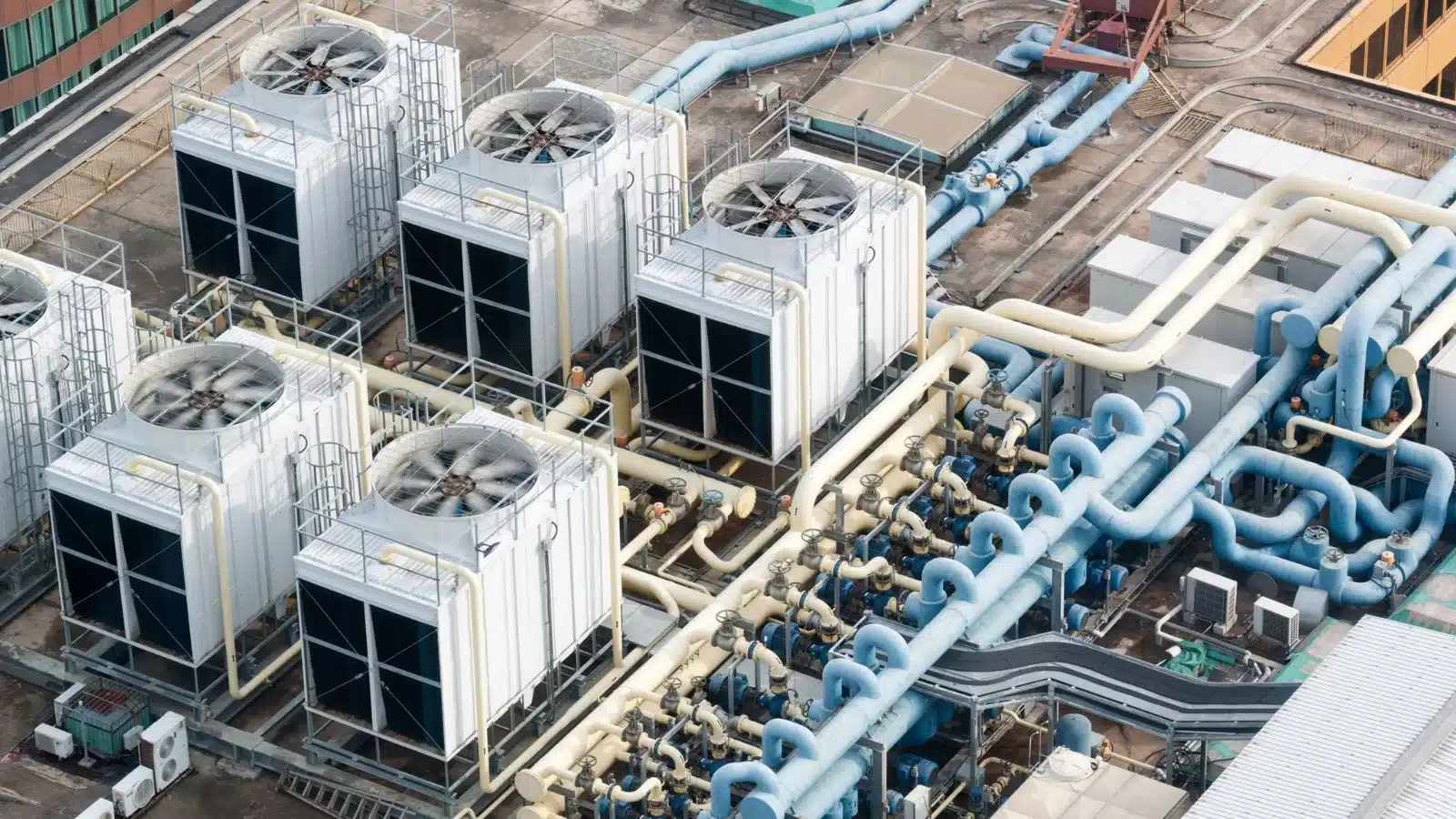
Different Types of Commercial HVAC Equipment in Saudi Arabia
AskA Solution
We firmly believe that the internet should be available and accessible to anyone, and are committed to providing a website that is accessible to the widest possible audience, regardless of circumstance and ability.
To fulfill this, we aim to adhere as strictly as possible to the World Wide Web Consortium’s (W3C) Web Content Accessibility Guidelines 2.1 (WCAG 2.1) at the AA level. These guidelines explain how to make web content accessible to people with a wide array of disabilities. Complying with those guidelines helps us ensure that the website is accessible to all people: blind people, people with motor impairments, visual impairment, cognitive disabilities, and more.
This website utilizes various technologies that are meant to make it as accessible as possible at all times. We utilize an accessibility interface that allows persons with specific disabilities to adjust the website’s UI (user interface) and design it to their personal needs.
Additionally, the website utilizes an AI-based application that runs in the background and optimizes its accessibility level constantly. This application remediates the website’s HTML, adapts Its functionality and behavior for screen-readers used by the blind users, and for keyboard functions used by individuals with motor impairments.
If you’ve found a malfunction or have ideas for improvement, we’ll be happy to hear from you. You can reach out to the website’s operators by using the following email
Our website implements the ARIA attributes (Accessible Rich Internet Applications) technique, alongside various different behavioral changes, to ensure blind users visiting with screen-readers are able to read, comprehend, and enjoy the website’s functions. As soon as a user with a screen-reader enters your site, they immediately receive a prompt to enter the Screen-Reader Profile so they can browse and operate your site effectively. Here’s how our website covers some of the most important screen-reader requirements, alongside console screenshots of code examples:
Screen-reader optimization: we run a background process that learns the website’s components from top to bottom, to ensure ongoing compliance even when updating the website. In this process, we provide screen-readers with meaningful data using the ARIA set of attributes. For example, we provide accurate form labels; descriptions for actionable icons (social media icons, search icons, cart icons, etc.); validation guidance for form inputs; element roles such as buttons, menus, modal dialogues (popups), and others. Additionally, the background process scans all the website’s images and provides an accurate and meaningful image-object-recognition-based description as an ALT (alternate text) tag for images that are not described. It will also extract texts that are embedded within the image, using an OCR (optical character recognition) technology. To turn on screen-reader adjustments at any time, users need only to press the Alt+1 keyboard combination. Screen-reader users also get automatic announcements to turn the Screen-reader mode on as soon as they enter the website.
These adjustments are compatible with all popular screen readers, including JAWS and NVDA.
Keyboard navigation optimization: The background process also adjusts the website’s HTML, and adds various behaviors using JavaScript code to make the website operable by the keyboard. This includes the ability to navigate the website using the Tab and Shift+Tab keys, operate dropdowns with the arrow keys, close them with Esc, trigger buttons and links using the Enter key, navigate between radio and checkbox elements using the arrow keys, and fill them in with the Spacebar or Enter key.Additionally, keyboard users will find quick-navigation and content-skip menus, available at any time by clicking Alt+1, or as the first elements of the site while navigating with the keyboard. The background process also handles triggered popups by moving the keyboard focus towards them as soon as they appear, and not allow the focus drift outside it.
Users can also use shortcuts such as “M” (menus), “H” (headings), “F” (forms), “B” (buttons), and “G” (graphics) to jump to specific elements.
We aim to support the widest array of browsers and assistive technologies as possible, so our users can choose the best fitting tools for them, with as few limitations as possible. Therefore, we have worked very hard to be able to support all major systems that comprise over 95% of the user market share including Google Chrome, Mozilla Firefox, Apple Safari, Opera and Microsoft Edge, JAWS and NVDA (screen readers).
Despite our very best efforts to allow anybody to adjust the website to their needs. There may still be pages or sections that are not fully accessible, are in the process of becoming accessible, or are lacking an adequate technological solution to make them accessible. Still, we are continually improving our accessibility, adding, updating and improving its options and features, and developing and adopting new technologies. All this is meant to reach the optimal level of accessibility, following technological advancements. For any assistance, please reach out to
We have received your inquiry and our team will review your requested items and get back to you as soon as possible.