No products in the cart.

Need help? Call us:
+966 59 204 1946
Shopping cart (0)
Subtotal: 0.00 ر.س
Spend 2,500.00 ر.س to get free shipping
Congratulations! You've got free shipping.
Have A Question?
Complete the form below to start discussing your industrial products and Services required.
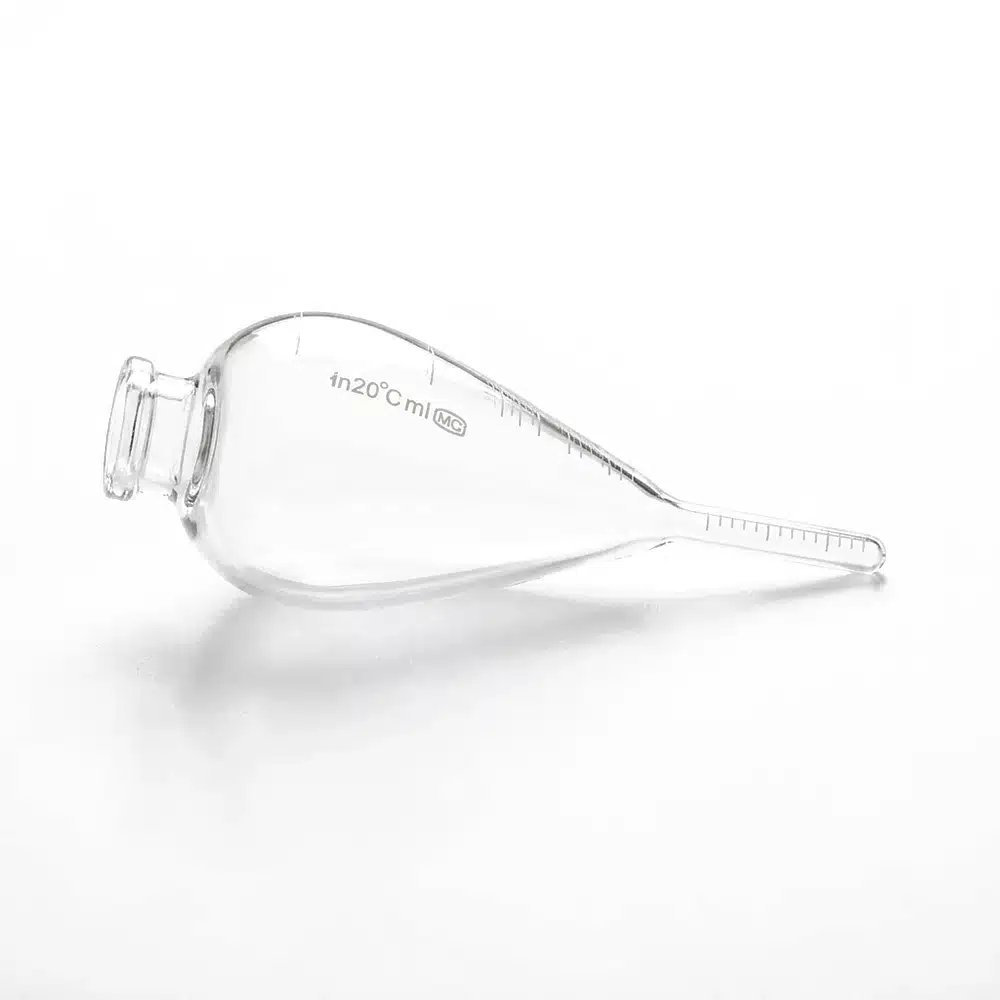
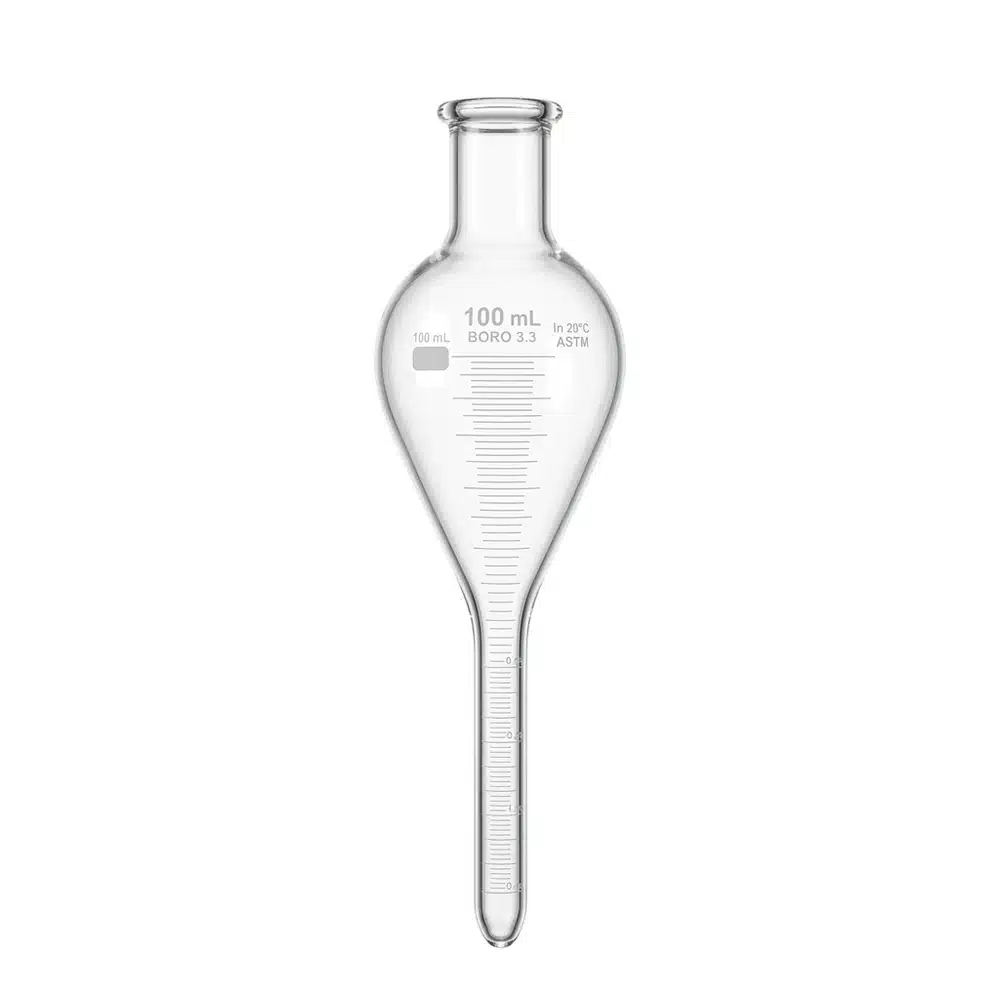
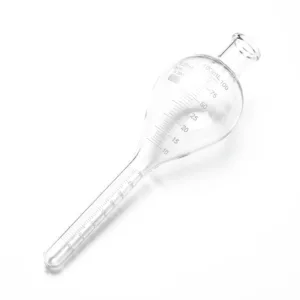
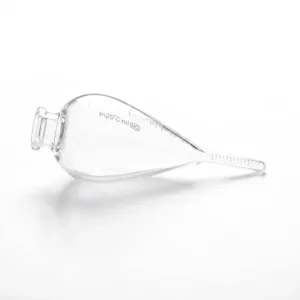
100ml Pear Shaped Glass Centrifuge Tube
- ASTM Oil Testing: Pear-shaped tube for water & sediment determination per ASTM D96.
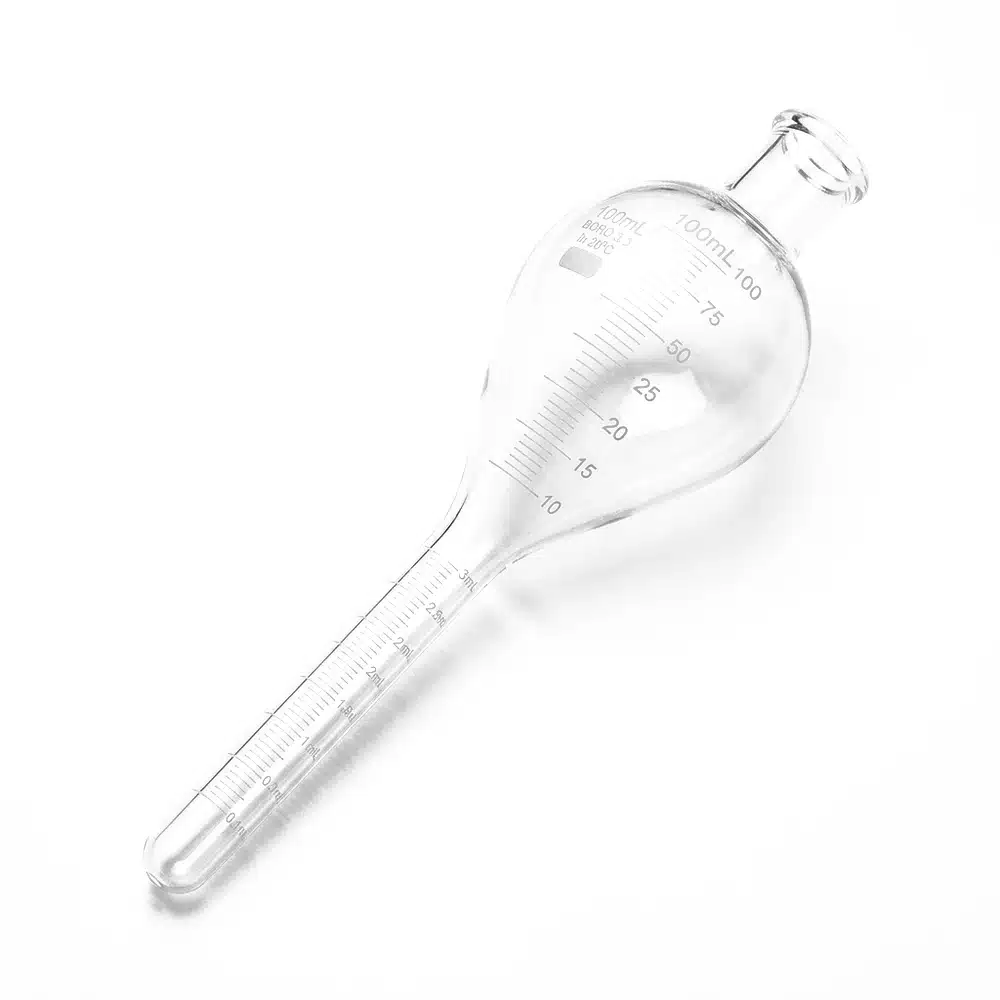
- Precise Graduated Stem: Fine calibration marks for accurate small-volume readings.
- Borosilicate Glass 3.3: Chemical-resistant, autoclavable, and reusable lab glassware.
- 100mL Standard Size: Fits standard oil-test centrifuge rotors and shields.
Estimated delivery:1 day
Please, activate Waitlist option to use this widget.
Categories: Laboratory & Pharmaceuticals, Centrifuge Tubes
Tags: 100ml centrifuge tube, ASTM D96 tube, borosilicate centrifuge tube, centrifuge tube Saudi Arabia, glass centrifuge tube, oil centrifuge tube 100ml, oil testing glassware, pear shape centrifuge tube, pear shaped centrifuge tube, water and sediment tube
 100ml Pear Shaped Glass Centri...
100ml Pear Shaped Glass Centrifuge Tube KSA
This 100ml pear shaped glass centrifuge tube is the standard vessel for spinning down water and sediment in petroleum testing. If your lab tests crude oil, diesel, or lubricants, you already know this piece of glassware — the pear shape funnels every trace of water and solids into the graduated stem, where you read the exact volume. Made for petroleum QC the way ASTM wrote it.
Why Labs Choose the Pear Shape
The shape is not decorative. Every curve of a pear shaped oil centrifuge tube exists to push solids and water into one readable point:
- Funnels sediment into the stem: The wide body tapers smoothly, so centrifugation drives every trace of water and solids down into the narrow calibrated stem — nothing hides on shoulders or corners.
- Reads tiny volumes precisely: The thin stem carries fine graduation marks, so fractions of a millilitre are easy to read after the spin. That precision is what pass/fail fuel specs depend on.
- Built for the centrifuge: Uniform wall thickness and annealed glass handle routine oil-test spin cycles without cracking or deforming.
- Clear glass, clear reading: Transparent borosilicate with crisp enamel graduations — the sediment line is unambiguous even in dark crude samples.
- Reusable economics: Wash, dry, and run again. One tube serves hundreds of determinations, which is why glass still beats plastic for this method.
Key Safety Advantages
Hot oil, glass, and a spinning rotor demand respect. This tube design keeps the routine safe:
- No pressure surprises: The open beaded rim vents freely — never seal a tube bound for the centrifuge.
- Thermal shock resistance: Borosilicate 3.3 glass tolerates the pre-heating step (typically 60°C) that ASTM methods require before spinning.
- Secure seating: The standard 100mL profile seats fully in oil-test centrifuge shields and cushions, so the tube cannot ride up or rattle mid-run.
- Chemical inertness: Glass does not react with crude, solvents, or demulsifiers used in sample prep — readings stay honest.
Packing & Compatibility
Each tube is individually packed to survive shipping. The 100mL pear shaped centrifuge tube fits standard heated oil-test centrifuges and their tube shields — the same footprint labs already use for ASTM D96 and D2709 work, including Koehler-style instruments.
- Standard 100mL footprint: Drops into existing oil-test centrifuge rotors with no adapter needed.
- Stopper-ready neck: The plain neck accepts standard cork or rubber stoppers for sample transport (never centrifuge with the stopper in).
- Bulk-friendly packing: Ask about multi-tube pricing for refinery and inspection-lab contracts.
Technical Specifications
The key facts for this glass centrifuge tube 100mL:
| Capacity | 100 mL |
|---|---|
| Shape | Pear-shaped with graduated stem |
| Material | Borosilicate glass 3.3 (printed on glass) |
| Graduation | White enamel — body: 10/15/20/25/50/75/100 mL; stem: 0–3 mL in 0.5 mL steps |
| Calibration | In 20°C |
| Marking | ASTM-marked glass |
| Top | Beaded rim, open neck |
| Compliance | Suitable for ASTM D96 / D2709 water & sediment methods |
| Reusable | Yes — washable and autoclavable |
Where Petroleum Labs Across Saudi Arabia Use Them
From the refineries of Jubail and Yanbu to crude terminals and fuel QC labs in Dammam and Riyadh, the water and sediment centrifuge tube is daily glassware wherever oil changes hands:
- Refinery QC labs: Incoming crude and outgoing product streams tested per ASTM D96.
- Third-party inspection: SGS-style surveyors verifying cargo quality at load and discharge ports.
- Lube oil blending plants: Sediment checks on base oils and additives before blending.
- Marine fuel testing: Bunker fuel water-content screening before acceptance.
- Research & university labs: Fuel characterization and methods development.
How to Use
Running an ASTM D96 water and sediment determination with a pear shaped oil centrifuge tube is straightforward:
- Fill: Pour 50 mL of the oil sample into each of two tubes, then add 50 mL of water-saturated solvent as the method directs.
- Mix: Stopper and invert the tubes several times until the sample and solvent are uniform. Remove stoppers.
- Heat: Pre-heat the tubes to 60°C as specified — borosilicate glass handles this without stress.
- Spin: Place tubes in the heated centrifuge shields and spin at the specified speed and time.
- Read: Immediately read the combined water and sediment volume collected in the graduated stem, at the bottom of the meniscus.
- Clean: Empty, wash with solvent, rinse, and dry — the tube is ready for the next run.
Precautions & Safety Protocols
Glass centrifuge tubes are safe when the routine is respected:
- Never centrifuge a stoppered tube: Pressure buildup can shatter the glass. Stoppers are for transport only.
- Inspect before every run: Discard any tube with chips, cracks, or scratched graduations — a weakened tube can fail at speed.
- Balance the rotor: Always run tubes in balanced pairs; an unbalanced oil-test centrifuge damages the instrument and the tubes.
- Handle hot tubes with care: After the 60°C pre-heat and the spin, use tongs or heat gloves.
- Keep the stem clean: Dried residue in the narrow stem ruins the next reading — brush it out during washing.
Why Buy from AskA Solution
Oil labs cannot wait weeks for glassware when a tube breaks mid-campaign:
- Stock in Dammam: No international lead time — order today and keep your testing schedule intact.
- Petroleum-lab expertise: We supply the glassware oil labs actually use, so you get the right tube the first time.
- Bulk and contract pricing: Refineries and inspection agencies can lock in multi-tube supply — ask for a quote.
- Fast Saudi-wide delivery: Riyadh, Jeddah, Jubail, Yanbu — one supplier, one shipment.
FAQs
- What is a pear shaped centrifuge tube used for?
It is the standard vessel for determining water and sediment in petroleum products by centrifuge. After spinning, water and solids collect in the narrow graduated stem where their volume is read directly — the basis of ASTM D96 and D2709 test methods. - What does ASTM D96 have to do with these tubes?
ASTM D96 (now largely superseded by D4007/D2709 for specific products) defines the centrifuge method for water and sediment in crude oil. Every ASTM D96 centrifuge tube follows the specified geometry — including the pear shape — so results are comparable between labs. - How do you read water and sediment in the tube?
After centrifuging, read the volume of the separated water-plus-sediment layer at the bottom of the meniscus on the stem graduations, and report it as a percentage of the sample volume per the standard. - Will this tube fit my oil-test centrifuge?
The 100mL pear shape is the industry-standard footprint for heated oil-test centrifuges and their shields. If your instrument runs ASTM D96/D2709 tubes, this fits. - Is the glass heat-resistant?
Yes — borosilicate 3.3 glass (printed on the tube) tolerates the 60°C pre-heating step and repeated washing, including autoclaving. - Do the tubes come with stoppers?
No — the tubes are supplied without stoppers; standard cork or rubber stoppers are available separately. Never centrifuge with a stopper inserted. - Do you deliver to refinery labs outside Dammam?
Yes. AskA Solution delivers across Saudi Arabia, including Jubail, Yanbu, Riyadh, and Jeddah.
Stock up on pear shaped centrifuge tubes for your oil testing program every oil centrifuge tube 100ml we supply is graduated, reusable, and ready for ASTM water and sediment work. Contact AskA Solution today for a quotation and fast delivery across Saudi Arabia.
Be the first to review “100ml Pear Shaped Glass Centrifuge Tube” Cancel reply
You must be logged in to post a review.
Related products




Still Searching for the Right Product?
Let us know your exact requirements — we’ll make it happen.
This website uses cookies to improve your experience.
By using this website you agree to our Privacy Policy.
By using this website you agree to our Privacy Policy.
Ok, I am ready

Reviews
There are no reviews yet.