The Best Material Fabrication in Saudi Arabia
+966 59 204 1946
No products in the cart.
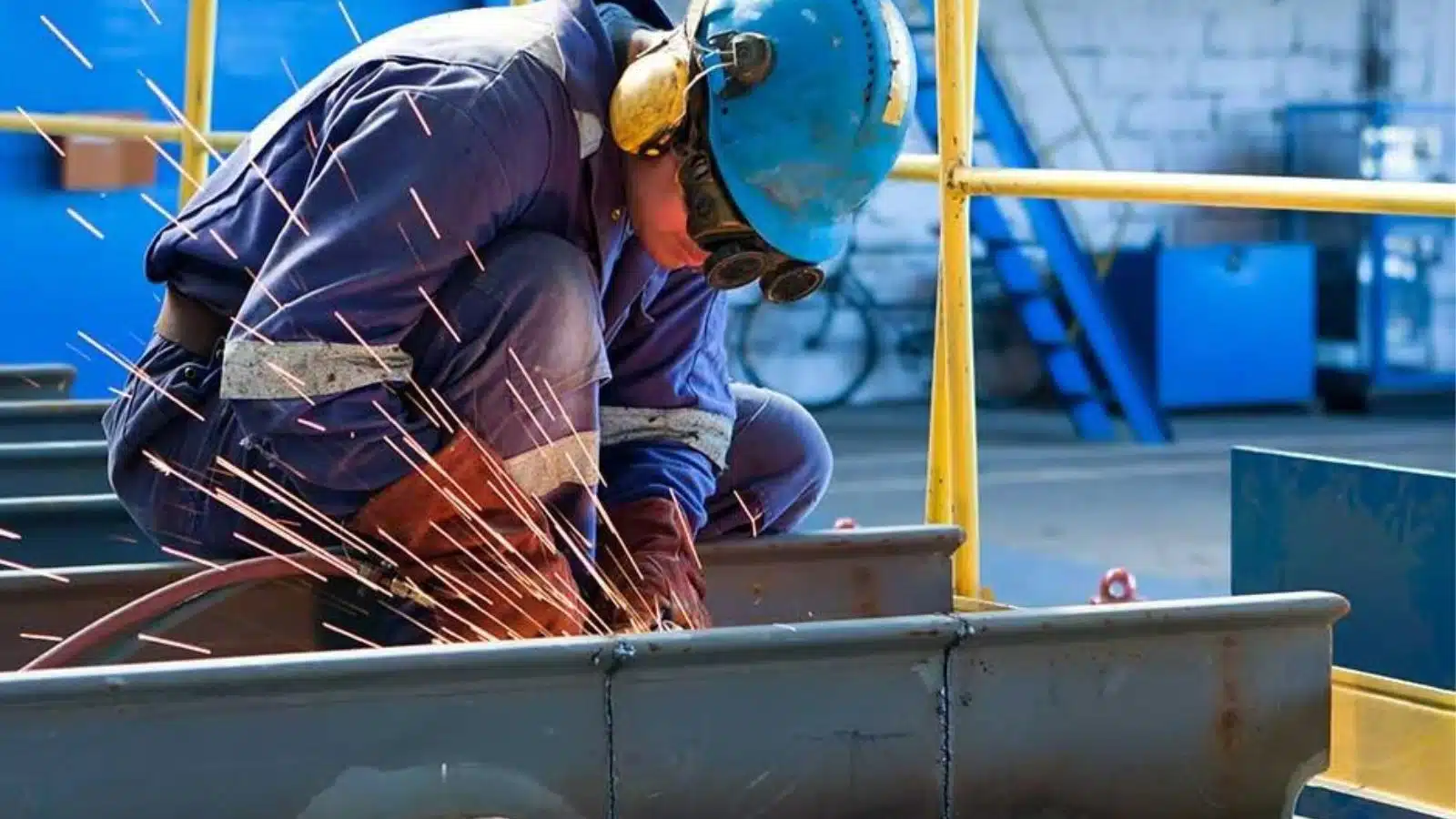
Essential Welding Protective Gear and Equipment in Saudi Arabia: Welding is a critical process across industries such as construction, manufacturing, automotive, and oil and gas. However, it comes with inherent risks — including exposure to extreme heat, intense light, molten metal, and hazardous fumes.
To protect welders from these dangers, using the right protective gear and equipment is non-negotiable. At ASKA Solution, we emphasize the importance of equipping welders with top-quality safety gear to ensure health, safety, and compliance with occupational standards.
Let’s explore the essential welding protective gear every welder should use.
A welding helmet is arguably the most recognizable piece of protective gear.
Purpose: Shields the welder’s eyes, face, and neck from ultraviolet (UV) and infrared (IR) rays, sparks, and spatter.
Features to Look For:
Read Also: The Ultimate Guide to Welding Machines and Cutting Tools for Fabricators
Tip: Always choose a helmet with the correct shade level for the type of welding you’re doing (e.g., MIG, TIG, or Stick welding).
Even under a helmet, additional eye protection is essential.
Purpose: Protects eyes from flying debris, grinding sparks, and UV rays during preparation and finishing tasks.
Standards: Must comply with ANSI Z87.1 or equivalent local safety standards.
Hands are at the highest risk of burns and injuries during welding.
Purpose: Protects from heat, electrical shock, cuts, and abrasions.
Types:
Your upper body needs robust protection from sparks, heat, and molten metal.
Purpose: Shields the torso and arms from burns and radiant heat.
Materials:
For extra coverage, many welders use leather aprons over jackets.
Foot protection is often overlooked but vital.
Purpose: Shields feet from falling objects, sparks, and molten metal.
Features:
Welding fumes and gases can be harmful over time, causing respiratory issues.
Purpose: Protects welders from inhaling toxic fumes and particulates.
Options:
Tip: Ensure your respiratory protection is appropriate for the materials being welded.
Welding areas are often noisy due to grinders, hammering, and machinery.
Purpose: Prevents hearing loss from prolonged exposure to loud noise.
Options:
These protect not just the welder but also nearby workers.
Purpose: Shields others from harmful welding arcs and sparks.
Features: Flame-retardant materials with UV protection.
Welders should avoid synthetic fabrics that can melt and cause severe burns.
Recommended: Heavy-duty cotton or leather pants and full-body coveralls that are flame-resistant.
Heat rises, and welders often work in tight spaces.
Purpose: Protects the scalp and hair from sparks and heat.
Extra: Adds a layer of comfort under the welding helmet.
At ASKA Solution, we supply premium welding protective gear and safety equipment that meets global safety standards and withstands the harshest industrial environments.
Welding is rewarding but risky work. Investing in the right protective gear is an investment in safety, health, and productivity. Always prioritize high-quality PPE (Personal Protective Equipment) and ensure regular inspections and replacements when needed.
Stay protected. Work confidently. Trust ASKA Solution for your welding safety needs.
Don’t forget to share it
Related Articles
The Best Material Fabrication in Saudi Arabia
The Art of Structural Fabrication in Saudi Arabia
Top Welding Fabrication Company in Saudi Arabia
The Best Steel Fabrication in Saudi Arabia
Top Aluminium Fabrication Company in Saudi Arabia
Top Industrial Steel Fabrication Company in Dammam Saudi Arabia
AskA Solution
We firmly believe that the internet should be available and accessible to anyone, and are committed to providing a website that is accessible to the widest possible audience, regardless of circumstance and ability.
To fulfill this, we aim to adhere as strictly as possible to the World Wide Web Consortium’s (W3C) Web Content Accessibility Guidelines 2.1 (WCAG 2.1) at the AA level. These guidelines explain how to make web content accessible to people with a wide array of disabilities. Complying with those guidelines helps us ensure that the website is accessible to all people: blind people, people with motor impairments, visual impairment, cognitive disabilities, and more.
This website utilizes various technologies that are meant to make it as accessible as possible at all times. We utilize an accessibility interface that allows persons with specific disabilities to adjust the website’s UI (user interface) and design it to their personal needs.
Additionally, the website utilizes an AI-based application that runs in the background and optimizes its accessibility level constantly. This application remediates the website’s HTML, adapts Its functionality and behavior for screen-readers used by the blind users, and for keyboard functions used by individuals with motor impairments.
If you’ve found a malfunction or have ideas for improvement, we’ll be happy to hear from you. You can reach out to the website’s operators by using the following email
Our website implements the ARIA attributes (Accessible Rich Internet Applications) technique, alongside various different behavioral changes, to ensure blind users visiting with screen-readers are able to read, comprehend, and enjoy the website’s functions. As soon as a user with a screen-reader enters your site, they immediately receive a prompt to enter the Screen-Reader Profile so they can browse and operate your site effectively. Here’s how our website covers some of the most important screen-reader requirements, alongside console screenshots of code examples:
Screen-reader optimization: we run a background process that learns the website’s components from top to bottom, to ensure ongoing compliance even when updating the website. In this process, we provide screen-readers with meaningful data using the ARIA set of attributes. For example, we provide accurate form labels; descriptions for actionable icons (social media icons, search icons, cart icons, etc.); validation guidance for form inputs; element roles such as buttons, menus, modal dialogues (popups), and others. Additionally, the background process scans all the website’s images and provides an accurate and meaningful image-object-recognition-based description as an ALT (alternate text) tag for images that are not described. It will also extract texts that are embedded within the image, using an OCR (optical character recognition) technology. To turn on screen-reader adjustments at any time, users need only to press the Alt+1 keyboard combination. Screen-reader users also get automatic announcements to turn the Screen-reader mode on as soon as they enter the website.
These adjustments are compatible with all popular screen readers, including JAWS and NVDA.
Keyboard navigation optimization: The background process also adjusts the website’s HTML, and adds various behaviors using JavaScript code to make the website operable by the keyboard. This includes the ability to navigate the website using the Tab and Shift+Tab keys, operate dropdowns with the arrow keys, close them with Esc, trigger buttons and links using the Enter key, navigate between radio and checkbox elements using the arrow keys, and fill them in with the Spacebar or Enter key.Additionally, keyboard users will find quick-navigation and content-skip menus, available at any time by clicking Alt+1, or as the first elements of the site while navigating with the keyboard. The background process also handles triggered popups by moving the keyboard focus towards them as soon as they appear, and not allow the focus drift outside it.
Users can also use shortcuts such as “M” (menus), “H” (headings), “F” (forms), “B” (buttons), and “G” (graphics) to jump to specific elements.
We aim to support the widest array of browsers and assistive technologies as possible, so our users can choose the best fitting tools for them, with as few limitations as possible. Therefore, we have worked very hard to be able to support all major systems that comprise over 95% of the user market share including Google Chrome, Mozilla Firefox, Apple Safari, Opera and Microsoft Edge, JAWS and NVDA (screen readers).
Despite our very best efforts to allow anybody to adjust the website to their needs. There may still be pages or sections that are not fully accessible, are in the process of becoming accessible, or are lacking an adequate technological solution to make them accessible. Still, we are continually improving our accessibility, adding, updating and improving its options and features, and developing and adopting new technologies. All this is meant to reach the optimal level of accessibility, following technological advancements. For any assistance, please reach out to