No products in the cart.

Need help? Call us:
+966 59 204 1946
Shopping cart (0)
Subtotal: 0.00 ر.س
Spend 2,500.00 ر.س to get free shipping
Congratulations! You've got free shipping.
Sale

Have A Question?
Complete the form below to start discussing your industrial products and Services required.
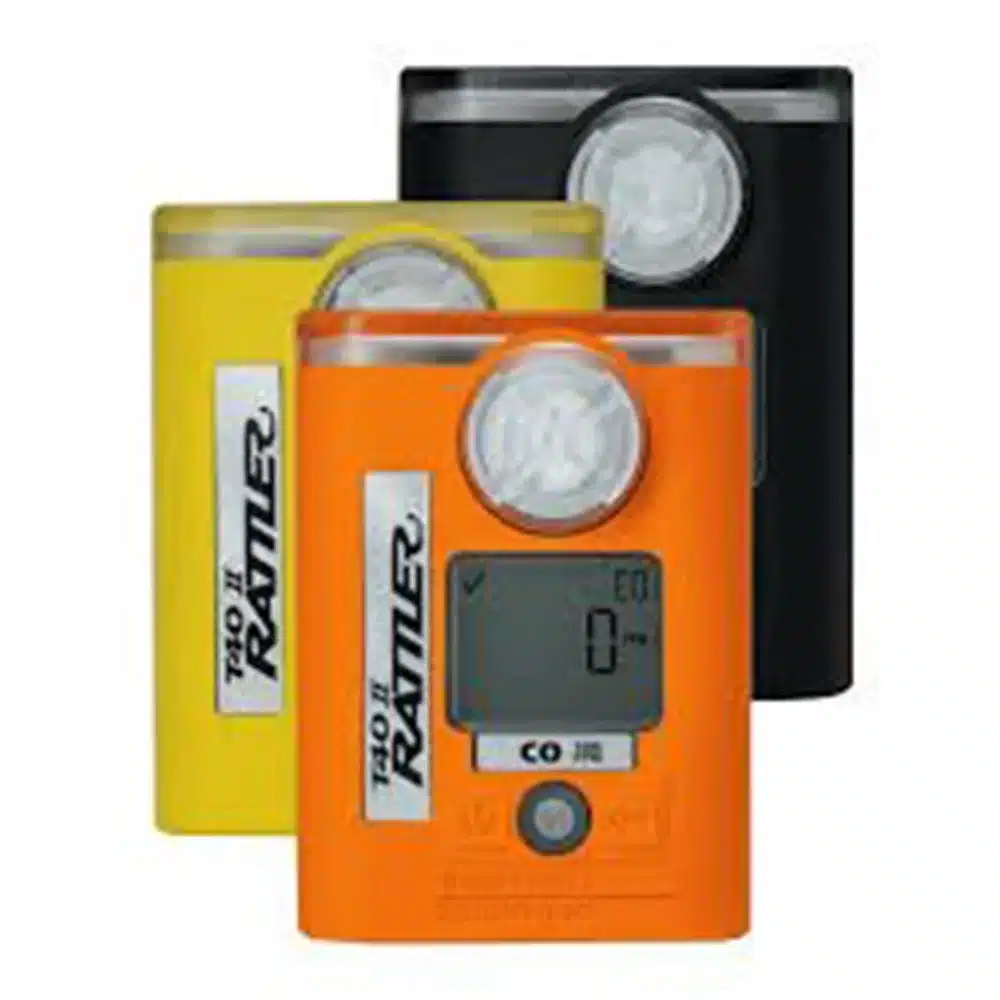
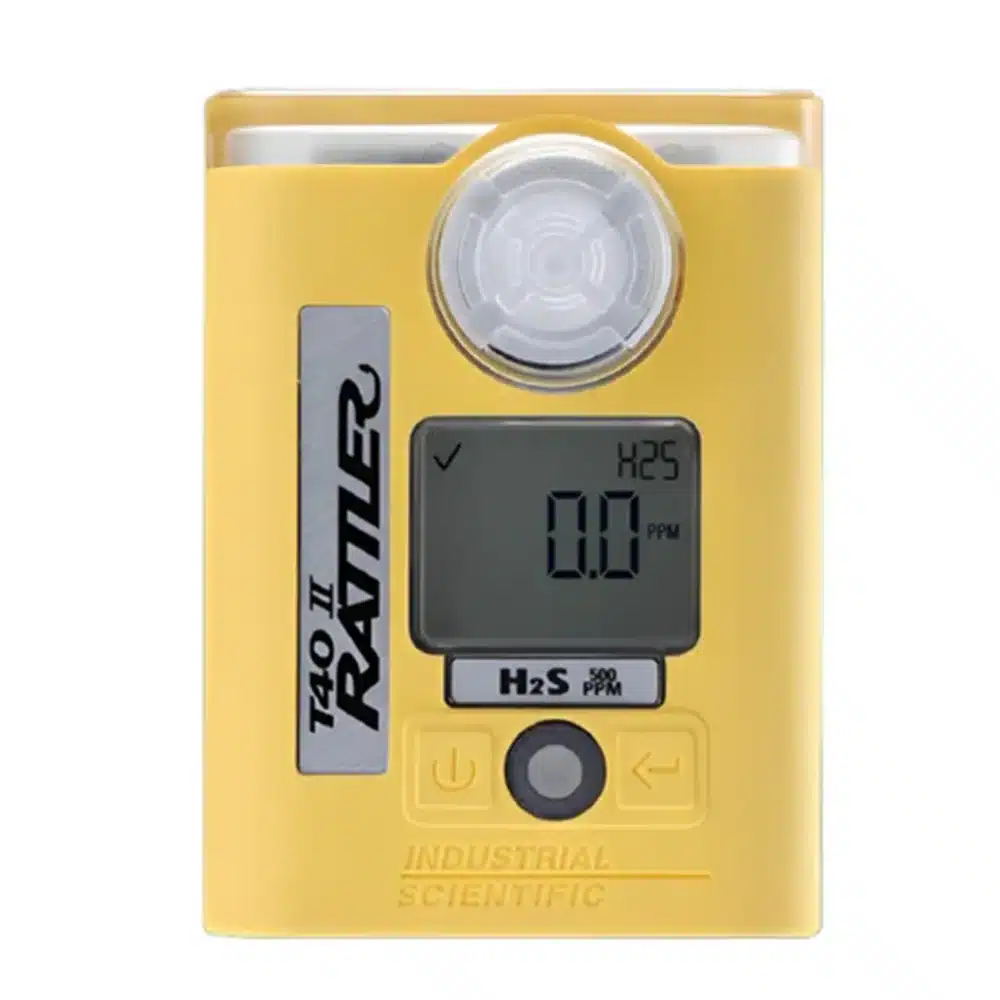
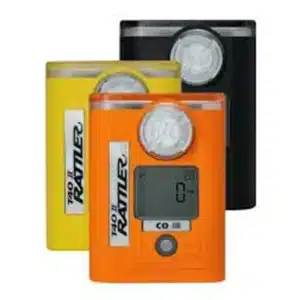
Rattler T40 II Personal Single Gas Detector
- Continuous Personal Protection: The t40 ii rattler monitors toxic H2S, CO, or oxygen hazards in real time.
- Rapid T90 Response: Delivers sub-10-second gas alerts with 95dB audible, visual, and vibrating alarms.
- Two-Year Runtime: Field-replaceable lithium cell eliminates daily charging docks and simplifies fleet upkeep.
- Harsh Environment Durability: Dual IP66/IP68 submersible casing withstands demanding Saudi desert field conditions.
Estimated delivery:1 day
Please, activate Waitlist option to use this widget.

 Rattler T40 II Personal Single...
T40 II Rattler Personal Single Gas Detector In KSA
The t40 ii rattler is an industrial-grade personal single-gas detector engineered by Industrial Scientific to deliver continuous atmospheric surveillance for workers across hazardous environments in Saudi Arabia. Weighing only 85 grams and enclosed in a rugged rubber over-molded polycarbonate housing, this compact monitor clips securely to personal protective equipment to measure toxic hydrogen sulfide, carbon monoxide, or ambient oxygen levels in real time. Purpose-built for high-heat desert installations and heavy industrial facilities from Jubail to Yanbu, the t40 ii rattler ensures personnel safety through ultra-fast sensor reaction times without burdening field technicians with heavy instrumentation.
Key Safety Advantages
Engineered to deliver dependable atmospheric monitoring in mission-critical industrial facilities, the t40 rattler gas detector incorporates several verified performance characteristics:
- Rapid T90 Sensor Response: Features high-precision electrochemical sensing technology that achieves a T90 response time in under 10 seconds, delivering instant warnings when hazardous gas concentrations rise.
- Dual IP66 and IP68 Ingress Protection: The t40 ii rattler provides complete dust-tight encapsulation and waterproof submersion durability, protecting internal electronics against fine desert sand and washdown sprays.
- Uncompromising Triple Alarm Notification: Immediately alerts the wearer in high-noise industrial settings using two ultra-bright red flashing LEDs, a piercing 95dB audible horn, and a strong internal vibration motor.
- Extended Two-Year Continuous Runtime: Powered by a replaceable 3.6V primary lithium-thionyl chloride battery that provides up to two years of continuous operation without needing daily recharging cradles.
- Intuitive Two-Button Interface: A clear segmented LCD display provides continuous real-time gas readings, peak values, and battery status with a simple two-button navigation layout for easy field operation.
- Comprehensive Event Logging: Automatically records up to 100 alarm events and 30 system error events, enabling safety officers to audit field exposures and maintain regulatory compliance.
- Global Hazardous Area Certifications: Certified under IECEx, ATEX, UL Class I Division 1, and CSA standards for safe operation in explosive atmospheres.
Technical Specifications
Verified mechanical, electrical, and measurement parameters for the industrial scientific t40 rattler derived from official manufacturer documentation:
| Parameter | Technical Specification |
|---|---|
| Manufacturer | Industrial Scientific |
| Model Series | T40 II Rattler (Rattler T40 II) |
| Sensor Technology | Electrochemical toxic and oxygen sensors |
| Gases Monitored | Hydrogen Sulfide (H2S), Carbon Monoxide (CO), or Oxygen (O2) |
| Carbon Monoxide (CO) Range | 0 to 1000 ppm / 0 to 2000 ppm (1 ppm resolution) |
| Hydrogen Sulfide (H2S) Range | 0 to 100 ppm / 0 to 200 ppm / 0 to 500 ppm (0.1 ppm resolution) |
| Oxygen (O2) Range | 0 to 30% volume (0.1% volume resolution) |
| Sensor Response Time (T90) | Less than 10 seconds (<10s) |
| Alarm Indicators | Audible (95dB at 10 cm), Visual (2 red LEDs), and Internal Vibration |
| Alarm Setpoints | Low Alarm, High Alarm, TWA (Time-Weighted Average), STEL (Short-Term Exposure Limit) |
| Display Type | Segmented Liquid Crystal Display (LCD) |
| Housing Material | Polycarbonate with protective rubber over-mold |
| Ingress Protection Rating | IP66 and IP68 certified |
| Operating Temperature Range | -40°C to +50°C (-40°F to +122°F) |
| Operating Humidity Range | 5% to 95% Non-condensing |
| Power Source | 3.6V Primary Lithium-Thionyl Chloride (Li-SOCl2), 1.5Ah, 2/3AA replaceable cell |
| Operational Battery Life | Up to 2 years under standard conditions |
| Dimensions (H x W x D) | 82 mm x 60 mm x 27 mm (3.23 in x 2.36 in x 1.07 in) |
| Unit Weight | Approximately 85g (3 oz) |
| Hazardous Area Approvals | IECEx: Ex ia IIC T4 Ga; ATEX: Ex ia IIC T4 Ga; UL: Class I, Div 1, Groups A, B, C, D T4 |
Applications of T40 Rattler Single Gas Monitor Across Saudi Industries
Combining compact dimensions with reliable environmental sealing, the t40 rattler single gas monitor delivers critical personal protection across vital industrial sectors:
- Upstream Oil & Gas Wellhead Operations: Provides continuous breathing zone monitoring using the dedicated t40 rattler gas detector h2s configuration during oil drilling, sour gas extraction, and field pipeline pigging across the Eastern Province.
- Petrochemical Refining & Downstream Plants: Detects toxic carbon monoxide around industrial furnaces, catalytic cracking units, and steam boilers, or toxic sulfur compounds using the reliable rattler t40 ii in Jubail and Yanbu complexes.
- Confined Space Entry & Vessel Purging: Ensures that storage tanks, distillation columns, and underground utility vaults maintain safe breathable atmospheres before and during maintenance using the rattler t40 platform.
- Wastewater Treatment & Municipal Lift Stations: Protects municipal utility maintenance crews from deadly sewer gas accumulations using the dependable t40 rattler h2s monitor during vault entry and pump servicing in Riyadh and Dammam.
- Hazardous Materials & Emergency Response: Equips industrial fire brigades and hazmat specialists with rapid-reading toxic gas detection to assess hazardous zones safely with the t40 ii rattler.
How to Use / Install the Rattler T40 Monitor
Adhere to standard industrial safety protocols to ensure dependable daily operation and maximize the service life of your t40 ii rattler instrument:
- Conduct a Daily Bump Test: Before entering any hazardous work area, challenge the sensor with a known concentration of test gas to verify that the sensor responds and all alarms activate correctly.
- Position Within the Breathing Zone: Securely attach the stainless steel crocodile clip to your shirt collar, chest pocket, or harness strap within 25 cm of your breathing zone so the t40 ii rattler samples the air you inhale.
- Keep the Sensor Port Clear: Ensure the front sensor aperture remains completely unobstructed by heavy jackets, safety harnesses, dirt, or mud during physical work.
- Inspect Real-Time Display: Confirm that the segmented LCD screen indicates normal baseline levels (0 ppm for toxic gases or 20.9% for oxygen) and that the battery level icon is full on the t40 ii rattler.
- Respond Immediately to Alarms: If the unit activates its 95dB horn, vibration, or flashing LEDs, evacuate immediately to an upwind, designated safe assembly area before investigating the gas source.
Precautions & Safety Protocols
Because the t40 ii rattler is life-safety equipment used in explosive and toxic environments, follow these critical precautions:
- Intrinsic Safety Compliance: Never open the instrument casing, replace the internal battery, or service internal sensor components within a classified hazardous atmosphere. Battery replacement must occur only in a verified non-hazardous location.
- Avoid Sensor Poisoning: Prevent exposing the electrochemical sensor to airborne silicones, heavy solvent vapors, or highly concentrated acidic gases that can desensitize internal catalysts.
- Zeroing in Clean Air Only: Only perform fresh-air calibrations or zero adjustments in an ambient environment known to be completely free of toxic contaminants and possessing normal 20.9% oxygen content.
- Routine Calibration Intervals: While daily bump testing confirms operational readiness, perform full sensor span calibration every 30 to 90 days in accordance with facility safety procedures using certified span gas.
- Handling and Physical Shock: While the protective rubber over-mold resists accidental workbench impacts, avoid subjecting the instrument to severe physical crushes or dropping it from heights that could fracture sensor membranes.
Why Choose ASKA Solution as Your Gas Detection Partner?
ASKA Solution supports safety managers, industrial contractors, and operational facilities across Saudi Arabia with dependable gas detection instruments, including the t40 ii rattler:
- Technical Sourcing & Model Matching: We assist safety teams with selecting the precise sensor range, calibration gas accessories, and single-unit or fleet deployment configurations for the t40 ii rattler.
- Commercial B2B Supply: Providing structured formal quotations, schedule-aligned delivery, and technical documentation for industrial operations from Dammam to Riyadh.
- Authentic Industrial Safety Equipment: Focusing on verified manufacturing standards to keep hazardous work environments protected with genuine personal monitoring hardware.
FAQs
Common technical inquiries regarding the t40 ii rattler and personal gas detection in industrial facilities:
- What specific gases can the t40 ii rattler detect?
The t40 ii rattler is a dedicated single-gas monitor. Each instrument is factory-configured to measure one target gas: Hydrogen Sulfide (H2S), Carbon Monoxide (CO), or Oxygen (O2) across multiple selectable ppm and volume ranges. - How long does the battery last, and can it be replaced in the field?
The instrument is powered by a high-capacity 3.6V primary lithium-thionyl chloride cell that delivers up to two years of continuous runtime. When depleted, the battery can be replaced in a non-hazardous area without retiring the detector. - Is the t40 ii rattler suitable for harsh outdoor conditions in Saudi Arabia?
Yes. With dual IP66/IP68 ingress protection and a durable rubber over-mold, the detector is fully sealed against fine blowing desert sand, rain, and water submersion, while operating across ambient temperatures from -40°C to +50°C. - What types of alarm alerts are integrated into this personal monitor?
The detector features a triple alarm system including two high-visibility red flashing LEDs, a loud 95dB audible horn at 10 cm, and an internal vibrating motor to ensure workers are alerted even in noisy industrial plant environments. - What is the difference between a bump test and a calibration for the t40 ii rattler?
A bump test briefly exposes the sensor to target gas to verify that the sensor responds and all alarms trigger, which should be performed before each day’s use. A calibration adjusts the instrument’s accuracy against a certified span gas standard, typically conducted every 30 to 90 days.
- Datasheet / Catalog
- FAQ's
- Precautions
Get All the Information by clicking below:
What specific gases does the T40 Rattler detect?
The T40 Rattler is a dedicated single-gas monitor. Different models are available, each factory-configured to detect one specific gas: either Hydrogen Sulfide (H2S), Carbon Monoxide (CO), or Oxygen (O2) levels.
How long does the battery last and can it be replaced?
The high-performance lithium battery provides up to two years of continuous, maintenance-free operation under normal conditions. The battery is also field-replaceable, allowing for minimal downtime.
Is the T40 Rattler suitable for the demanding environments in Saudi Arabia?
Yes, absolutely. It is designed for harsh conditions, featuring a durable, shock-resistant housing and an IP66/68 rating. This means it is completely protected from dust ingress and can withstand powerful water jets and even full submersion, making it ideal for industrial sites across Saudi Arabia.
How often does this gas detector require calibration?
While a bump test is recommended before each use to ensure functionality, the standard calibration frequency is typically every 30 to 90 days. However, always adhere to your company's specific safety policy and local Saudi Arabian regulatory standards.
What types of alarms does the T40 Rattler have?
It features a powerful triple-alarm system to ensure warnings are impossible to miss. This includes two ultra-bright flashing LEDs, a very loud 95dB audible alarm, and a strong internal vibrating alarm for high-noise environments.
Perform Daily Functional Checks: Always conduct a "bump test" before each day's use. This simple check verifies that the sensor correctly responds to gas and that all visual, audible, and vibrating alarms are functioning properly.
Keep the Sensor Port Clear: Never allow the sensor opening to be blocked by clothing, dirt, mud, or other contaminants. An obstructed sensor cannot detect gas accurately, which can lead to a dangerous failure to alarm.
Do Not Submerge in Liquids: While the device is highly water-resistant (IP68), it is not designed for underwater operation. Prolonged submersion, especially in corrosive liquids, can damage the unit. Clean it with a damp cloth as needed.
Avoid High-Impact Drops: Although rugged, the device contains sensitive electronic components. Avoid dropping it from significant heights onto hard surfaces, as a severe impact could damage the sensor or internal electronics.
Use Only in Accordance with Certifications: Do not attempt to open the device or perform unauthorized repairs, as this will void its intrinsic safety certifications (e.g., IECEx). Using a compromised device in a hazardous location could pose a serious ignition risk.
Be the first to review “Rattler T40 II Personal Single Gas Detector” Cancel reply
You must be logged in to post a review.
Related products







Still Searching for the Right Product?
Let us know your exact requirements — we’ll make it happen.
This website uses cookies to improve your experience.
By using this website you agree to our Privacy Policy.
By using this website you agree to our Privacy Policy.
Ok, I am ready

Reviews
There are no reviews yet.