No products in the cart.
Tools & Hardware
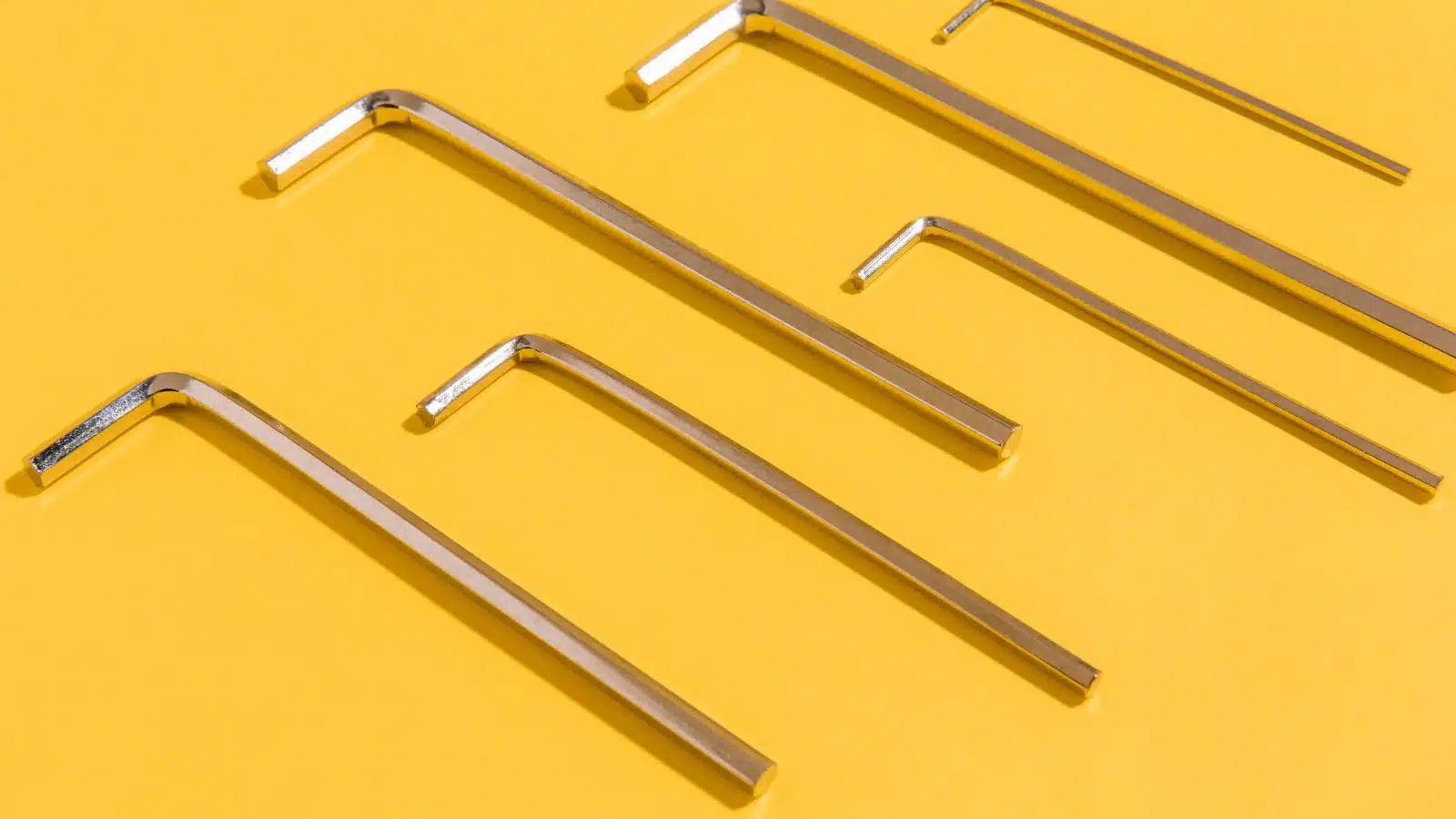
Why Choose Long Chrome Vanadium Allen Wrenches for Your Toolbox
Why Choose Long Chrome Vanadium Allen Wrenches for Your Toolbox: When it comes to equipping...

+966 59 204 1946
No products in the cart.
In the grand tapestry of engineering, construction, and manufacturing, the unsung heroes are often the smallest components. While visible structures and complex machinery capture attention, the very integrity and longevity of these marvels hinge on something seemingly minor: fasteners. The right fastener selection isn’t just a detail; it’s a critical decision that can make or break a project, impacting safety, performance, durability, and ultimately, your bottom line.
At Aska Solution, we’ve spent years partnering with businesses across diverse industries, from heavy industrial applications to intricate structural designs. We’ve seen firsthand how a meticulous approach to fastener selection can prevent catastrophic failures, optimize operational efficiency, and extend the lifespan of valuable assets. Conversely, we’ve also witnessed the costly consequences of overlooking this crucial step—from premature corrosion to structural instability and extensive rework. This guide is built from our practical experience, designed to empower you with the knowledge to make confident, informed choices for any project.
Think of fasteners as the bones and joints of your creation. They are the mechanical devices that physically join or affix two or more objects together. Without them, even the most robust materials would simply fall apart. Their role extends beyond mere connection; they must withstand various forces, endure diverse environments, and maintain their integrity over time. From the smallest electronic device to the largest bridge, the reliability of a structure is directly proportional to the reliability of its fasteners. Understanding the nuances of fastener selection is, therefore, paramount.
Navigating the vast array of fastener types, materials, and specifications can be daunting. This comprehensive guide will walk you through the essential steps, providing you with the framework we use in our own consulting practice. We’ll demystify complex terminology, offer practical insights, and share real-world considerations that will transform your approach to choosing these vital components. By the end, you’ll be equipped to make educated decisions, ensuring your projects are not only functional but also exceptionally resilient and safe.
The very first step in effective fastener selection is to thoroughly understand the environment and application where the fasteners will operate. This foundational analysis dictates nearly every subsequent decision, from material choice to coating specifications. Overlooking these factors is a common misstep we encounter, often leading to premature failure and costly repairs. We consistently emphasize that context is king.
The operational environment is a crucible that tests the limits of any component. Fasteners exposed to external elements face a barrage of challenges that indoor fasteners typically avoid.
Understanding these environmental factors is crucial for ensuring the chosen fastener materials can withstand the specific conditions without premature degradation, ensuring the long-term reliability of your assembly.
The nature of the joint itself—whether it’s intended to be permanent or allow for future disassembly—is another pivotal consideration for fastener selection.
The type and magnitude of the load a fastener will experience are perhaps the most critical mechanical considerations. This directly influences the required tensile strength and shear strength of the chosen fastener.
By thoroughly evaluating these environmental and application factors, you lay a solid foundation for an informed fastener selection process, ensuring your project’s reliability and safety from the ground up.
The material from which a fastener is made is arguably its most defining characteristic, dictating its strength, durability, and resistance to environmental degradation. Making the correct choice in fastener materials is fundamental to the long-term success of any assembly. Our experts at Aska Solution emphasize that a mismatch here can lead to anything from inconvenient maintenance to severe structural failure.
These two material families dominate the fastener market, each with distinct advantages and ideal applications.
Description: Primarily iron alloyed with carbon, providing high strength and hardness. Carbon steel fasteners are graded (e.g., Grade 2, Grade 5, Grade 8 in imperial; Class 4.8, 8.8, 10.9 in metric), with higher grades indicating greater tensile strength and shear strength.
Advantages: Generally less expensive than stainless steel, offers very high strength, and can be easily hardened. Many bolt types, screw types, and nut types are available in high-strength steel grades, making them excellent load bearing fasteners.
Disadvantages: Prone to rust and corrosion if not properly coated or plated.
When to Choose: Ideal for applications requiring maximum strength and hardness where corrosion is not a significant concern or can be mitigated through coatings. Common in construction (structural fasteners), automotive, and heavy machinery, especially when protected from moisture.
Corrosion Resistance: Typically poor without a protective coating.
Description: Iron alloyed with a minimum of 10.5% chromium, which forms a passive layer on the surface, providing excellent corrosion resistance. Common grades include 304 (A2) and 316 (A4).
Advantages: Excellent corrosion resistance (especially 316 in harsh environments), aesthetically pleasing, maintains strength at high and low temperatures. No need for additional coatings, which can chip or wear.
Disadvantages: Generally more expensive than carbon steel, typically lower tensile strength and hardness compared to high-grade carbon steel. Can suffer from galling (cold welding) if not properly lubricated during assembly.
When to Choose: Essential for outdoor applications, marine environments, chemical processing, food and beverage industries, and medical applications where corrosion resistance is critical and strength requirements are met by the grade. Many common bolt types and screw types are readily available in stainless steel.
Corrosion Resistance: High (304) to very high (316).
Beyond steel, other specialized fastener materials offer unique properties for specific challenges.
Description: An alloy of copper and zinc.
Advantages: Good electrical conductivity, excellent corrosion resistance in water, non-magnetic, aesthetically pleasing (often used for decorative purposes), and relatively easy to machine. Less prone to galling than stainless steel.
Disadvantages: Lower strength than steel, more expensive.
When to Choose: Electrical applications, decorative hardware, marine environments (though bronze is often preferred), and applications where non-magnetic properties are required.
Description: An alloy primarily of copper, usually with tin as the main additive.
Advantages: Superior corrosion resistance to brass, especially in saltwater and harsh marine environments. Good strength, excellent ductility, and often non-sparking.
Disadvantages: More expensive than steel, generally lower strength than high-grade steel.
When to Choose: Marine applications (boats, docks), chemical plants, and environments requiring exceptional corrosion resistance and non-sparking properties.
Description: Lightweight metal, often alloyed with other elements (e.g., magnesium, silicon) to improve strength.
Advantages: Extremely lightweight, good corrosion resistance (forms a passive oxide layer), non-magnetic.
Disadvantages: Significantly lower strength than steel, prone to galvanic corrosion when in contact with less noble metals (like steel), can be more expensive.
When to Choose: Aerospace, automotive, and other applications where weight reduction is paramount, and strength requirements can be met. Careful consideration of material compatibility is vital to prevent galvanic corrosion.
For carbon steel fasteners, enhancing corrosion resistance is often achieved through various coatings and platings. These protective layers act as a barrier or sacrificial anode.
Choosing the right fastener materials and appropriate coatings ensures that your industrial fasteners remain robust and reliable, providing the necessary tensile strength and shear strength throughout their service life. This decision is crucial for protecting against premature wear and maintaining structural integrity.
| Fastener Material | Key Advantage | Key Disadvantage | Typical Applications | Corrosion Resistance |
|---|---|---|---|---|
| Carbon Steel (Grades 2, 5, 8) | High Strength, Cost-Effective | Poor Corrosion Resistance (uncoated) | Construction (structural fasteners), Automotive, Machinery | Low (requires coating) |
| Stainless Steel (304/A2) | Good Corrosion Resistance, Aesthetics | Lower Strength than High-Grade Steel, Galling Risk | Outdoor, Food & Beverage, General Purpose | High |
| Stainless Steel (316/A4) | Excellent Corrosion Resistance (Marine) | Higher Cost, Lower Strength than High-Grade Steel | Marine, Chemical, Coastal, Medical | Very High |
| Brass | Good Electrical Conductivity, Decorative | Lower Strength, Higher Cost | Electrical, Decorative Hardware, Plumbing | Good |
| Bronze | Excellent Marine Corrosion Resistance, Ductility | Higher Cost, Moderate Strength | Marine, Chemical, Harsh Water Environments | Excellent |
| Aluminum | Extremely Lightweight, Non-Magnetic | Low Strength, Galvanic Corrosion Risk | Aerospace, Automotive (lightweighting), Electronics | Good (but sensitive to galvanic reaction) |
With the environment and materials established, the next critical step in fastener selection is identifying the correct type of fastener for your specific joining task. Each category of fastener—screws, bolts, nuts, washers, and anchors—is designed for particular applications and load conditions. Our integrated approach at Aska Solution often involves recommending a combination of these industrial fasteners to achieve optimal structural integrity.
Screws are perhaps the most ubiquitous type of fastener, distinguished by their ability to form their own mating thread, either by tapping into a material or engaging with a pre-tapped hole. We encounter a vast array of screw types in our projects.
Choosing the right screw types involves considering the material being joined, the required holding power, and environmental conditions that dictate fastener materials.
Bolts and nuts work in tandem to create a strong, clamp-force connection that can be easily disassembled. They are a cornerstone of structural and mechanical engineering. Understanding the various bolt types and nut types is key for secure fastening.
The combination of appropriate bolt types and nut types, considering their thread types and fastener materials, is paramount for creating reliable mechanical fasteners.
Washers are often overlooked but play a vital role in proper fastener selection. These thin plates (typically disk-shaped) perform several crucial functions. Different washer types provide specific benefits.
When our team tackles this issue on-site, they often find that incorporating the correct washer types can significantly improve the longevity and safety of an assembly, preventing common issues like embedment or loosening.
Anchors are specialized fasteners designed to attach objects to concrete, masonry, or drywall, where traditional screws or bolts would lack sufficient holding power.
The specific application and the material of the base structure (e.g., concrete, brick, hollow wall) will dictate the appropriate anchor choice.
The threads of a fastener are its very essence, responsible for generating clamping force and providing resistance to pull-out. Understanding different thread types is crucial for effective fastener selection, impacting everything from assembly speed to vibrational resistance and ultimate strength. In our engineering assessments, we pay close attention to thread compatibility and design, as mismatched or poorly chosen threads can lead to premature failure.
The distinction between coarse and fine thread types is fundamental and impacts a fastener’s performance in several ways.
Description: Have fewer threads per inch (TPI) or larger pitch (distance between threads) compared to fine threads.
Advantages:
1. Faster Assembly: With fewer turns required to achieve full engagement, coarse threads are quicker to assemble and disassemble. This can significantly impact manufacturing efficiency for industrial fasteners.
2. Less Prone to Cross-Threading: The larger crest and root make them more forgiving during initial engagement.
3. Better Tolerance for Damage/Plating: More robust against minor nicks, dents, or the thickness added by hot-dip galvanization on bolt types.
4. Stronger in Brittle Materials: Provide a better bite in softer or brittle materials like cast iron, aluminum, or plastics, as they offer more material between the threads to prevent stripping.
Disadvantages: Less resistant to vibration, slightly lower tensile strength for a given diameter (due to smaller stress area).
When to Choose: General-purpose fastening, rougher applications, situations requiring quick assembly or where plating is involved. Many common screw types and bolt types utilize coarse threads.
Description: Have more threads per inch or smaller pitch compared to coarse threads.
Advantages:
1. Higher Tensile Strength: For a given diameter, fine threads have a larger stress area and a larger minor diameter, providing greater resistance to tension. This is a critical factor for load bearing fasteners under significant pull-out forces.
2. Greater Resistance to Vibration: The smaller helix angle and increased contact area make them less likely to loosen under dynamic loads. This is why you often find fine thread types in precision machinery.
3. Finer Adjustment: The smaller pitch allows for more precise adjustments during assembly.
4. Better Sealing: The increased number of threads per unit length can provide a better seal in pressure applications.
Disadvantages: Slower to assemble/disassemble, more prone to cross-threading, more sensitive to plating thickness or minor damage.
When to Choose: High-stress applications, precision adjustments, situations with significant vibration, and thin-walled materials where maximum strength is needed. Common in aerospace, automotive engines, and precision instruments.
Machine threads are characterized by their consistent, uniform pitch and profile, designed to mate precisely with pre-tapped holes or nuts. These thread types are engineered for mechanical fasteners that demand high strength and reliability.
These thread types are specifically designed to create their own mating threads in the material they are driven into, eliminating the need for pre-tapping.
Description: Feature sharp, cutting edges on the thread flank or tip that cut into the material (e.g., metal, plastic) as the screw is driven.
Types: Come in various points (Type A, B, AB, F) and thread configurations suited for different material thicknesses and hardnesses. Some even have a drill bit-like point (self-drilling screws) to eliminate the need for a pilot hole.
Advantages: Faster assembly, reduced labor by eliminating pre-tapping, good holding power in appropriate materials.
Disadvantages: Not as strong as machine threads with a nut, can strip out if overtightened or removed frequently.
Applications: Sheet metal fabrication, plastic assembly, consumer electronics, and light industrial applications where permanent or semi-permanent connections are needed.
Description: Characterized by a coarse, sharp, often tapered thread profile designed to grip wood fibers effectively. The threads are widely spaced to maximize material engagement.
Advantages: Excellent holding power in wood, no need for pre-tapping (though a pilot hole is often recommended to prevent splitting), strong resistance to pull-out in wood.
Disadvantages: Only suitable for wood or similar soft, fibrous materials.
Applications: Carpentry, furniture making, cabinet installation, and any application involving joining wood components.
Proper fastener selection based on thread types ensures optimal engagement, desired strength, and efficient assembly, directly influencing the overall success and longevity of your project.
While often perceived as merely aesthetic, the head style and drive type of a fastener are critical functional choices in fastener selection. They impact how torque is applied, the fastener’s flushness with the surface, and even its resistance to tampering. Our field engineers at Aska Solution emphasize that selecting the right head and drive is crucial for efficient installation, secure fastening, and the long-term integrity of an assembly.
The head style dictates how the fastener sits on the surface and how its load is distributed.
Each head style offers specific advantages depending on whether a flush surface, maximum clamping area, or specific aesthetic is desired.
The drive system is the recess or protrusion on the fastener head that engages with the driving tool. This choice directly affects the amount of torque that can be applied, the risk of cam-out, and installation speed.
Advantages: Can be driven with a flat-blade screwdriver.
Disadvantages: Very prone to cam-out (the driver slipping out), limited torque transfer, and difficult to use with power tools efficiently. We generally advise against slotted drives for critical applications.
Advantages: Widely available, self-centering.
Disadvantages: Still prone to cam-out before optimal torque is reached, especially with worn bits.
Advantages: Excellent resistance to cam-out, allows for high torque application, can be driven one-handed, holds the bit well. Very popular in Canada for wood screw types.
Disadvantages: Less common globally than Phillips or Torx.
Advantages: Superior resistance to cam-out, allows for very high torque transfer, extends bit life, very efficient with power tools.
Disadvantages: Requires a specific Torx bit.
Advantages: Allows for very high torque, ideal for cap screws and set screws where a flush finish is desired. Often used for high-strength mechanical fasteners.
Disadvantages: Requires an Allen key, can strip out if overtightened or if the key is worn.
When specifying industrial fasteners, we often recommend Torx or Hex Socket drives for applications requiring high torque or resistance to loosening, minimizing installation issues.
For applications where security is paramount, preventing unauthorized access or removal, specialized tamper-resistant head styles and drive types are essential.
Pin-in-Hex (Security Hex): A small pin in the center of a standard hex socket, requiring a specialized driver with a hole.
Pin-in-Torx (Security Torx): Similar to pin-in-hex, but with a Torx drive.
Spanner Head (Snake Eye): Two holes, requiring a “fork” style bit.
Tri-Wing: A three-slotted recess, requiring a specialized Tri-Wing bit.
One-Way Screws: Designed to be driven in one direction (tightened) but cannot be easily removed without specialized tools or destructive methods.
The careful consideration of head styles and drive types ensures efficient assembly, reliable tightening, and appropriate security, making them integral to effective fastener selection.
The mechanical properties of fasteners—their ability to withstand various forces—are non-negotiable considerations in fastener selection. Miscalculating these parameters can lead to catastrophic failure. At Aska Solution, our structural engineers frequently engage in detailed load calculations to ensure that every industrial fastener specified is more than capable of handling the demands placed upon it, focusing heavily on tensile strength, shear strength, and fatigue limit.
Tensile strength is a fundamental property that quantifies a fastener’s resistance to forces that try to pull it apart along its length.
Shear strength measures a fastener’s resistance to forces that attempt to cut or slide it across its cross-section.
While tensile and shear strength address ultimate breaking points, fatigue limit addresses a fastener’s ability to endure repeated cycles of stress below those ultimate limits.
“Ignoring the fatigue limit in dynamic applications is akin to building a bridge with a ticking clock. The ultimate strength of a fastener means little if it fails prematurely after thousands of unnoticed micro-cycles. True durability comes from understanding long-term endurance.” – Dr. Eleanor Vance, Materials Science Engineer
Mastering fastener selection for strength means not just looking at peak loads but considering the entire operational life cycle, ensuring the chosen load bearing fasteners can withstand every force, every day, for years to come.
Even with a solid understanding of fastener types, materials, and strength, errors in fastener selection are surprisingly common. These mistakes, though seemingly minor, can have significant repercussions, leading to premature failure, reduced safety, and increased maintenance costs. Our experience at Aska Solution has shown that vigilance against these pitfalls is as important as knowing the correct procedures.
One of the most frequent and impactful errors we observe is the selection of fastener materials that are ill-suited for the application environment.
Prevention: Always consider the galvanic series when mixing metals. Use insulating washers or coatings, or select fastener materials that are galvanically compatible with the joined components. Stainless steel 316 is generally more noble and poses less risk, but even it can cause issues with aluminum in harsh conditions. We once assisted a client whose exterior light fixtures were failing prematurely due to this exact issue—steel screws used with aluminum housings, exacerbated by coastal humidity.
Choosing the correct fastener materials is not just about strength but also about chemical and environmental resilience.
The proper tightening of a fastener is paramount. Both overtightening and undertightening can lead to joint failure.
Problem: If a bolt is not tightened sufficiently, it won’t develop the necessary clamping force (preload) to hold the joint together. This makes the joint susceptible to vibration, shear forces, and separation. The bolt can then experience dynamic loads directly, leading to fatigue failure. For critical structural fasteners, insufficient preload can mean the entire assembly doesn’t perform to design specifications.
Consequences: Joint loosening, vibration fatigue, leakage (in sealed applications), and potential catastrophic failure.
Problem: Applying too much torque can stress the fastener material beyond its yield point, causing permanent deformation, thread stripping, or even immediate fracture. It can also damage the material being clamped. Overtightening can also cause hydrogen embrittlement in high-strength bolts, leading to delayed brittle fracture.
Consequences: Fastener failure, damage to components, increased risk of hydrogen embrittlement.
As discussed in Step 1, ignoring the environment leads to predictable failures.
A holistic approach to fastener selection, which rigorously considers all environmental factors from the outset, is crucial for long-term reliability and avoiding costly mistakes. This means thinking beyond the immediate strength requirements and considering the life cycle of the fastener in its intended operating conditions.
Not all fastening challenges can be met by standard screws, bolts, and nuts. Many industries and applications demand specialized industrial fasteners designed to perform under extreme conditions, provide unique bonding properties, or meet stringent regulatory standards. Our expertise at Aska Solution often involves delving into these niche solutions to deliver robust, high-performance systems for our clients.
Adhesive fasteners, while not mechanical in the traditional sense, offer compelling alternatives or complements to conventional methods in certain scenarios.
When to Use: Ideal for applications with high vibration, preventing thread types from backing out, or providing a seal against leaks.
When to Use: For heavy structural fasteners, situations requiring high pull-out strength in brittle materials, or when traditional expansion anchors might crack the base material.
When to Use: For lightweighting (e.g., in automotive and aerospace to reduce the number of bolt types and their weight), joining dissimilar materials without galvanic corrosion, or creating continuous stress distribution across a joint.
These industries operate under extreme demands for safety, performance, and reliability, necessitating fasteners with superior characteristics. Fastener selection here is often governed by stringent standards.
High Strength-to-Weight Ratio: Often made from specialized alloys (e.g., titanium, superalloys, high-strength steels like 17-4 PH stainless) to minimize weight while maximizing tensile strength and shear strength.
Fatigue Resistance: Engineered for exceptional fatigue limit to withstand millions of stress cycles without failure, critical for aircraft and vehicle components.
Corrosion Resistance: Advanced coatings or inherently corrosion-resistant fastener materials are used to protect against various environments, including de-icing fluids, saltwater, and engine chemicals.
Precision and Traceability: Manufactured to extremely tight tolerances with full material traceability (lot numbers, certifications) to ensure quality and accountability.
Vibration Resistance: Incorporate specialized locking features (e.g., self-locking nut types, intricate washer types, thread-locking patches) to prevent loosening under extreme vibration.
For heavy construction and civil engineering, structural fasteners are designed to carry significant loads, ensuring the integrity and safety of buildings, bridges, and other large structures.
High Strength: Typically made from high-strength carbon steel (e.g., ASTM A325, A490 bolts) with corresponding heavy hex nut types and hardened washer types. These are designed to be prime load bearing fasteners.
Controlled Preload: Often installed using specific methods to achieve a precise and high preload (tension) in the bolt, which is critical for transferring shear loads through friction in the joint (slip-critical connections) or bearing (bearing-type connections).
Durability and Longevity: Chosen for long service life, often hot-dip galvanized for enhanced corrosion resistance in outdoor environments.
* Standardization: Adhere to strict industry standards and codes (e.g., AISC for steel structures) to ensure interchangeability and predictable performance.
These specialized industrial fasteners underscore the vast and intricate world of fastening, demonstrating that the right solution often requires tailored expertise and a deep understanding of application-specific demands.
While this guide provides a comprehensive framework for fastener selection, the sheer complexity and critical nature of many projects often necessitate expert consultation. The stakes are high: material failures, structural instability, regulatory non-compliance, and unexpected maintenance costs can all stem from an uninformed decision. At Aska Solution, we pride ourselves on being that trusted partner, offering specialized knowledge and integrated services to navigate even the most challenging fastener dilemmas.
We don’t just supply fasteners; we provide solutions. Our approach is holistic, drawing on extensive experience across diverse sectors. When you partner with us for your fastener selection needs, you gain access to a team committed to precision, safety, and efficiency.
Aska Solution offers a comprehensive suite of services that extend beyond simple fastener selection, ensuring every aspect of your fastening strategy is optimized.
By partnering with Aska Solution, you’re not just getting fasteners; you’re gaining a strategic advantage. We empower you to build with confidence and precision, knowing that every connection is sound, every material is optimal, and every solution is engineered for long-term success.
The journey through fastener selection reveals that these components are far more than simple connectors; they are critical engineering elements that underpin the safety, performance, and longevity of virtually every structure and machine. From understanding the harsh realities of environmental exposure to precisely calculating tensile strength and shear strength, every decision matters. We’ve explored the vast array of fastener types, the nuances of fastener materials, and the critical role of specific thread types and drive systems. We’ve also highlighted the common pitfalls and the specialized solutions that can overcome unique engineering challenges.
At Aska Solution, our mission is to empower you with the expertise to make these crucial choices with unwavering confidence. We bring a wealth of practical experience, deep technical knowledge, and a commitment to integrated solutions that transform complex challenges into robust realities. By applying the principles outlined in this guide and leveraging our specialized services, you can ensure that your projects are not just built, but built to endure. We are here to ensure your connections are reliable, your structures are sound, and your success is secured.
Determining if a fastener is strong enough involves several key steps. First, identify the maximum load (static, dynamic, shear) the fastener will experience in its application. Then, consult the manufacturer’s specifications for the chosen fastener material and grade, focusing on its tensile strength (resistance to pulling apart) and shear strength (resistance to cutting). Apply an appropriate safety factor (typically between 2 and 10, depending on the application’s criticality and uncertainty) to the fastener’s published strength to ensure it can safely handle the load. For dynamic loads, also consider the fatigue limit. Our engineers at Aska Solution regularly perform these calculations to specify suitable load bearing fasteners for complex projects.
Mixing different fastener materials is possible but requires careful consideration to prevent galvanic corrosion, especially in the presence of moisture or electrolytes. Galvanic corrosion occurs when two dissimilar metals are in electrical contact, causing the more “active” metal to corrode preferentially. To avoid this, always check the galvanic series. If mixing is unavoidable, use insulating washers or coatings to electrically separate the metals, or choose fastener materials that are galvanically close to each other. For example, using stainless steel fasteners with aluminum components without insulation can lead to rapid corrosion of the aluminum.
The primary distinction between a bolt and a screw lies in how they create a joint. A bolt is typically designed to be used with a nut, relying on the clamping force created by tightening the nut to hold components together. The bolt itself usually has an unthreaded shank portion, and its thread types are designed to mate with a nut. A screw, on the other hand, is designed to form its own mating thread in the material it’s driven into (e.g., wood, plastic, soft metal) or engage with a pre-tapped hole without requiring a nut. Screws often have a fully threaded body and come in various screw types like wood screws, self-tapping screws, or machine screws. Both are types of mechanical fasteners, but their application and method of forming a joint differ significantly.
Thread pitch (the distance between adjacent threads or threads per inch) is critically important as it affects a fastener’s strength, resistance to loosening, and ease of assembly. Coarse thread types (larger pitch) are generally faster to assemble, less prone to cross-threading, and more forgiving with plating, but offer less resistance to vibration. Fine thread types (smaller pitch) provide higher tensile strength for a given diameter, greater resistance to vibration, and allow for finer adjustments, but are more susceptible to damage and slower to assemble. The correct thread pitch is vital for ensuring optimal clamping force, vibration resistance, and compatibility with mating components or nuts for all bolt types and screw types.
Galvanic corrosion is an electrochemical process where one metal corrodes preferentially when it is in electrical contact with another, more noble metal in the presence of an electrolyte (e.g., water, moisture, saltwater). It’s essentially an unintended battery where the less noble metal acts as the anode and corrodes. To prevent it, you can:
1. Match Metals: Choose fastener materials that are galvanically similar to the materials being joined (e.g., stainless steel fasteners with stainless steel components).
2. Insulate: Use non-conductive washers, bushings, or coatings to electrically isolate dissimilar metals.
3. Coatings: Apply protective coatings or platings that act as barriers or sacrificial anodes (like zinc plating).
4. Avoid Electrolytes: Design to minimize moisture or chemical ingress into the joint.
5. Sacrificial Anodes: In extreme cases (e.g., marine environments), a deliberately less noble metal can be added as a sacrificial anode to protect more critical components. Our team at Aska Solution often advises on these strategies to enhance the corrosion resistance and longevity of industrial fasteners.
Don’t forget to share it
Related Articles
Why Choose Long Chrome Vanadium Allen Wrenches for Your Toolbox

Top 5 Uses for the Stanley 200mm Linesman Combination Plier
DIY Game Changers: Top Power Tools You Need Now
Master Your Workshop: The Ultimate Efficiency Guide
Mastering Workshop Organization: The Pro’s Efficiency Guide
Surprising Hardware Upgrades That Elevate Home Value
We have received your inquiry and our team will review your requested items and get back to you as soon as possible.