No products in the cart.

Fabrication Solution
The Best Material Fabrication in Saudi Arabia
The Best Material Fabrication in Saudi Arabia: The fabricators of the material need to be...

+966 59 204 1946
No products in the cart.
In today’s rapidly evolving industrial landscape, where innovation outpaces convention and unique challenges demand tailored responses, the reliance on standardized, off-the-shelf components often proves to be a significant bottleneck. Projects are becoming increasingly complex, requiring specialized parts that perform under extreme conditions, integrate seamlessly into existing systems, or meet highly specific regulatory standards. This is where Custom Fabrication Solutions emerge not merely as an option, but as an indispensable strategic imperative. They bridge the gap between abstract design concepts and tangible, perfectly functional realities.
At Aska Solution, we recognize that true progress in engineering and manufacturing stems from the ability to precisely define and then deliver on unique requirements. Our extensive experience across diverse sectors has consistently demonstrated that the most successful projects are those built upon foundations of purpose-built components, meticulously engineered to achieve optimal performance and longevity. We don’t just provide parts; we engineer specific advantages that drive project success from concept to completion and beyond. This article delves deep into the world of custom fabrication, exploring its profound impact on modern industry and outlining how our integrated approach delivers unparalleled value.
The demands placed upon modern industrial and technological projects are unprecedented. From the microscopic precision required in medical devices to the macroscopic strength needed for heavy machinery, generic components simply cannot meet the intricate specifications and performance benchmarks that define cutting-edge innovation. This necessitates a shift towards Custom Fabrication Solutions, a discipline centered on creating components and systems specifically designed and manufactured for a singular purpose.
Custom fabrication is the art and science of engineering and manufacturing parts, components, or entire assemblies that are uniquely specified for a particular application, project, or system. Unlike mass-produced, standardized items, these are not pulled from a catalog; they are meticulously conceived, designed, and brought into existence to fulfill exact requirements. This process often involves bespoke manufacturing, where every dimension, material property, and finish is chosen to optimize performance for a specific operational context. It encompasses a vast array of techniques, including but not limited to, metal fabrication services, precision engineering, and the creation of custom metal parts from diverse alloys. Essentially, if a standard part won’t perfectly do the job, custom fabrication steps in to create the ideal solution.
This isn’t merely about making something ‘different’; it’s about making something ‘right’. It means having a component that fits perfectly, performs exactly as intended, and contributes optimally to the overall system. Our teams often encounter scenarios where clients initially attempt to adapt existing parts, only to face ongoing issues. We show them the measurable benefits of investing in truly tailored components that integrate flawlessly and enhance system efficiency.
In complex engineering projects, particularly those pushing the boundaries of technology or operating in demanding environments, the need for bespoke engineering becomes paramount. Consider aerospace, medical, or defense industries, where failure is not an option and performance specifications are stringent. Here, custom industrial solutions are not a luxury but a fundamental necessity. The unique physical stresses, environmental factors, integration challenges, and performance metrics often fall outside the scope of what standard components can reliably handle.
For instance, in our service experience, a client developing a new generation of deep-sea exploration equipment required housings capable of withstanding extreme hydrostatic pressures while maintaining precise internal temperature regulation. Standard enclosures failed in simulations. We designed and fabricated custom metal parts using advanced materials and specialized welding services to create an enclosure that not only met but exceeded the performance requirements, enabling the project to proceed successfully. This level of precision engineering is what differentiates truly advanced projects.
At Aska Solution, our approach to custom fabrication is built upon a foundation of deep engineering expertise, state-of-the-art manufacturing capabilities, and a collaborative partnership model. We view ourselves as an extension of our clients’ engineering teams, working hand-in-hand from the initial concept phase through to installation and commissioning. Our integrated capabilities span design, prototyping, material science, and various fabrication processes, allowing us to deliver comprehensive Custom Fabrication Solutions that address even the most intricate challenges.
We understand that every project presents its own unique set of parameters and constraints. Our methodology is rooted in understanding these nuances, applying rigorous design for manufacturability (DFM) principles, and leveraging our extensive experience in industrial fabrication to transform complex ideas into robust, high-performance reality. When our technical teams handle an electro-mechanical installation, they ensure not just fit, but optimal functionality and long-term reliability of every custom-fabricated element.
While mass-produced, standardized components offer cost advantages in high-volume, generic applications, their limitations become glaringly apparent in projects demanding specific performance, unique geometries, or seamless integration. The temptation to opt for ‘off-the-shelf’ parts to save upfront costs often leads to a cascade of compromises and hidden expenses that ultimately undermine project success.
The most immediate limitation of standardized components is their inherent lack of adaptability. They are designed for the broadest possible application, meaning they rarely offer an optimal fit for a specialized need. This often forces engineers into a ‘square peg in a round hole’ scenario, where the design of an entire system must be compromised or warped to accommodate available components. Such compromises can lead to suboptimal performance, reduced efficiency, and even fundamental design flaws.
A standard bearing, for example, might not offer the exact load capacity, rotational speed, or environmental resistance required for a specialized equipment manufacturing project. Trying to make it work through creative mounting or additional components adds complexity without truly solving the core issue. This is precisely where Custom Fabrication Solutions offer a lifeline, by eliminating these design constraints from the outset.
The initial cost savings associated with off-the-shelf components can quickly evaporate due to the hidden costs of compromise. When a standard part doesn’t quite fit, extensive retrofitting, modification, or the design of custom adapters becomes necessary. These additional steps consume valuable engineering time, increase material waste, and introduce new points of failure. Moreover, a part that is merely ‘good enough’ often results in suboptimal integration within the broader system.
This can manifest as increased friction, excessive vibration, inefficient energy transfer, or premature wear. In our experience, clients who initially chose standard parts to save money frequently returned to us later, having spent significantly more on rectifying issues stemming from inadequate fit and performance. The upfront investment in bespoke manufacturing for custom metal parts is often recouped many times over through enhanced efficiency and reduced maintenance throughout the product’s lifecycle.
Beyond direct financial costs, relying on off-the-shelf components can severely impact project timelines and quality control. The process of searching for a suitable standard part, attempting to adapt it, and then troubleshooting subsequent integration issues can cause significant delays. Each modification, each workaround, adds another layer of complexity and another potential point of failure that must be rigorously tested and validated.
Furthermore, integrating a component that isn’t perfectly suited can make consistent quality control a challenge. Deviations from optimal performance might be difficult to trace, and the overall reliability of the system can be compromised. With Custom Fabrication Solutions, every component is designed with its end-use in mind, allowing for tighter tolerances, predictable performance, and a streamlined quality assurance process from the initial prototyping stages through to final production. This precision in industrial fabrication contributes directly to accelerated, more reliable project outcomes.
The ability to deliver exceptional Custom Fabrication Solutions rests on three foundational pillars: the judicious selection of advanced materials, the application of precision engineering and manufacturing processes, and the unparalleled expertise of the engineers and technicians guiding the entire endeavor. These elements, when synergistically combined, enable the creation of components that not only meet but often exceed the most demanding specifications.
Choosing the right material is paramount in custom fabrication. It’s not just about strength; it’s about a complex interplay of properties such as corrosion resistance, thermal conductivity, electrical insulation, biocompatibility, weight, and cost. Our material scientists and engineers work closely with clients to specify materials that will perform optimally under the anticipated operational stresses and environmental conditions.
For applications requiring extreme strength-to-weight ratios, high-temperature resistance, or superior fatigue life, we often turn to advanced materials like specialty steels, titanium alloys, nickel-based superalloys, or even carbon fiber composites. These materials are critical for sectors like aerospace, defense, and high-performance automotive, where failure is simply not an option. Their processing requires specialized knowledge in metal fabrication services and often proprietary techniques.
Beyond metals, custom fabrication frequently employs specialized plastics and technical ceramics. Engineering plastics offer advantages in chemical resistance, electrical insulation, and lightweight design, making them ideal for medical devices, electronics, and food processing equipment. Ceramics, known for their exceptional hardness, wear resistance, and high-temperature stability, are invaluable in pump components, seals, and heat exchangers. Our expertise extends to the precise machining and finishing of these diverse materials.
Once materials are selected, the next critical step involves deploying the right manufacturing processes, executed with unwavering precision. These processes are the tools through which raw materials are transformed into tailored components that meet exact design specifications.
Computer Numerical Control (CNC machining) is a cornerstone of precision engineering. CNC mills, lathes, and grinders can execute complex geometries with micron-level accuracy and exceptional repeatability, making them indispensable for creating intricate custom metal parts and features. Whether it’s a unique manifold or a complex housing, our CNC machining capabilities ensure that every cut and contour is exactly as designed. This technology is vital for both prototyping and full-scale production runs of custom industrial solutions.
Welding services are fundamental to joining disparate metal components, building complex structures, and ensuring the structural integrity of fabricated assemblies. We employ advanced welding techniques such as TIG, MIG, laser welding, and even electron beam welding, chosen specifically for the material type, joint configuration, and performance requirements. Our certified welders ensure not only robust structural bonds but also aesthetically pleasing finishes, crucial for both functionality and presentation of specialized equipment manufacturing.
Sheet metal fabrication involves forming, cutting, and joining metal sheets into various shapes and structures. This process is essential for creating enclosures, chassis, brackets, and panels. Techniques like laser cutting, plasma cutting, punching, bending (using press brakes), and rolling are all part of our in-house capabilities. This allows us to produce precise, lightweight, and strong components rapidly, often crucial for custom metal parts in a variety of industries.
Additive manufacturing, commonly known as 3D printing, has revolutionized the creation of complex geometries and rapid prototyping. For Custom Fabrication Solutions, it allows for the production of highly intricate parts that would be impossible or cost-prohibitive to produce with traditional subtractive methods. We leverage various additive manufacturing technologies for quick design iterations, functional prototypes, and even low-volume production of end-use tailored components, especially when dealing with unique designs or advanced materials.
Even the best materials and machines are ineffective without the intellectual capital to guide their application. Engineering acumen is the critical third pillar, ensuring that every custom fabrication project is intelligently conceived, rigorously analyzed, and flawlessly executed.
Our engineers embed design for manufacturability (DFM) principles from the very outset of a project. This involves optimizing designs not only for performance but also for ease, efficiency, and cost-effectiveness of production. By considering material properties, process limitations, and assembly requirements during the design phase, we prevent costly redesigns and manufacturing hurdles down the line. DFM ensures that the envisioned custom metal parts can be practically and economically produced to the highest quality.
Before any physical material is cut or formed, our engineering teams utilize advanced simulation and analysis tools. Finite Element Analysis (FEA), Computational Fluid Dynamics (CFD), and kinematic simulations allow us to virtually test and validate designs under anticipated loads, stresses, and environmental conditions. This predictive analysis identifies potential failure points, optimizes material usage, and refines designs for optimal performance, ensuring that our Custom Fabrication Solutions are robust and reliable from day one.
The decision to invest in Custom Fabrication Solutions yields a multitude of strategic advantages that collectively elevate project success. These benefits extend far beyond the immediate manufacturing process, influencing long-term performance, cost efficiency, and competitive positioning.
The most immediate and tangible benefit of custom fabrication is the assurance of uncompromising precision and a perfect fit. When components are engineered to exact specifications, they integrate seamlessly into the larger system, eliminating the need for costly and time-consuming modifications. This perfect fit reduces assembly time, minimizes alignment issues, and prevents the operational inefficiencies that arise from mismatched parts. Our precision engineering ensures every dimension is meticulously controlled.
Unlike generic parts, tailored components are engineered specifically for their intended purpose, optimizing every aspect of their performance. This could mean maximizing load-bearing capacity while minimizing weight, achieving specific thermal or electrical properties, or ensuring resistance to particular chemical agents. This purpose-built design translates into superior functionality, extending the lifespan of the equipment and boosting overall system efficiency. This is particularly critical in specialized equipment manufacturing where performance dictates success.
While the upfront cost of custom fabrication might seem higher than off-the-shelf alternatives, the long-term cost efficiencies are substantial. Perfect fit eliminates rework and assembly delays. Optimized performance reduces wear and tear, leading to fewer breakdowns and lower maintenance costs over the equipment’s lifespan. Furthermore, efficient material usage and reduced scrap, thanks to precise CNC machining and sheet metal fabrication, contribute to overall cost savings. We find that the total cost of ownership for equipment using our Custom Fabrication Solutions is often significantly lower.
By designing and manufacturing components that are precisely what is needed from the outset, the entire project timeline can be significantly accelerated. There’s no time wasted on searching for suitable standard parts, adapting them, or troubleshooting integration issues. Our streamlined custom fabrication process, from prototyping to final production, ensures that components are delivered ready for immediate and flawless integration, minimizing delays and keeping projects on track.
Custom Fabrication Solutions empower innovation. When engineers are no longer constrained by the limitations of available components, they are free to design truly novel systems and push the boundaries of what’s possible. This ability to innovate provides a significant competitive advantage, allowing companies to develop unique products, enter new markets, and establish leadership in their respective industries. Our bespoke manufacturing capabilities enable our clients to turn ambitious concepts into market-ready realities.
Operating environments can be harsh and unpredictable, from extreme temperatures and pressures to corrosive chemicals and high vibration. Generic components, designed for general use, may not withstand these specific stresses, leading to premature failure and potentially catastrophic consequences. Custom fabrication allows for the selection of advanced materials and design geometries specifically tailored to mitigate these risks, ensuring reliability and safety in even the most demanding operational conditions. This is a core tenet of our industrial fabrication philosophy.
At Aska Solution, our custom fabrication process is a meticulously structured journey designed to transform complex client requirements into precise, high-performance Custom Fabrication Solutions. We follow a comprehensive, multi-phase approach, integrating engineering design with advanced manufacturing techniques and rigorous quality control at every step. This ensures that every project, whether for custom metal parts or complex assemblies, meets our exacting standards and exceeds client expectations.
The journey begins with a deep dive into understanding our client’s vision and requirements.
We engage in intensive discussions to fully grasp the project’s objectives, operational environment, performance specifications, and any regulatory constraints. This collaborative approach ensures that every detail, no matter how small, is captured. It’s during this phase that we identify if bespoke manufacturing is truly the optimal path.
Based on the gathered requirements, our engineers develop initial conceptual designs and conduct feasibility studies. This involves exploring different design approaches, material options, and manufacturing methodologies to determine the most viable and efficient path forward. We provide our clients with preliminary insights into cost, timeline, and potential challenges, setting clear expectations.
With a clear concept established, we move into the intricate stages of design and validation.
Our team utilizes advanced 3D CAD (Computer-Aided Design) software to create precise digital models of the proposed components and assemblies. These models serve as the blueprint for manufacturing and allow for comprehensive digital simulation, including Finite Element Analysis (FEA) and Computational Fluid Dynamics (CFD). These simulations predict performance under various conditions, enabling us to optimize designs before any physical material is processed. This is critical for precision engineering.
For complex or novel designs, we often create physical prototypes using techniques like 3D printing or rapid CNC machining. This allows for tactile evaluation, fitment testing, and functional validation in a real-world setting. Based on prototype testing and client feedback, designs are iteratively refined until optimal performance and form are achieved. This prototyping phase is crucial for de-risking the project and perfecting custom metal parts before full production.
Once the design is finalized and approved, we transition to the physical creation of the components.
We leverage our extensive network of trusted suppliers to source the highest quality advanced materials specified for the project. Our long-standing relationships ensure not only material quality but also timely delivery and competitive pricing. Every batch of material undergoes rigorous incoming inspection to verify its properties and compliance.
Our state-of-the-art facilities house a comprehensive suite of manufacturing equipment, including advanced CNC machining centers, precision sheet metal fabrication tools, and cutting-edge welding services stations. Each stage of industrial fabrication is executed by skilled technicians and closely monitored with in-process quality control checkpoints, ensuring that dimensional accuracy and material integrity are maintained throughout. This allows us to produce complex custom industrial solutions with unwavering quality.
The individual components come together in this crucial phase, followed by rigorous inspection.
Individual custom metal parts are meticulously assembled into their final configurations, adhering to strict tolerances and assembly procedures. Depending on the application, components may also undergo various finishing treatments such as passivation, anodizing, powder coating, or specialized polishing to enhance durability, corrosion resistance, or aesthetic appeal.
Before any product leaves our facility, it undergoes a comprehensive battery of quality assurance tests. This includes dimensional inspection, material verification, non-destructive testing (NDT), functional testing, and performance validation against the original specifications. Our commitment to precision engineering means no shortcuts in this vital phase.
Our involvement extends beyond manufacturing, ensuring seamless integration and long-term performance.
For complex systems or integrated solutions, our highly skilled technical teams can provide expert on-site installation and integration services. We ensure that our Custom Fabrication Solutions are not only perfectly manufactured but also correctly installed and calibrated within your operational environment.
Our commitment to our clients extends throughout the lifecycle of our fabricated solutions. We offer comprehensive post-installation support, including troubleshooting, preventative maintenance guidance, and spare parts provision. This ongoing partnership ensures the sustained performance and longevity of the specialized equipment manufacturing we deliver.
Successfully integrating Custom Fabrication Solutions into a project requires careful consideration of several critical factors. These go beyond the immediate design and manufacturing, influencing the long-term viability, maintainability, and overall success of the initiative.
The choice of a fabrication partner is arguably the most important decision. It’s easy to focus solely on cost, but true value lies in a partner’s comprehensive capabilities and reliability.
Look for a partner with proven expertise across a wide range of materials and manufacturing processes, including precision engineering, metal fabrication services, CNC machining, and welding services. A partner with integrated design, prototyping, and production capabilities, like Aska Solution, can offer a seamless experience, reducing the risks associated with fragmented supply chains and ensuring consistent quality for your custom metal parts.
Effective communication and transparency are paramount. A good partner will provide regular updates, involve you in critical decision points, and openly address challenges. Strong project management ensures that timelines are met and quality standards are upheld from concept to delivery of your custom industrial solutions.
“Design for X” (DFX) is a philosophy that extends design for manufacturability (DFM) to encompass various aspects of a product’s lifecycle, ensuring optimization for factors beyond initial production.
Designing for assembly minimizes the number of parts, simplifies the assembly process, and ensures that components can be easily and quickly put together. This reduces labor costs, minimizes errors, and shortens overall production time, particularly important for complex specialized equipment manufacturing.
Components designed with maintenance in mind are easier to inspect, repair, or replace. This reduces downtime, lowers maintenance costs, and extends the operational life of the equipment. Considering access points, standardized fasteners, and modularity during the design phase significantly impacts long-term serviceability of tailored components.
While custom fabrication focuses on current needs, forward-thinking projects also consider future scalability and adaptability. Designing components and systems that can be easily modified, upgraded, or scaled up for increased production volumes ensures future-proofing. This involves modular design principles, using commonly available interfacing standards where possible, and anticipating potential technological advancements, preventing expensive redesigns down the line for bespoke manufacturing efforts.
The practical applications of Custom Fabrication Solutions are vast and varied, spanning nearly every industrial sector. In each instance, they provide measurable benefits, from enhanced performance and safety to accelerated market entry.
In the aerospace sector, the need for lightweight, high-strength, and temperature-resistant components is non-negotiable. A defense contractor required a unique fuel manifold for a new generation drone, needing to withstand extreme temperatures and vibrations while being significantly lighter than existing solutions. Our precision engineering team designed and fabricated the manifold using a specialized titanium alloy and advanced welding services, achieving a 20% weight reduction and exceeding stress test requirements, which directly contributed to increased flight range and payload capacity for the drone. This demonstrated the irreplaceable value of custom metal parts.
A medical device manufacturer approached us for bespoke manufacturing of a miniaturized surgical instrument that needed to integrate micro-robotics and be fully biocompatible. The intricate geometry and material requirements (medical-grade stainless steel with a specific surface finish) were beyond standard production methods. Through a combination of micro-CNC machining and laser welding, we delivered custom metal parts that met the exact size, performance, and sterility standards, enabling successful FDA approval for the device and opening new surgical possibilities.
For a mining client, we developed specialized equipment manufacturing components for large-scale excavators operating in highly abrasive and corrosive environments. Standard components had a short lifespan, leading to frequent downtime. Our team designed and fabricated wear plates and bucket teeth from ultra-hard, abrasion-resistant advanced materials with a proprietary heat treatment. These tailored components demonstrated a 3x increase in lifespan compared to off-the-shelf alternatives, drastically reducing maintenance costs and improving operational uptime for the client’s industrial fabrication needs.
In the renewable energy sector, we partnered with a wind turbine manufacturer to design and fabricate custom support structures for offshore wind farms. These structures required exceptional corrosion resistance, fatigue strength, and precise aerodynamic profiling. Our sheet metal fabrication and structural welding services expertise allowed us to produce large-scale, intricate structures from specialized high-strength steel, optimized for minimal drag and maximum energy capture. These Custom Fabrication Solutions contributed to a measurable improvement in turbine efficiency and extended operational life in harsh marine environments.
Despite its undeniable benefits, Custom Fabrication Solutions are often surrounded by misconceptions that can deter businesses from exploring this valuable option. It’s time to set the record straight.
This is perhaps the most prevalent myth. While the initial unit cost for a custom part might be higher than a mass-produced item, this doesn’t tell the full story. As a client once asked us about the necessity of specialized laboratory filters, we showed them how applying the correct grade of custom metal parts led to a measurable lift in their quality control metrics and reduced overall processing time. The hidden costs of off-the-shelf components – retrofitting, design compromises, reduced efficiency, increased maintenance, and premature failure – often far outweigh the upfront investment in bespoke manufacturing. When considering the total cost of ownership, including operational efficiency, longevity, and avoided downtime, custom fabrication frequently proves to be the more cost-effective choice.
The perception that custom fabrication inherently leads to lengthy project delays is often unfounded, especially with an experienced partner. With an integrated approach, from rapid prototyping to streamlined production and rigorous quality control, we often deliver Custom Fabrication Solutions faster than the time it would take to adapt and integrate a subpar off-the-shelf alternative. Our design for manufacturability (DFM) approach and efficient CNC machining capabilities reduce lead times significantly. The initial investment in a well-managed custom process actually accelerates project completion by eliminating rework and integration headaches.
“Good enough” is the enemy of optimal. In critical applications, “good enough” often translates to suboptimal performance, compromised reliability, and increased operational risk. An off-the-shelf component is designed for the lowest common denominator, not for your specific, demanding requirements.
“Settling for ‘good enough’ in critical applications is like building a skyscraper on a temporary foundation. It might stand for a while, but it’s inherently unstable. True engineering excellence demands purpose-built precision.” – Dr. Eleanor Vance, Lead Materials Scientist
Choosing Custom Fabrication Solutions means choosing peak performance, perfect integration, and the peace of mind that comes with components engineered specifically for your success. This applies to everything from metal fabrication services to complex specialized equipment manufacturing.
This myth couldn’t be further from the truth. Small and medium-sized enterprises (SMEs) often have highly specialized needs, unique niche products, or innovative prototypes that benefit immensely from bespoke manufacturing. In many cases, custom fabrication is what allows smaller businesses to compete with larger players by offering unique, high-performance custom industrial solutions. We partner with businesses of all sizes, providing the same level of precision engineering and dedication to every project.
At Aska Solution, we pride ourselves on being more than just a fabrication shop; we are an integrated engineering and manufacturing partner. Our unique advantage lies in our holistic approach, combining deep technical expertise with advanced production capabilities to deliver unparalleled Custom Fabrication Solutions.
Our strength stems from our comprehensive, in-house capabilities. From initial conceptual design and prototyping through CNC machining, sheet metal fabrication, advanced welding services, assembly, and even on-site installation, we manage the entire lifecycle of your custom components. This integrated control ensures seamless project execution, superior quality, and streamlined communication, providing a true single-source solution for all your metal fabrication services needs.
Our team comprises highly skilled and experienced engineers, designers, material scientists, and certified technicians across various disciplines. This multidisciplinary expertise allows us to tackle complex challenges with innovative solutions, applying principles of precision engineering, design for manufacturability, and advanced material science. We don’t just build; we engineer for success.
Quality is not just a buzzword for us; it is ingrained in every process and every product we deliver. We adhere to stringent quality control standards and employ advanced inspection techniques to ensure every custom metal part meets exact specifications. Our focus is on delivering measurable outcomes – enhanced performance, increased efficiency, reduced operational costs, and ultimately, your project’s success.
We believe in forging strong, collaborative partnerships with our clients. Your project becomes our priority. We work closely with you at every stage, offering transparent communication, expert guidance, and flexible solutions to meet your evolving needs. This partnership approach ensures that our Custom Fabrication Solutions are perfectly aligned with your strategic objectives, delivering true bespoke manufacturing value.
The field of Custom Fabrication Solutions is dynamic, continually evolving with technological advancements. The future promises even greater precision, efficiency, and sustainability, further cementing its role in modern industry.
The integration of automation and Artificial Intelligence (AI) is transforming custom fabrication. AI-driven generative design can rapidly explore thousands of design iterations, optimizing custom metal parts for performance and manufacturability far beyond human capability. Automated robotics in CNC machining, welding services, and material handling will increase precision, speed, and safety in industrial fabrication, leading to even more efficient bespoke manufacturing.
Innovations in advanced materials, including self-healing polymers, high-entropy alloys, and smart composites with embedded sensors, will open new frontiers for Custom Fabrication Solutions. These materials will enable components that can adapt to changing conditions, monitor their own health, and offer unprecedented performance characteristics, particularly crucial for specialized equipment manufacturing.
Sustainability is becoming a core focus. Future custom fabrication will emphasize environmentally friendly processes, including reduced waste through optimized designs, increased use of recycled and recyclable materials, and energy-efficient manufacturing techniques. Our commitment to design for manufacturability (DFM) already inherently reduces waste, and we continue to explore greener options in sheet metal fabrication and other processes.
The concept of a “digital thread,” where a seamless flow of data connects every stage from design to manufacturing, quality control, and field operation, will become standard. This Industry 4.0 integration will enhance traceability, enable real-time optimization, and facilitate predictive maintenance, making Custom Fabrication Solutions even more responsive and intelligent.
In an industrial world that increasingly demands unparalleled precision, optimized performance, and agile innovation, Custom Fabrication Solutions are no longer a niche offering but a strategic imperative. They empower businesses to overcome the limitations of standardized components, unlock new design possibilities, and achieve a measurable competitive advantage. From enhancing functionality and ensuring perfect fit to driving long-term cost efficiencies and mitigating operational risks, the value proposition of purpose-built components is undeniable.
At Aska Solution, we are dedicated to transforming your complex challenges into expertly engineered realities. Our integrated approach, spanning advanced precision engineering, cutting-edge industrial fabrication, and a collaborative partnership model, ensures that every custom metal part and solution we deliver is of the highest quality, perfectly aligned with your project objectives, and poised for long-term success. We believe that by understanding the intricate needs of your specific application, we can provide not just components, but comprehensive solutions that elevate your entire operation.
—
A1: Virtually any industry with specialized requirements benefits, including aerospace and defense, medical devices, automotive (especially racing and custom builds), heavy industrial equipment, oil and gas, renewable energy, robotics, and consumer electronics requiring unique enclosures or components. If standard parts don’t meet precise performance, size, or material needs, custom fabrication is essential.
A2: While initial unit costs might sometimes be higher than off-the-shelf items, custom fabrication typically leads to significant long-term cost savings. These savings come from eliminating retrofitting, improving efficiency, reducing downtime due to better performance and reliability, lowering maintenance, and extending the lifespan of equipment. It’s an investment that pays dividends over the product’s lifecycle.
A3: Design for Manufacturability (DFM) is an engineering philosophy where designs are optimized for efficient, cost-effective, and high-quality production from the very beginning. In custom fabrication, DFM is crucial because it anticipates manufacturing challenges, selects appropriate materials and processes, and streamlines the production path, thereby reducing errors, waste, and overall project timelines.
A4: Absolutely. Prototyping is a core part of our Custom Fabrication Solutions process. We utilize various methods, including 3D printing and rapid CNC machining, to create functional prototypes that allow for thorough testing, fitment checks, and iterative design refinements before committing to full-scale production. This de-risks the project and ensures the final product meets all specifications.
A5: Our expertise covers a vast array of materials. This includes various metal alloys (e.g., stainless steel, aluminum, titanium, nickel alloys), high-performance plastics (e.g., PEEK, Ultem, Delrin), specialized ceramics, and advanced composites (e.g., carbon fiber). Material selection is always tailored to the specific application’s environmental conditions, performance requirements, and budget.
A6: Custom fabrication removes the constraints imposed by relying on generic components. It allows engineers to design without compromise, creating unique geometries, integrating novel functionalities, and utilizing cutting-edge materials. This freedom directly fosters innovation, enabling companies to develop groundbreaking products and gain a significant competitive edge in their respective markets.
A7: The lead time for Custom Fabrication Solutions varies significantly based on complexity, material availability, the number of components, and the specific manufacturing processes involved. A simple custom bracket might take a few weeks, while a complex, multi-component assembly with specialized material and extensive testing could take several months. We provide detailed project timelines during the conceptual design and quoting phase.
A8: Quality assurance is integrated into every phase of our process. We start with rigorous material sourcing and verification, implement in-process quality control checkpoints during manufacturing (e.g., dimensional checks during CNC machining), and conclude with comprehensive final inspections, functional testing, and adherence to industry-specific standards. Our multidisciplinary engineering team and certified technicians are committed to delivering precision and reliability.
A9: Standard manufacturing focuses on mass-producing generic, off-the-shelf components designed for broad applications and sold from a catalog. Custom fabrication, on the other hand, involves designing and manufacturing unique components, parts, or assemblies specifically tailored to meet the precise and often unique requirements of a particular project, application, or system. It prioritizes exact fit, optimal performance, and specialized functionality over broad applicability.
A10: Yes, a well-executed custom fabrication project, especially one incorporating “Design for X” principles, can be designed with future scalability and adaptability in mind. By utilizing modular designs, standardized interfaces where appropriate, and foresight into potential technological advancements, our Custom Fabrication Solutions can be engineered to accommodate future upgrades, modifications, or increased production volumes, ensuring long-term relevance and value.
Don’t forget to share it
Related Articles
The Best Material Fabrication in Saudi Arabia

The Art of Structural Fabrication in Saudi Arabia

Top Welding Fabrication Company in Saudi Arabia

The Best Steel Fabrication in Saudi Arabia

Top Aluminium Fabrication Company in Saudi Arabia
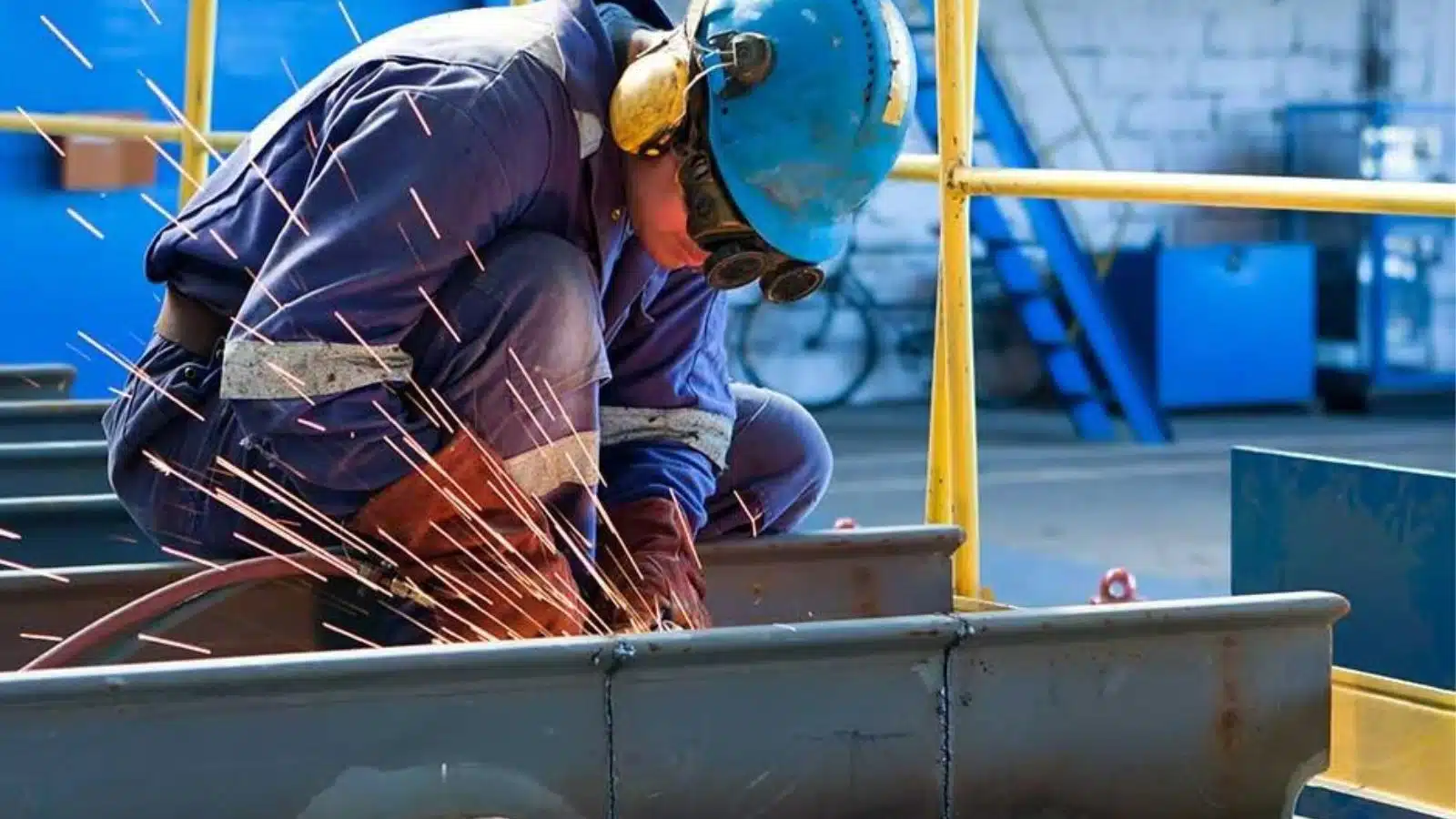
Top Industrial Steel Fabrication Company in Dammam Saudi Arabia
We have received your inquiry and our team will review your requested items and get back to you as soon as possible.